Prof. Dr. Wilhelm Maier
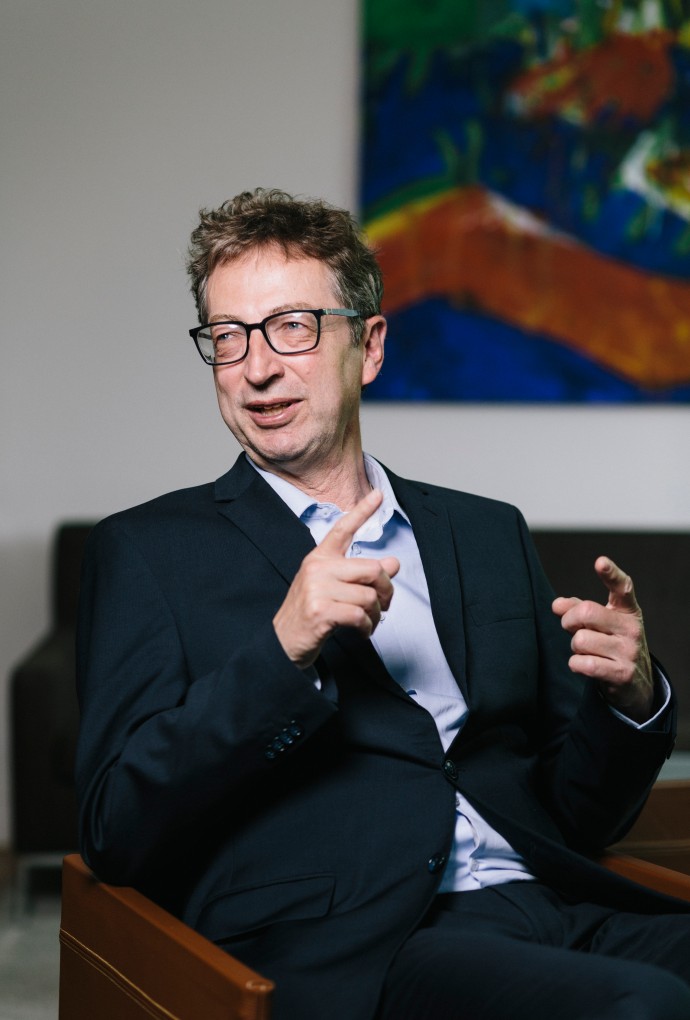
Fakultät 10
Room: LO 319
Address: 81243 München, Am Stadtpark 20
T +49 89 1265-2738
Professor:
Human Resource Management and General Business Administration
Function:
Academic Adviser for the bachelor's degree programme in Business Administration
Consultation hours:
by prior arrangement
Fact sheet
-
Expertise and Responsibilities
Field of teaching:
Human Resource Management and General Business Administration
Key areas of work:
- strategic human resource management
- Motivation and Leadership Behaviour
- IT-supported human resources management
- Vice President of Hochschule München
- Human Resource Management at Schering AG and Wacker-Chemie GmbH
- Freelance organisational and HR consultancy
- Studied Business Administration at Ludwig Maximilian University in Munich
- research assistant at universities in Berlin and Eichstätt
- Contact person at the German Business Foundation
Human Resource Management / Human Resources
1998 Maier, Wilhelm, Systemic Human Resource Management, Hampp, Mering, 1998
Terms such as ‘evolutionary management’, ‘chaos management’ and ‘networked thinking’ have been a recurring theme in management literature for years. Opinions vary widely as to their significance for business administration. Whilst critics see them merely as a play on words with limited practical value, their proponents believe that these systemic approaches offer the opportunity to develop realistic concepts for tackling typical management problems.
The idea of applying systems theory to economics is not a new one. As this book shows, the history of its application in economics dates back to the very beginnings of the discipline. The key innovation of the new systemic concepts lies in the principle of self-organisation, which occupies a central position in what are known as the newer systems theories.
It is undisputed that this principle bears similarities to numerous management problems and provides a scientific basis for all concepts that focus on increasing staff members’ personal responsibility. Well-known examples of this include self-managing and semi-autonomous groups, or lean management.
This book is aimed at students and interested practitioners. It begins by presenting the origins and key tenets of various systems theories with a view to their applicability in business management. Drawing on several promising systemic approaches, techniques and building blocks, the author develops a general human resource management concept. He applies this concept to address a classic human resource management problem – staff turnover – and as a consultancy module for tackling a complex real-world problem in a case study.
Drawing on the experience gained from applying this prototype, the author finally ventures a forward-looking assessment of the potential of such concepts, which are based on systems theory, and identifies areas where further research is required.