Press release
Simulations for the energy storage systems of the future: Digital twins help avoid surprises (Press Release 27/26)
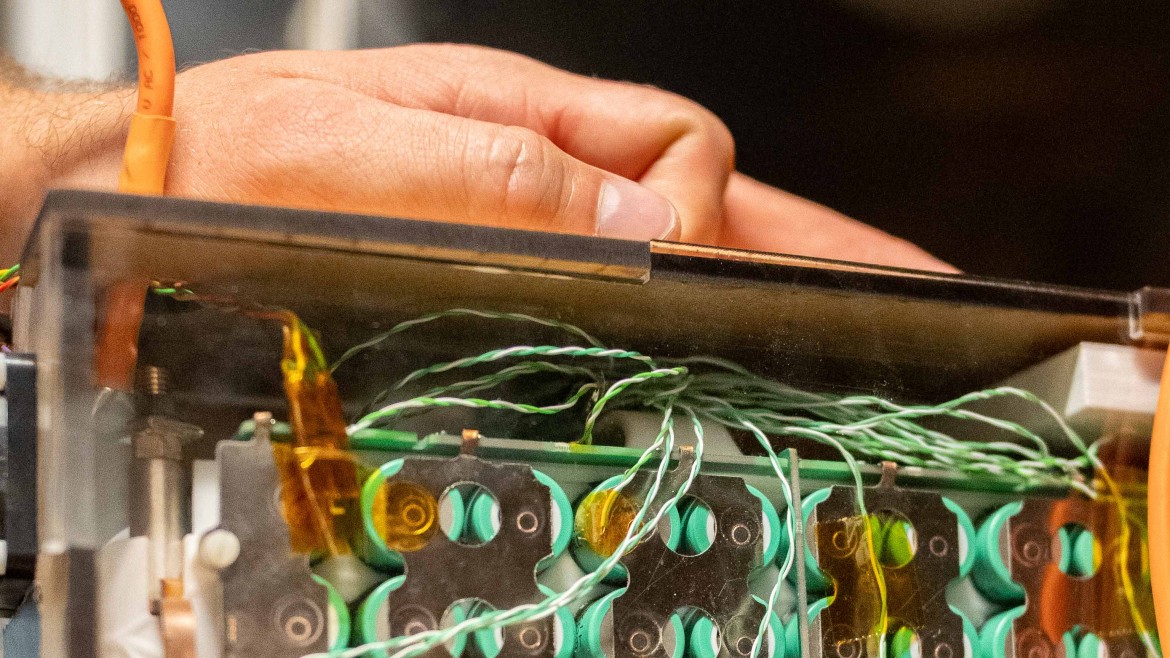
Large-scale battery storage systems contain tens of thousands of individual cells. A new computer model enables early fault diagnosis, thereby preventing unexpected system failures.
20/07/2026
Munich, 20 July 2026 – Green electricity, anytime, anywhere – battery storage makes it possible. The market is growing rapidly, with more and more large-scale storage systems coming online to store surplus electricity generated by solar panels and wind turbines and feed it back into the grid when needed. But also to power cars, lorries, trains and ships in a climate-neutral way.
Requirements for large-scale decentralised storage systems
The demands placed on such large-scale battery storage systems are high. They must be capable of handling mega- and, in some cases, even gigawatts of electrical power and operate reliably over thousands of charge and discharge cycles. For this to happen, tens of thousands of lithium-ion cells – which are grouped into modules and assembled into packs – must operate within specific voltage limits.
Digital twin detects faults and malfunctions
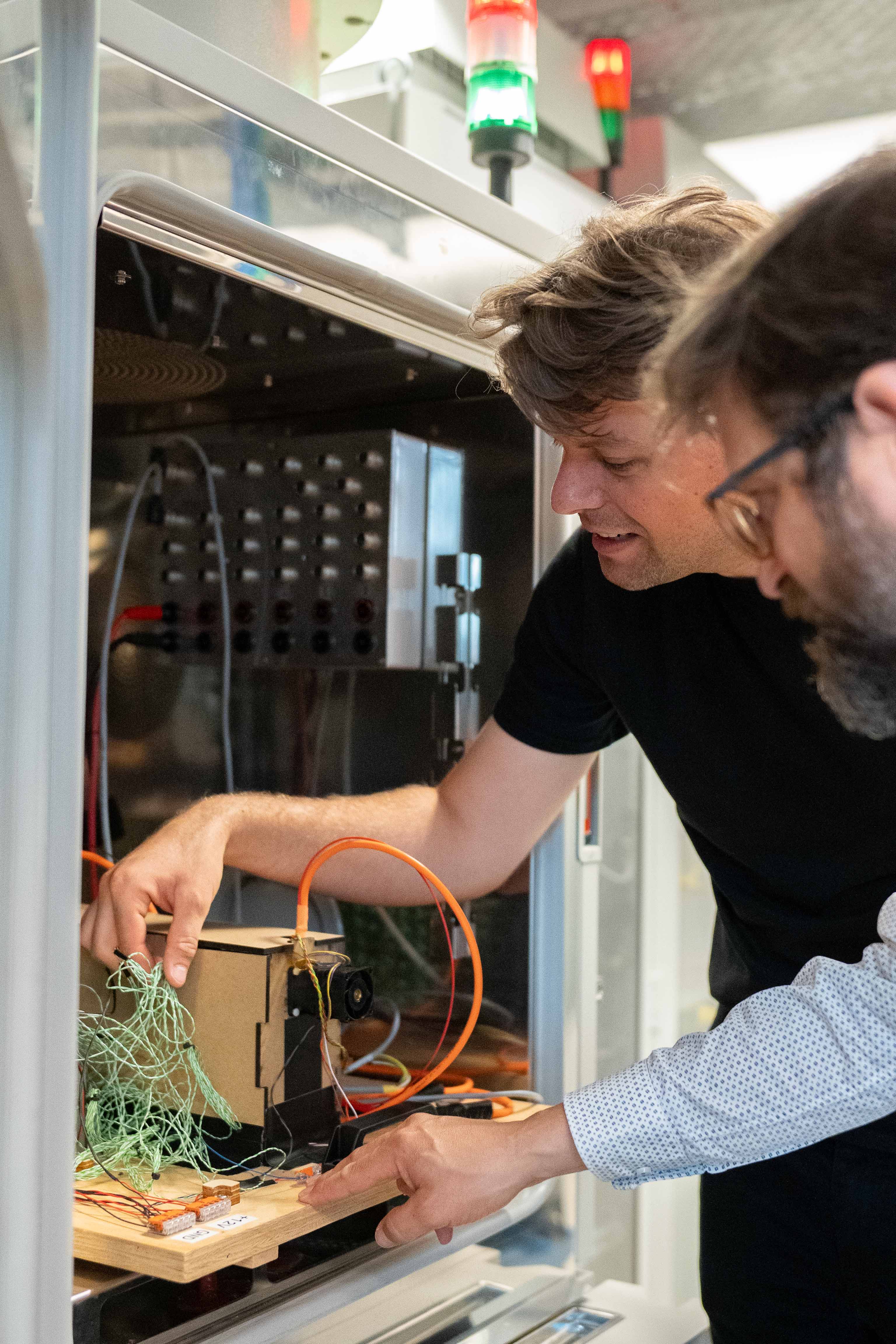
“Conventional battery management systems used to control and monitor large-scale battery storage systems provide information on whether limit values – for example, for temperature or voltage – are being exceeded. If this is the case, the storage system must be shut down immediately,” reports Alexander Reiter. In his dissertation at Hochschule München (HM), the mechanical engineer is developing a computer model for large-scale battery storage systems. With the help of this digital twin, faults in individual cells can be detected and malfunctions predicted during operation – long before absolute limit values are exceeded and a failure of the entire system leads to massive economic losses.
“At the level of individual cells, system failures show signs of developing at a very early stage,” says Reiter. “However, it is only possible to a limited extent to carry out actual metrological checks on individual cells whilst the system is in operation, which is why simulation models are often used in such cases. Calculating a simulation model for every single cell in the system would, however, be far too time-consuming.”
Predictable faults
The digital twin makes it possible to visualise deviations from the expected average behaviour of the cells. “We use statistical methods for troubleshooting,” explains the researcher. In the first step, the model is calibrated using the manufacturer’s technical parameters and characterisation measurements taken on the system – for example, the number of cells and modules, the capacity and internal resistance, as well as the expected variations in these parameters. Based on this data, a statistical distribution curve can then be calculated, showing how the cells should behave during operation.
The digital twin now undergoes the same charging and discharging cycles as the real battery in real time, whilst continuously checking whether the actual behaviour – for example, the distribution of cell voltages – matches the previously calculated distribution curve. “With the help of these models, we can visualise the deviation of individual cells from their statistically expected behaviour,” emphasises Reiter. In this way, failures of individual cells can be quickly identified – and faults become predictable.
Protection against system failures in the shipping industry
“The method is simple and can be implemented straight away,” emphasises HM Professor Oliver Bohlen, Head of the Electrical Energy Storage Research Group at Hochschule München. The research partner Everllence, which, amongst other things, uses storage systems in hybrid shipping, benefits directly from the research findings: “Based on these methods, the company can further improve existing procedures for the early detection of faults in order to prevent system failures during operation.”
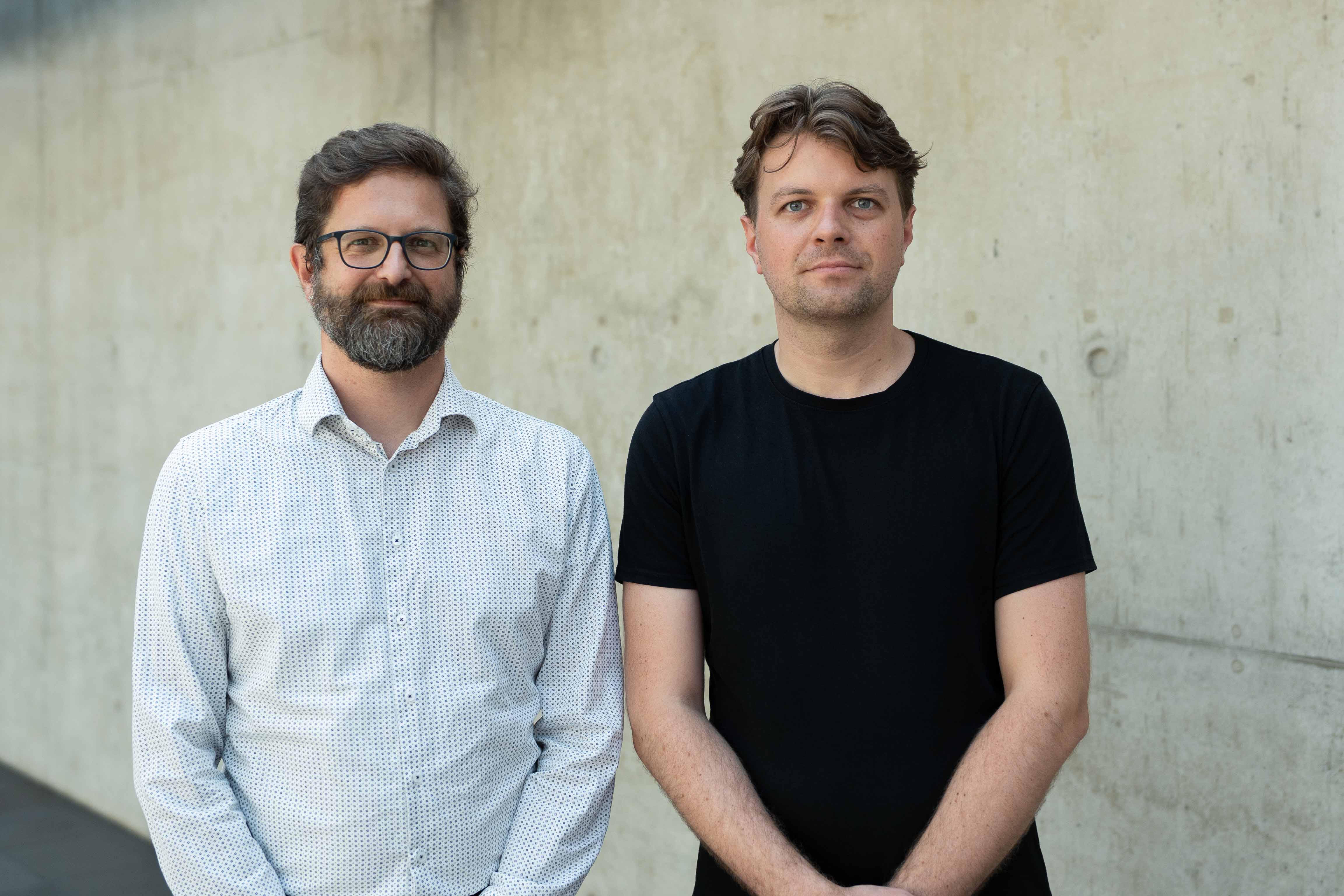
Alexander Reiter
As part of his doctorate, Reiter is working with the industry partner Everllence at the Institute for Sustainable Energy Systems (ISES) at HM. He is undertaking his doctorate at HM and RWTH Aachen University. As part of his dissertation, he has developed a computer model for large-scale battery storage.
Prof. Dr. Oliver Bohlen
Bohlen heads the ‘Electrical Energy Storage’ research group at the Institute for Sustainable Energy Systems (ISES) at HM. This research group focuses on systems for storing electrical energy – primarily batteries – and their applications, such as electric vehicles, home storage systems and e-bikes. We
would be happy to arrange an interview with Alexander Reiter and HM Professor Oliver Bohlen.
Contact: Christiane Taddigs-Hirsch on T 089 1265-1911 or by email .
Publications
by Alexander Reiter, Susanne Lehner, Oliver Bohlen, Dirk Uwe Sauer
Model-Based Fault Diagnosis for Large-Scale Marine Battery Systems
https://www.researchgate.net/publication/387813133_Model-Based_Fault_Diagnosis_for_Large-Scale_Marine_Battery_Systems
doi.org/10.1109/ESARS-ITEC60450.2024.10819841
Alexander Reiter, Susanne Lehner, Oliver Bohlen, Dirk Uwe Sauer Electrical cell-to-cell variations within large-scale battery systems — A novel characterisation and modelling approach
doi.org/10.1016/j.est.2022.106152