Press release
Easing the burden of care with AI (Press Release 33/26)
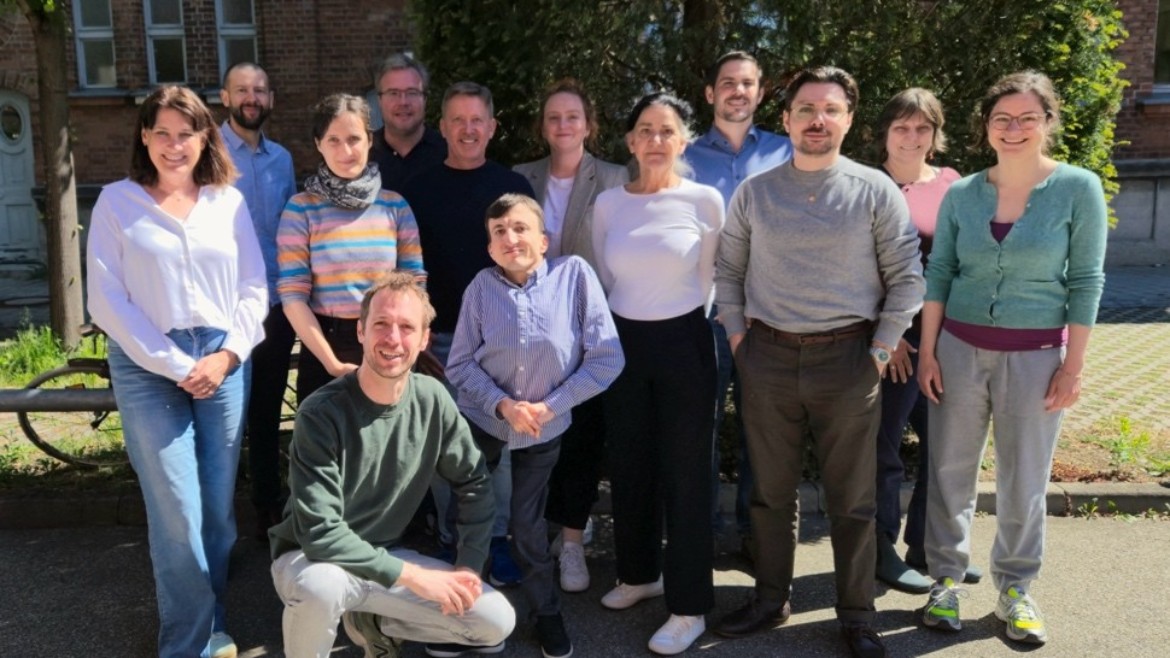
The “Smart Vitality Care” research project at Hochschule München (HM) brings together research and care practice. The aim is to develop a data-protection-compliant, open AI ecosystem designed to ease the workload of care professionals in their day-to-day work.
03/09/2026
Munich, 21 September 2026 – How can artificial intelligence be used in such a way that it genuinely supports nursing staff in their stressful day-to-day work in hospitals and care settings? This is the question being explored by the new research project ‘Smart Vitality Care’ (SVC), which is being coordinated at Hochschule München (HM). The research project is developing and evaluating an AI-supported open-source information system designed to protect nursing staff from becoming overwhelmed by information-gathering tasks and duties in their day-to-day care work. This interdisciplinary collaborative project brings together the technological expertise of the MUC.DAI (Munich Center for Digital Sciences and AI) interdisciplinary school with the focus on health and nursing sciences at MUC.HEALTH (Munich Campus for Health and Engineering).
When technology is more of a burden than a help
Nurses spend a significant part of their working day on documentation, searching for information and using various digital systems. Rather than simplifying workflows, many applications have so far led to additional complexity and a high cognitive load. The situation is exacerbated by a fragmented software landscape consisting of confusing, isolated systems: rather than easing the burden, systems that are difficult to use and ever-increasing volumes of data are placing a greater strain on staff. “With Smart Vitality Care, we want to demonstrate that artificial intelligence in care is not just another system that needs to be operated, but a tool that genuinely lightens the load. The key to this is that we develop the solutions from the outset in collaboration with care professionals – this is the only way to ensure that AI is used in a way that is truly effective in everyday practice and builds trust,” explains Project Manager Dr Philipp Tschochohei.
A smart AI ecosystem for everyday care
The three-year research project centres on the development and scientific evaluation of an open AI ecosystem. This consists of two key components: an intelligent dashboard that aggregates and prioritises care-related information in a context-appropriate manner for nursing staff whilst they are working; and an open-data catalogue that makes best practices – proven through research and practice – accessible for various use cases in both research and practice. These solutions are being developed in collaboration with nursing staff and are undergoing continuous testing in both laboratory and real-world settings. The project adopts a ‘privacy-by-design’ approach, as the AI systems used work exclusively with anonymised interaction patterns and do not utilise sensitive health data from clients.
By the end of the project, the aim is to have developed a ‘Scaling Strategy 2035’, through which the AI ecosystem developed will be integrated into standard care provision across the Bavarian care sector in the long term.
Key facts about the project
The “Smart Vitality Care” project is a joint research project between HM, Rosenheim University of Applied Sciences and MyOnClinic GmbH. It is funded by the Bavarian State Ministry of Health, Care and Prevention (StMGP) and will run from February 2026 to January 2029. Associated partners include AOK Bayern, Diakonie München & Oberbayern, the Paritätische Wohlfahrtsverband Bayern, the Anthojo Brannenburg care home, the Wiltschka care home, the Nuremberg Care Practice Centre, Portabiles HealthCare Technologies and the Association of Caregivers in Bavaria. The advisory board members from the LMU and TUM clinics will participate in the project on a voluntary part-time basis.
We would be happy to arrange a meeting with the Project Manager, Dr Philipp Tschochohei.
Contact: Constance Schölch on T 089 1265-1920 or by email.