News
HM at the UN Climate Change Conference
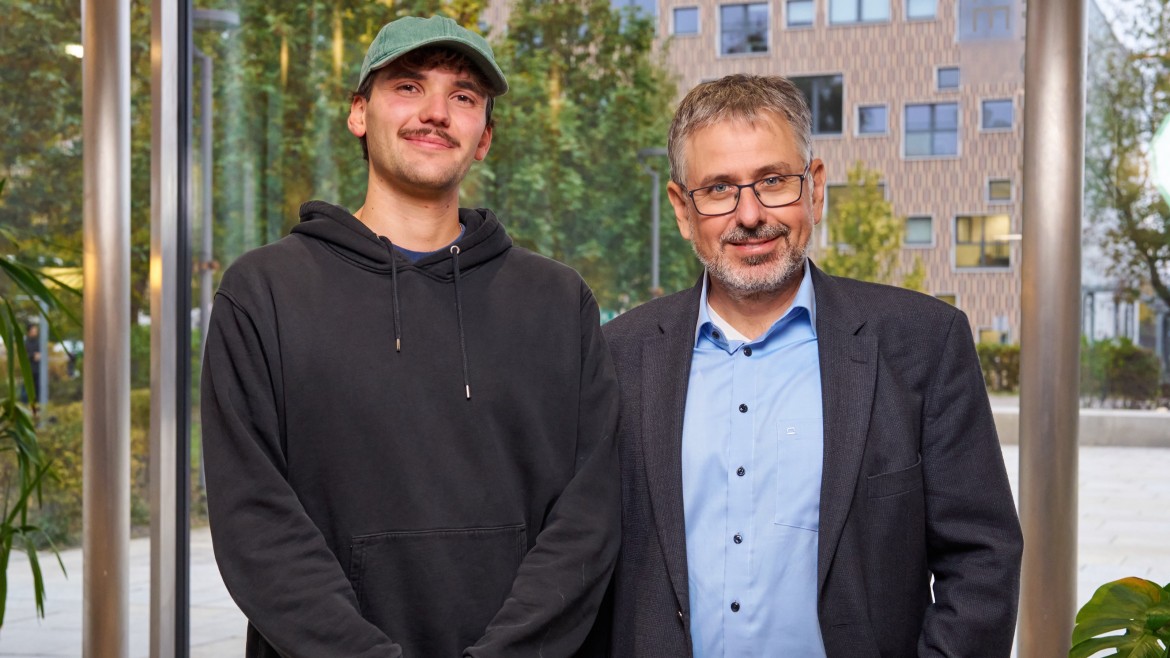
Insights and expectations of the HM delegation ahead of COP31
08/11/2026
HM is one of the few European universities to hold official observer status at the UN Climate Change Conference and is also sending an HM delegation comprising lecturers, staff members and students to COP31 in Antalya. Students are being specifically prepared for their participation through the seminar ‘Shaping International Climate Protection – The Role of HM at UN Climate Change Conferences’.
What role does the HM play at the COP, and why is its participation important? In this interview, HM Professor Andreas Wüst from the Department of General and Interdisciplinary Studies and HM undergraduate student Florian Margreiter, who is studying Aerospace Engineering at the Department of Mechanical, Automotive and Aeronautical Engineering, discuss these issues.
What does observer status at the COP actually mean for the HM delegation?
Andreas Wüst: We are not stakeholders or decision-makers, but we do belong to one of the two largest observer groups at the COP. Their input, advice and reflections are continuously incorporated into the deliberations and consultations on limiting global warming and its consequences, both before and during the COP. The exchange within the observer group, comprising scientists and NGOs, offers valuable insights into analyses and ideas, as well as the opportunity to reflect jointly on the progress of the negotiations. Above all, we are able to attend many COP negotiations and gain a first-hand impression of the positions, arguments and areas of compromise of the various stakeholders.
How did you become part of the HM delegation and how did you prepare for the COP?
Florian Margreiter: I took the seminar ‘Shaping International Climate Protection’ in the second semester, as I am personally very interested in the topic of climate protection. The interdisciplinary content provided by Professors from various subject areas was particularly valuable, as it gave us different perspectives on the COP and its complex processes. After being accepted into the delegation, I also studied the procedures in depth and prepared specifically for my role as an observer through United Nations workshops.
What is the significance of universities such as HM participating in the UN Climate Change Conference?
Andreas Wüst: Since 1995, the UN Climate Change Conferences have aimed to agree on joint measures to limit global warming. This is no longer just about reducing greenhouse gases (‘mitigation’), but also about adapting to the consequences of climate change (‘adaptation’) and compensating for damage that has already occurred (‘loss and damage’). The participation of universities in the COP is important for gaining a better understanding of political decision-making processes and for being able to assess both progress and deadlocks. At the same time, the delegations help to bring the knowledge and experience gained at the conference back to universities and beyond, to strengthen networks and to promote commitment to effective climate action.
Is there a topic that particularly interests you?
Florian Margreiter: I gave my final presentation in the seminar on the topic of adaptation. Why do climate protection measures have to be delayed until something actually happens, and only then are actions taken and adjustments made? I’m taking this question with me to the COP and hope to find answers, or at least to gain a better understanding of how these challenges are being tackled and what is being done to deal with them more effectively in future.
The interview was conducted by Heidi Bundschus