Science communication strategy of Hochschule München
How does the scientific knowledge generated at Hochschule München reach its target audiences – the scientific community, politicians, practice partners and civil society – in a way that is precisely tailored to their needs? The university’s science communication strategy provides answers to this question.
The strategy sets out the target audience HM wishes to reach through its science communication, and the objectives it aims to achieve. It identifies suitable channels and formats for this purpose and defines the core and supporting processes required to achieve them.
The science communication strategy was adopted by the university management in December 2024.
Systematic science communication at HM
With this strategy, HM is systematising its science communication in order to fulfil its social responsibility to promote the exchange of knowledge between the scientific community and society. HM advocates a dialogue-based approach to science communication. Ensuring that all of HM’s channels cover even controversial scientific topics is part of the university’s responsibility to democracy.
Cross-cutting task: science communication
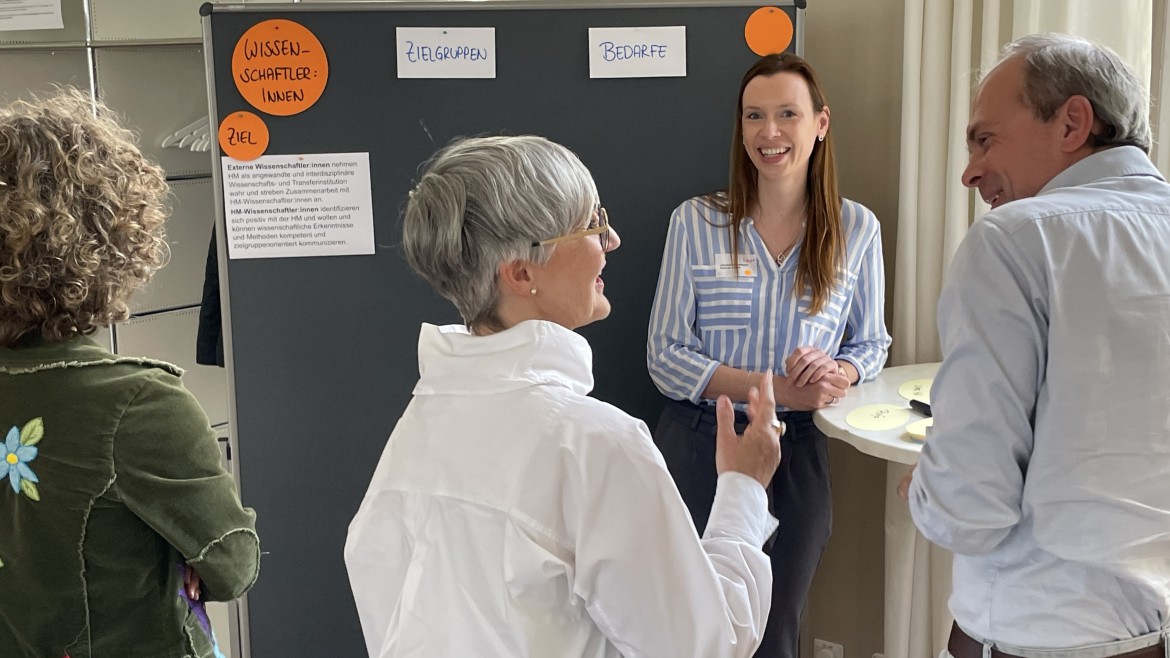
Making the research carried out at Hochschule München accessible and relevant is a cross-cutting task driven by central communications officers, departmental communications staff in departments, faculties and institutions, as well as students, researchers, lecturers and those involved in knowledge transfer.
This strategy was developed in consultation with these and other stakeholders in science communication.
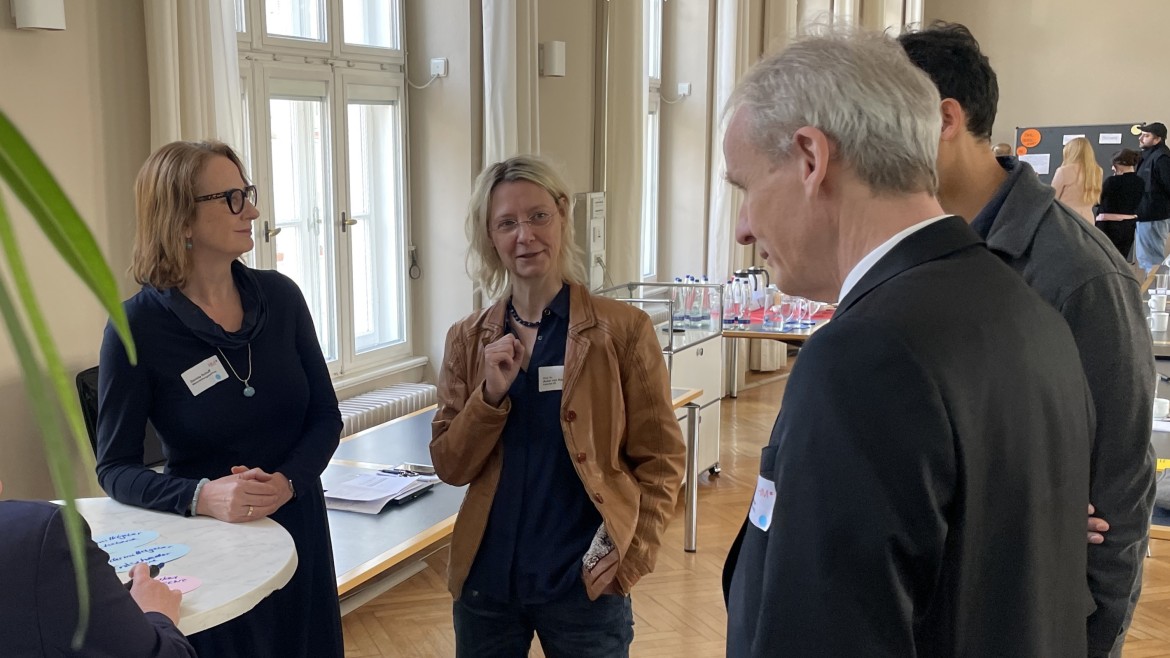
A positive mindset, driven by actively putting science communication into practice in the field of HM on a daily basis, stems primarily from practical experience, a sense of self-efficacy and positive feedback.
Sir Mark Walport, the UK government’s chief scientific adviser on climate science communication, put it this way: “Science isn’t finished until it’s communicated.”