
teaching mission statement
"Hochschule München is one of the most diverse Universities of Applied Sciences in Germany. It is characterised by a wide range of degree programmes, interdisciplinary research, an entrepreneurial ethos and strong regional links, whilst remaining open to the world. Through practically-oriented and future-focused teaching, studies at Hochschule München prepare students to play an active role in shaping a changing society.
The teaching mission statement sets out the fundamental objectives in the context of teaching and serves as a common understanding of how we at Hochschule München wish to shape ‘good teaching’ and which indicators and criteria underpin our approach. The teaching mission statement acts as a framework for guidance and reflection in our interactions with one another, and as a common understanding of university-wide quality standards and overarching goals. For this reason, we developed it from the outset as an integral part of the University Development Plan (HEP) between 2021 and 2023, with broad participation from all staff and student groups at Hochschule München. Implementing this in our day-to-day work and continuously developing it further is a university-wide task that challenges us all equally as members of Hochschule München."
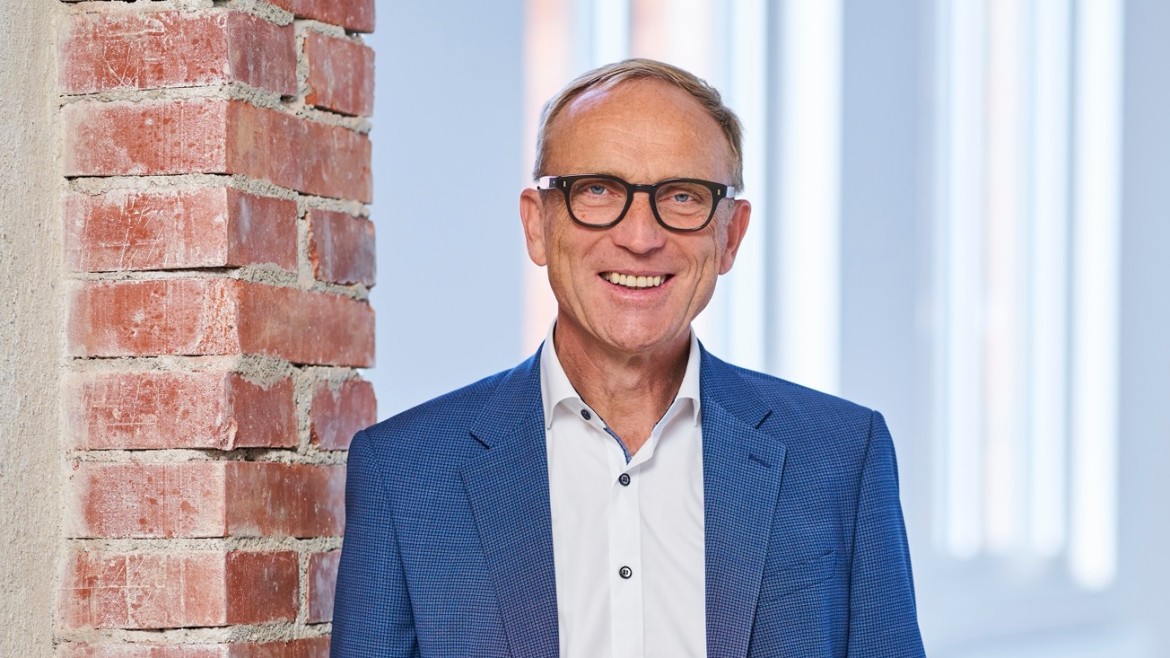
Prof. Dr Klaus Kreulich, Vice-President for Innovation and Quality in Education
Teaching at the HM focuses on students as shapers of the global future, for whom excellent subject-specific qualifications are just as indispensable as advanced skills in the interdisciplinary fields of sustainability and digitalisation. Collaborative learning on the campus is combined with digital teaching scenarios that enable flexibility and individualised learning pathways. Active participation in shaping the European Higher Education and Research Area is a fundamental component of students’ international education. Through teaching and learning in a global context, the HM prepares its graduates for the cross-cultural and cross-border challenges of the 21st century. The HM makes its contribution to society by educating people, empowering them to engage responsibly and reflectively with social and societal changes, and driving forward new developments through research. This includes upholding democratic principles. In this sense, the HM is a place of free teaching, free research and free speech, and assumes responsibility for representing justifiable positions to the outside world. These principles of freedom include enabling people from diverse backgrounds to have equal and non-discriminatory access to education, research and transfers. This self-image of the HM is shaped, on the one hand, by its historical foundations and, on the other, by its understanding of the university as a living environment; it is reflected in a collaboratively developed, overarching brand concept from which the HM’s profile emerges. HM regards diversity and the active promotion of equal opportunities as essential to the fulfilment of its remit. All members of the HM should be able to develop their potential to the fullest and utilise their skills, regardless of gender identity, ethnic origin, social background, cultural background, religion, political beliefs, personal or family circumstances, any disabilities or other individual characteristics. The HM is committed to promoting respectful and appreciative interaction, ensuring equal opportunities and advocating for protection against discrimination. The HM is a place of exchange for the development of new ideas. Interactions are characterised by open dialogue, a capacity for constructive criticism, and mutual respect and tolerance. Through outstanding, practice-oriented academic teaching, the HM trains its students to become excellent graduates who are highly sought-after in the labour market. The students’ skills profile is characterised by entrepreneurial and sustainable thinking and action, as well as international experience and intercultural competence, preparing them for a world of work shaped by globalisation and digitalisation. The central aim of teaching is to provide students with an excellent education combined with intensive individual support. HM graduates stand out for their professional and personal skills. The consistent and fundamental starting point is HM’s outstanding academic disciplines, which are linked in an interdisciplinary manner by major societal trends such as digitalisation and sustainability. Of particular relevance are the Bavarian and European innovations in higher education policy, the transition to the ‘new normal’ following the pandemic semesters, the digitalisation of all areas of life, and the acute shortage of academic professionals in the labour market. Last but not least, education at the HM aims to address the causes of and potential solutions to the climate crisis. Current external developments have the potential to fundamentally transform the higher education landscape. As a high-performing university, HM aims to play a leading role in driving this transformation. Taking a responsible role in shaping the national and international framework for higher education is an integral part of its identity. In line with both new and fundamental requirements for quality and innovation in education, HM pursues five strategic objectives:
1. To view students as responsible shapers of the future.
Students at the HM are guided to act independently in a practical context and learn to think and act from multiple perspectives and in an interdisciplinary manner. The HM prepares its students for a future in which they will need to assess the (technological) consequences of their actions. It educates responsible citizens to strengthen civil society. In order to systematically involve students in the further development and co-creation of teaching innovations, the HM establishes structures that ensure and promote student participation. Through a wide range of opportunities for networking, collaborating, reflecting and learning together, students experience a sense of self-efficacy. Their scope for influence expands as they reflect on the future of higher education in the context of their immediate day-to-day student life. Constructive dialogue on teaching-related change processes fosters skills that contribute to the further development of their personalities.
2. To offer academically excellent higher education in line with major societal trends for both traditional and new target groups.
In the spirit of forward-looking higher education at a high subject-specific level, HM offers its students a wide range of opportunities to engage with the interdisciplinary megatrends of digitalisation and sustainability. In particular, students can tailor their individual profile to these topics through an interdisciplinary certificate programme. The same applies to the cross-disciplinary areas of expertise in entrepreneurship and international affairs, which are firmly rooted in HM’s self-image as a business-oriented university of applied sciences with international partnerships. A long-standing and increasingly established trend in future higher education is the growing importance of lifelong learning. Rapid social and technological developments pose challenges for working academics who wish to maintain their high level of competence in the workplace over the long term. At the same time, companies must contend with a shortage of talent in highly innovative fields of activity. The HM’s continuing professional development programmes represent a compelling response to these growing needs. At the same time, they act as an additional link between lecturers and current professional practice, which can be utilised to enrich undergraduate teaching as well as application-oriented research and knowledge transfer activities. Further specific objectives and measures within the ‘Higher Education’ strategy package support the expansion of research-based and knowledge-transfer-oriented Teaching, a tangible focus on gender and diversity issues, and the visibility of degree programmes for school pupils and other interested parties.
3. To support lecturers in further developing their roles, profiles and approaches.
The lecturers at HM combine academic expertise with in-depth experience from professional practice. HM provides its lecturers with a suitable framework for individual professional development and support in the use of new teaching methods and technologies. The specific objectives and measures focus on the implementation of the Higher Education Innovation Act (HIG) and the associated options for digitally supported forms of teaching; the establishment of the ‘Innovation Professorship in Teaching’ as an incubator for the further development of teaching; the expansion of services for lecturers; and the integration of the new Bayerisches Zentrum für Innovative Lehre (BayZiel) (Bavarian centre for innovative teaching).
4. Create an attractive campus featuring social and digital innovations.
The absence from the physical campus, necessitated by the Covid-19 pandemic, has highlighted in a particularly striking way its importance for effective higher education. It is in this place of encounter and community that a sense of belonging to and identification with university life develops. At the same time, the pandemic-driven shift to online teaching has expanded the campus to include virtual spaces and given rise to new models of teaching and learning. Creating an attractive campus with social and digital innovations means bringing forms of face-to-face, online and hybrid teaching into a new synergy. To create excellent conditions for self-directed learning and social interaction on the physical campus, new spatial concepts are being developed at HM. The interfaces between face-to-face and online teaching are being re-examined and designed in an appealing way. The specific objectives and measures focus on evaluating the experiences gained during the COVID-19 pandemic and acting on the resulting insights; establishing new physical and virtual spaces for student interaction; setting up a Competence Centre for digital examinations in line with the principles of constructive alignment; and raising the profile of teaching innovations in order to achieve a broad impact.
5. Manage and organise Teaching – as a core process – in an efficient and quality-assured manner.
The size and diversity of HM are accompanied by a high degree of organisational complexity. As a fully-fledged university of applied sciences, HM offers a broad spectrum of academic disciplines that are linked in various ways through interdisciplinary fields and cross-cutting themes. The range of degree programmes is aimed at a wide variety of target groups. To ensure efficiency and a consistently high standard of quality that takes account of both the increased quality awareness among lecturers and external requirements, the HM is seeking accreditation of quality management systems. In order to manage Teaching – as a core process – in an effective and quality-assured manner, the HM is establishing university-wide and central structures and teams for a suitable quality management system that facilitates an internalised approach to accreditation. Particularly within the dynamic context of certificates and extra-occupational programmes, this goes hand in hand with the optimisation of processes for the implementation and introduction of course offerings.
Contact
Center for Innovation in Teaching and Education