News
“We’ve always done it this way” – why this answer isn’t enough
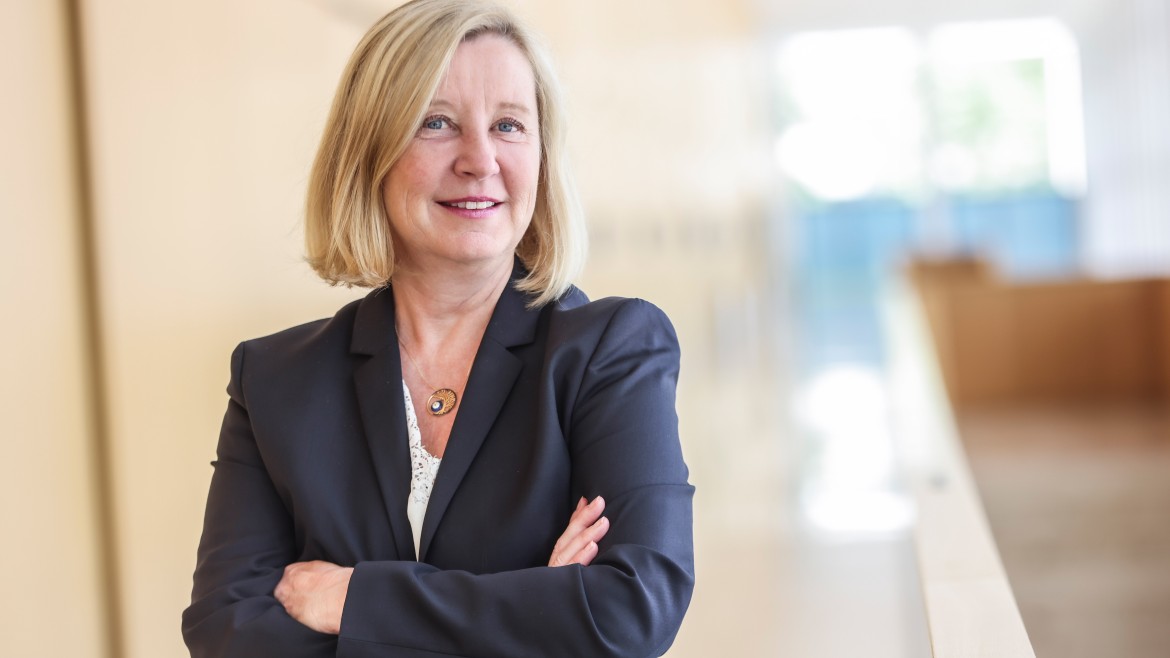
Practical, international, team-oriented: Prof. Dr. Helga Zollner talks about teaching on the master's degree programme in Paper Technology – and why critical thinking is crucial for the future.
05/11/2026
Prof. Dr. Helga Zollner is the programme director of the advanced Master’s degree programme in Paper Technology at Hochschule München. The English-language programme is aimed at engineers and scientists who wish to enter the international paper and packaging industry or take on management roles within it. In this interview, Zollner explains how teaching working professionals differs from teaching undergraduate students, how she ensures the programme is practically-oriented, and which skills will be crucial in the future.
Ms Zollner, you teach working students. How does teaching this group differ from teaching undergraduates?
Many participants already bring specific experience from their day-to-day working lives and are therefore able to apply new material to practical situations very quickly. The questions are often more direct and application-oriented: How can a particular approach be implemented in the workplace? Why is a process carried out in exactly this way? What impact would a change have on quality, costs or production? This leads to very practically-oriented discussions.
For me as a lecturer, this is particularly exciting because it directly links theoretical principles with professional experience. At the same time, the participants bring a wide range of perspectives from their organisations and fields of work – and the whole group benefits from this.
How do you structure your courses to ensure they are practically-oriented and relevant to the wider world?
It is important to me that theoretical knowledge is linked to practical applications as early as possible. That is why internships in our laboratories and at our pilot plants play such a significant role: there, students can experiment, take measurements, carry out calculations and experience first-hand how theoretical concepts affect the process. Another key component is field trips to paper mills and companies in the industry, as well as visits to trade fairs such as the Zellcheming Expo and symposia such as the IMPS or the Faserstoff Symposium. There, students gain an insight into the issues currently facing the industry and the demands that will be placed on skilled workers in the future.
In the modules themselves, I also enjoy working with case studies: I want students not only to apply formulas, but also to consider what the results mean for a real-world process or product. It is precisely this combination of theory, application and reflection that, for me, makes teaching practically-oriented and relevant.
In your view, which skills are in particular demand – both now and in the future?
As well as specialist knowledge, I believe the ability to reflect is crucial. Students should learn to put what they have learnt into context, recognise connections and critically question existing processes. We should not be satisfied with an answer such as ‘We’ve always done it this way’, but should ask: Why do we do it this way? Are there better, more efficient or more sustainable solutions?
Equally important is the ability to work as part of a team. In technical professions in particular, solutions are rarely developed in isolation these days, but rather through collaboration between different disciplines, departments and companies – increasingly on an international scale. The paper and packaging industry is a global industry with international companies, supply chains, customers and research partners. Good language skills, particularly in English, are therefore just as important as intercultural competence. Looking ahead, it will become increasingly important to combine technical expertise with critical thinking, an openness to change and good communication skills.