News
New analysis technology for vehicle batteries
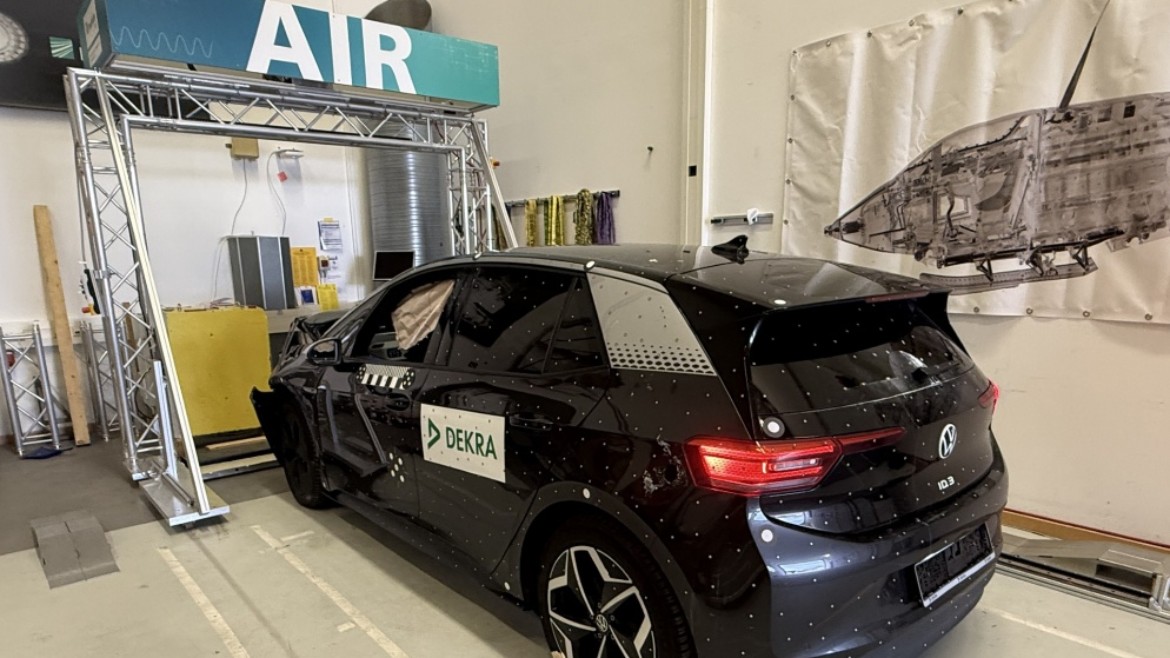
HM research team, in collaboration with the Fraunhofer Institute, has developed an innovative analytical method for vehicle batteries using 2D X-ray projections
09/11/2026
When an electric car is taken off the road – for example, following an accident or because it is no longer cost-effective to repair it – the drive battery is often removed and given a new lease of life, for instance in photovoltaic systems or as a mobile energy storage unit. As part of the AIR (Drive Battery Inspection using X-ray Technology) research project, a method has now been developed to inspect batteries for damage prior to reuse. Research assistant Stefan Koppenhofer and HM Professor at the Department of Mechanical, Automotive and Aeronautical Engineering are relying on the automated analysis of X-ray images.
The method behind battery inspection
The method enables an assessment of the battery’s suitability. This requires sufficient residual capacity and that the battery is in a safe condition. By X-raying complete battery packs, conclusions can be drawn about their mechanical integrity, and information can be obtained regarding their internal condition and any potential structural abnormalities, without having to open the battery casing or dismantle any components. This is because deformations of cells and modules can arise, for example, due to ageing, vibration or accidents, and prevent further use. Used vehicle batteries can be specifically assessed using the method developed by the AIR project, which provides support when dealing with vehicles involved in accidents and batteries exhibiting mechanical abnormalities.
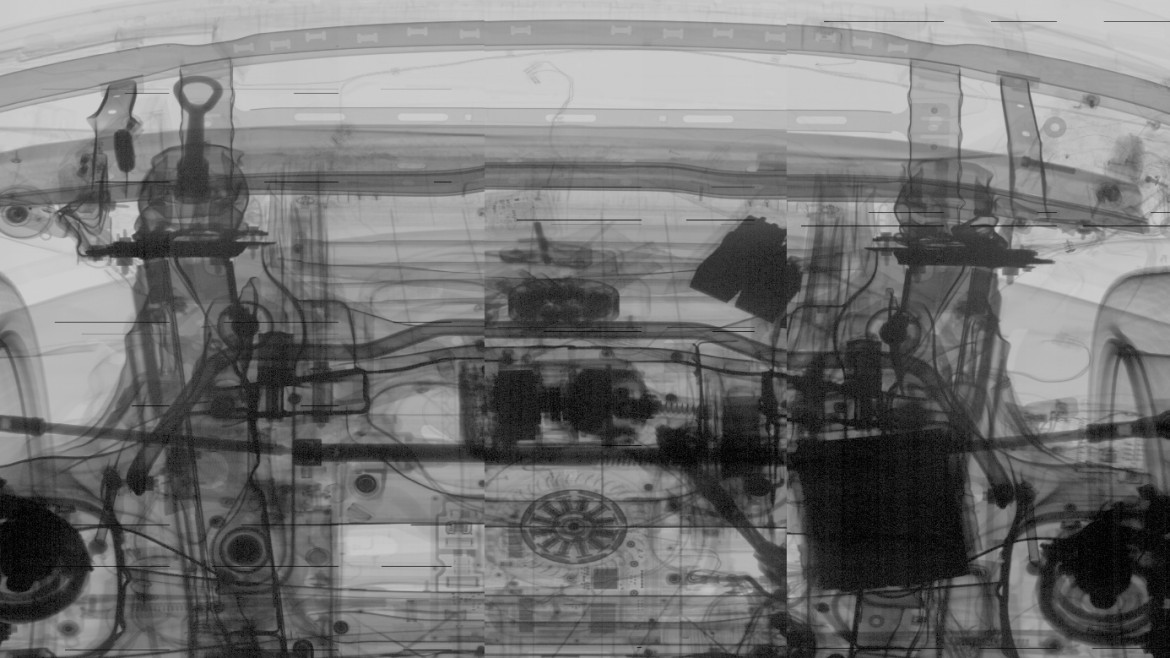
How does the analysis of the 2D X-ray projections work?
The AIR system is designed as a radiography system. Depending on the test setup, either a battery pack or a complete vehicle is passed through the beam path. The software developed automatically analyses the 2D X-ray projections produced. In the test environment used, the analysis of a battery pack took around five minutes. The actual total test time depends, amongst other things, on the size of the battery pack, the test setup and the number of projections taken.
Greater sustainability through the AIR process
The results of the AIR project can help to evaluate used vehicle batteries more effectively for second-life applications and to assess their mechanical integrity more accurately. Reuse conserves resources and minimises the carbon footprint. Looking ahead, the planned Giant-Eye CT system at the Fraunhofer IIS X-ray Technology Development Centre in Fürth is set to expand the possibilities for three-dimensional analysis of entire electric vehicles.
Ivana Velev