History of Hochschule München
Hochschule München, originally established as a university of applied sciences, was founded in 1971. Its establishment was the result of the joint efforts of headteachers, lecturers and students at engineering colleges at the end of the turbulent 1960s. The aim was to reform engineering education and raise the status of higher technical colleges within the higher education sector. Technical colleges specialising in business, social sciences and design subsequently joined the initiative.
The HM’s predecessor institutions already have a rich history. The tradition of the Departments of Architecture, Civil Engineering and Geoinformatics stretches back 200 years. Their predecessor, the School of Building Trades, began delivering regular lectures at that time.
The diverse range of courses now offered by HM has evolved over the decades. The timeline shows how the range of courses has changed, how new qualifications have transformed the curriculum, and what other factors have shaped the history of HM.
Join us on a journey through time!
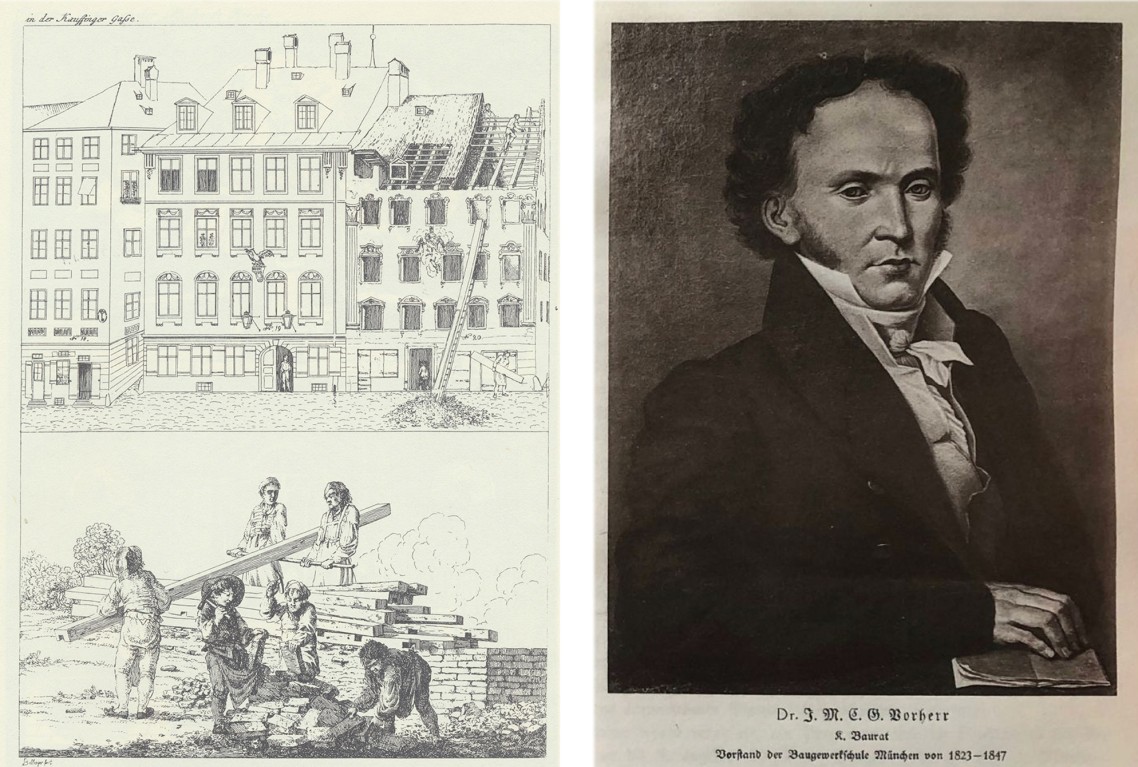
Following a petition submitted last November by ‘more than 32 master builders from the countryside’, Hermann Mitterer, a teacher at the Sunday school, held a special course on building trades at the beginning of 1821.
Gustav Vorherr, who had been District Building Inspector for the Isar District since 1809, had for some years been aiming to standardise the Bavarian building industry. To this end, he drafted a memorandum in 1810 on the organisation of a state-run school for building trades.
Pictured left: a builder around 1800; right: Gustav Vorherr
1823
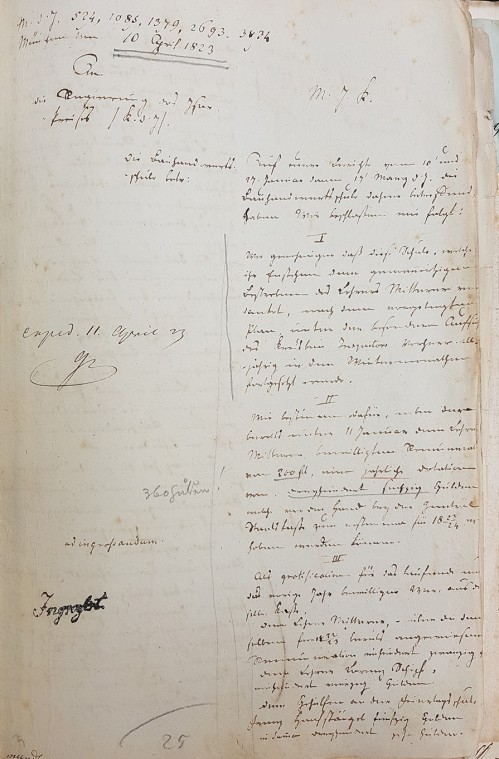
On 10 April 1823, the Bavarian Ministry of the Interior approved the continuation of building trades training at a dedicated school of building trades under the supervision of Gustav Vorherr – the oldest direct predecessor of today’s Hochschule München.
1825
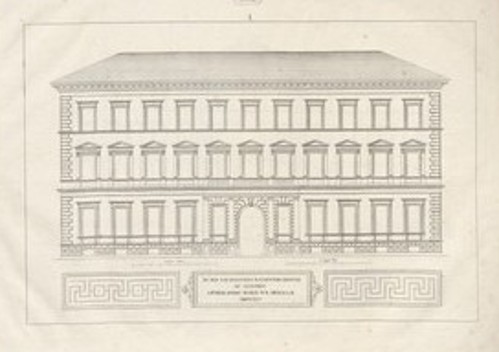
In the early days, a great deal of improvisation took place at the State School of Architecture – teachers and pupils produced the teaching materials themselves: a teaching sheet on façade construction from 1825, produced using the lithographic printing process.
1827
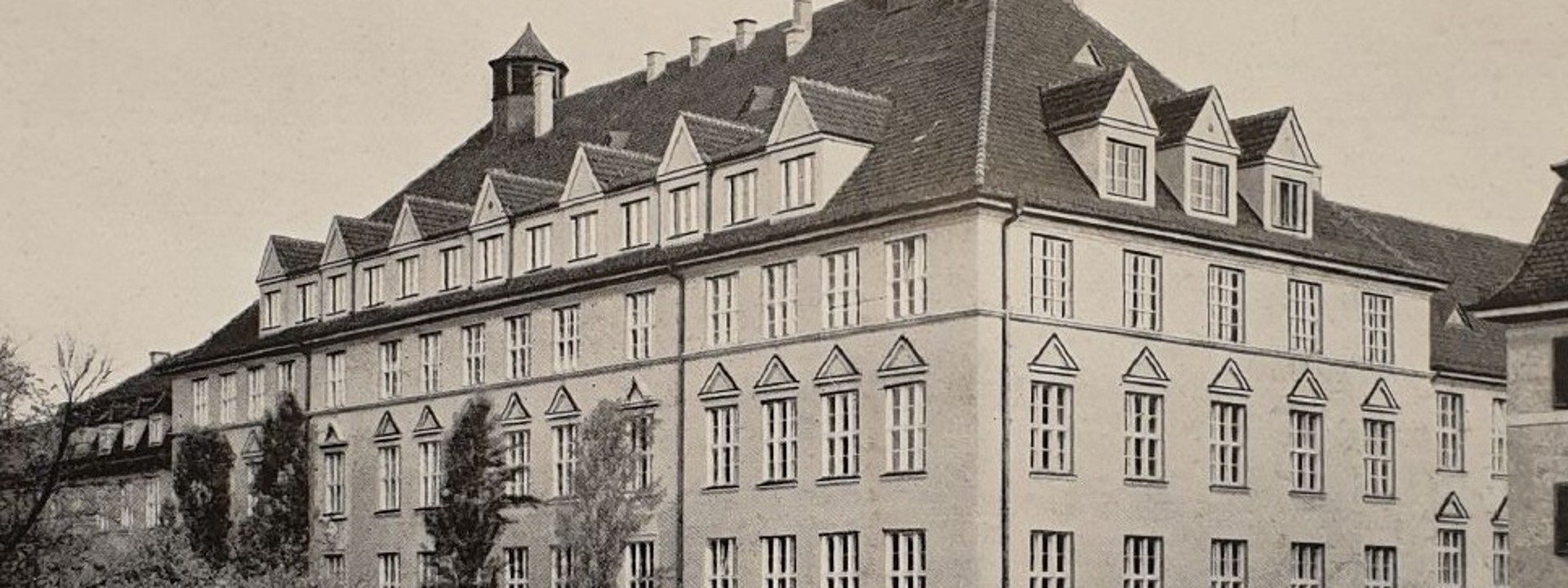
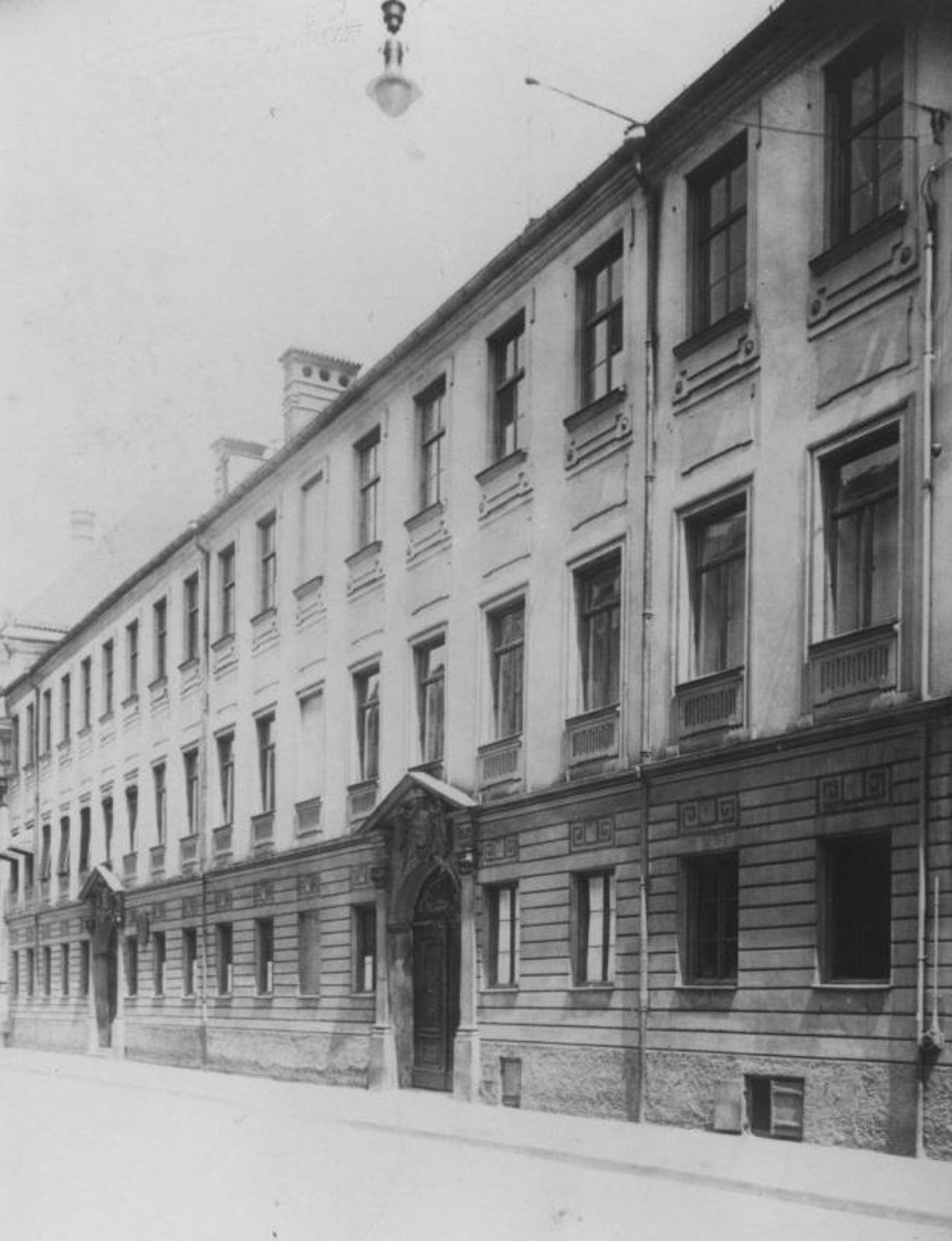
The establishment of the Central Polytechnic School (1827–1833) and the Polytechnic School (1833–1868) in Munich (building on Damenstiftstraße, photograph taken around 1910) was central to the development of technical and practical education in Bavaria.
1852
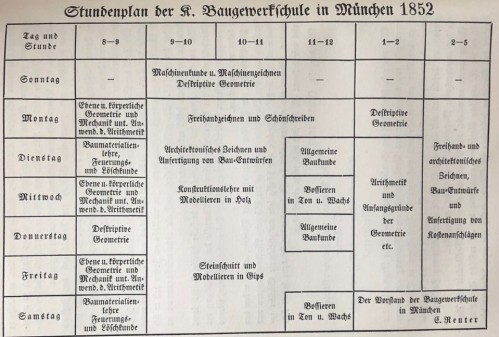
The timetable for pupils at the Royal School of Building Trades, 1852. Lessons were also held on Saturdays and Sundays.
1868
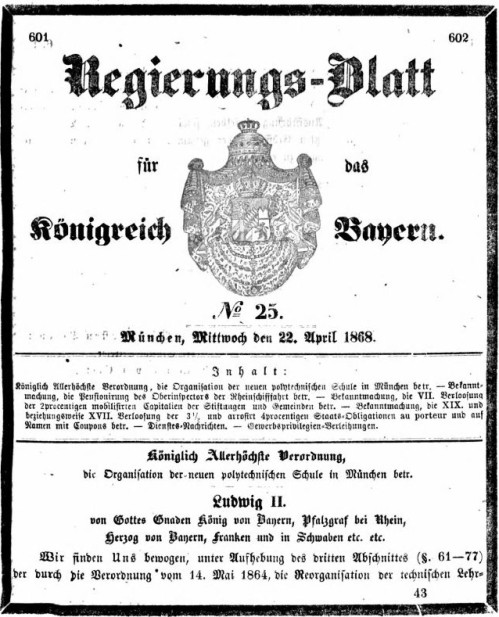
In 1868, a technical university was established by royal decree; this is today’s TU. Polytechnic education was thus accorded the status of higher education.
1877
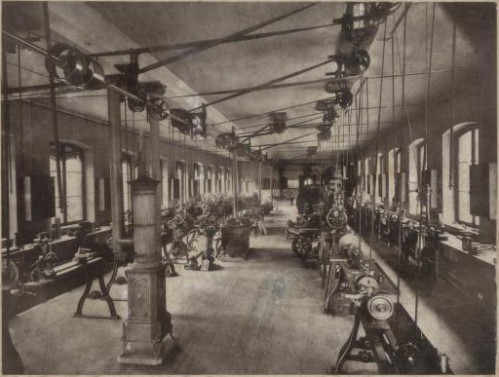
Also in 1868, industrial schools were established in Bavaria as technical secondary schools. In 1877, the School of Building Trades was placed under the authority of the Industrial School in Munich and housed in the same building at 23 Gabelsbergerstraße (later renumbered 57) (Machine Hall, 1881).
1895
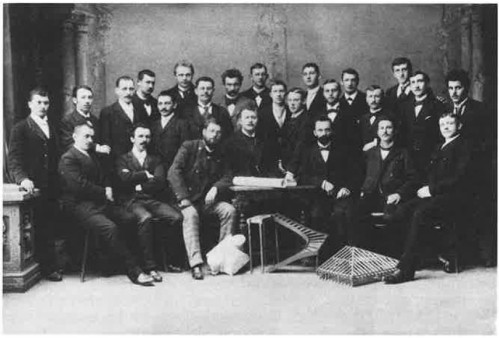
A group photograph of the graduates of the School of Building Trades in 1895. Students came to Munich not only from Bavaria, but from all over Germany, Austria and Switzerland.
Around 1900
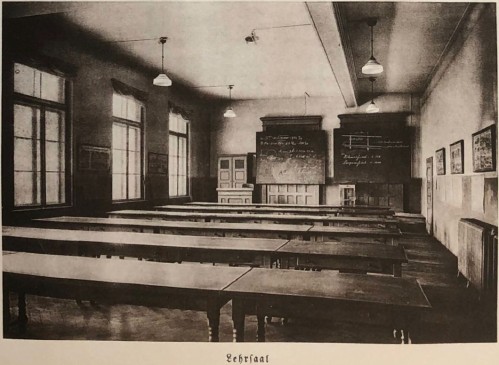
A classroom at the building trades school at the turn of the century
Around 1900
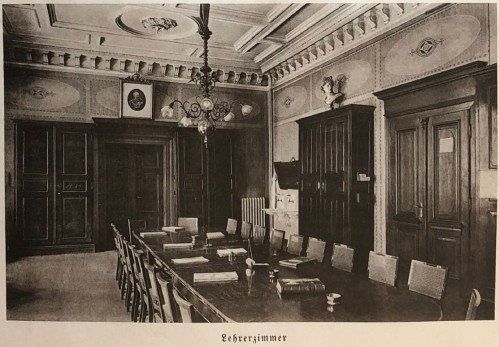
The staff room at the Building Trade School
1900
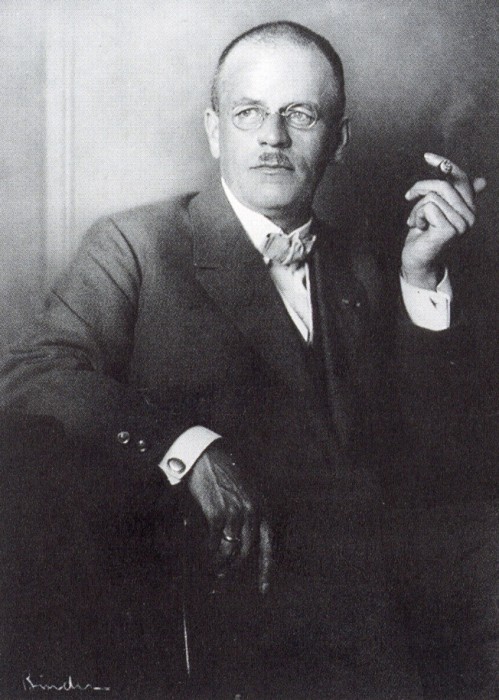
Georg Heinrich Emmerich (1870–1923) was a photographer and served as a Supervisor for several specialist photography journals. He was responsible for founding the School of Photography and served as its first director from 1900 to 1917.
Around 1910
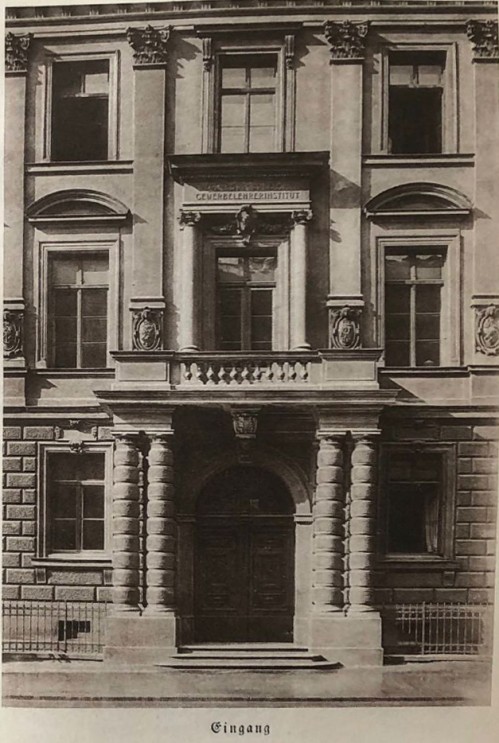
The main entrance to the Building Trade School at 23 Gabelsbergerstraße: in 1907, it had regained its independence following the closure of the Industrial School.
1911
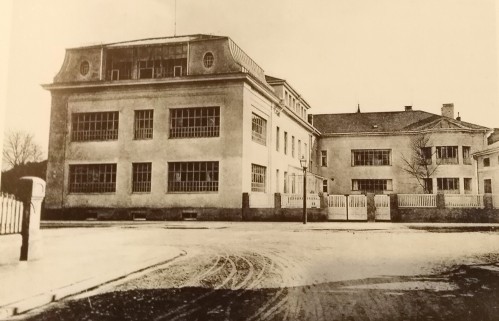
Due to a lack of space, the photography school moved to a former hospital at 33 Clemensstraße shortly after it was founded. It remained there, with a brief interruption, until 2019.
1912
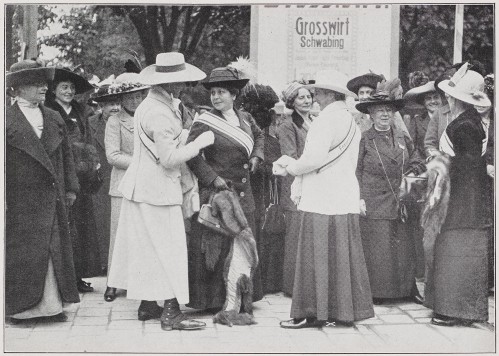
The establishment of social work as a profession for women and the founding of ‘social schools for women’ was a project undertaken by sections of the bourgeois women’s movement around 1900. In Munich, the Association for Women’s Interests was an early advocate of this cause.
Pictured: Women’s Suffrage Congress in Munich, 1912
Around 1920
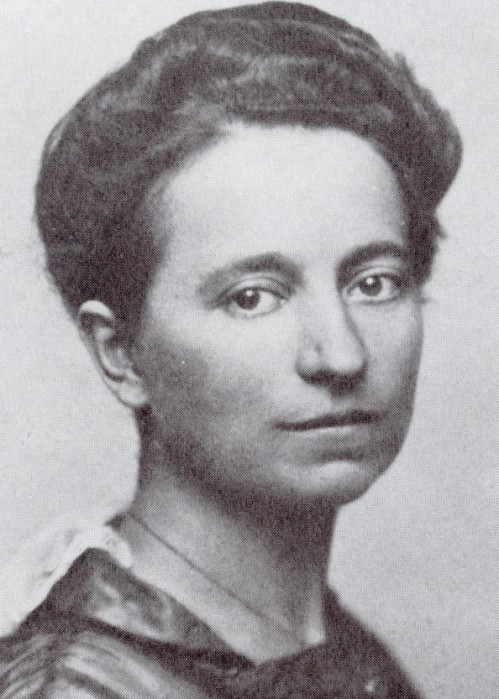
After 1918, state welfare policy was on the rise. The profession of social worker became established. The City of Munich’s School for Social Work was expanded and gained state recognition.
Pictured: The economist Dr Anna Pohlmann-Heim, who took over the running of the school in 1921 following the death of Frieda Dünsing.
1924
On 1 October 1924, teaching began at the newly founded ‘Higher Technical College of the City of Munich’ – initially still in the premises of the Trade School on Pranckhstraße.
1924
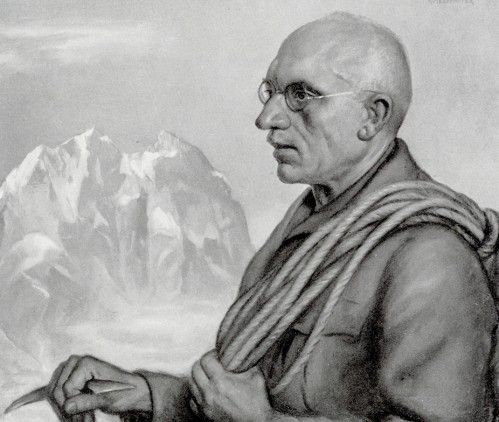
The first director of the “Higher Technical College of the City of Munich” was the engineer and mountaineer Hans Pfann – he held the post from 1924 to 1935. In 1928, he led an expedition to the Andes organised by the German and Austrian Alpine Clubs.
1925
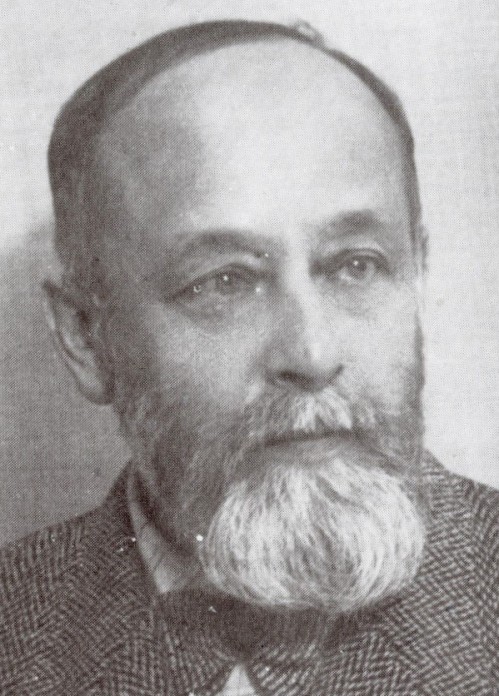
Emil Schweighart had initially worked as a government master builder and architect before joining the School of Building Trades as a teacher in 1910. Between 1925 and 1937, he served as the school’s headmaster.
1926
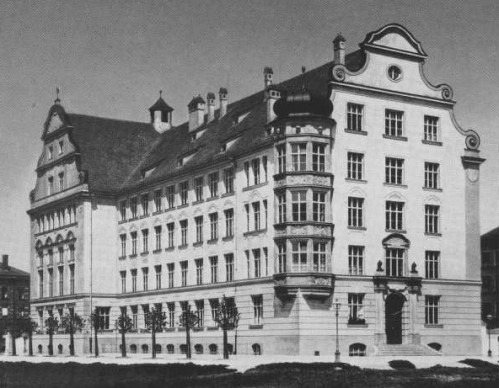
On 20 May, lessons at the “Higher Technical College of the City of Munich” began in a new building at 34 Lothstraße.
1926
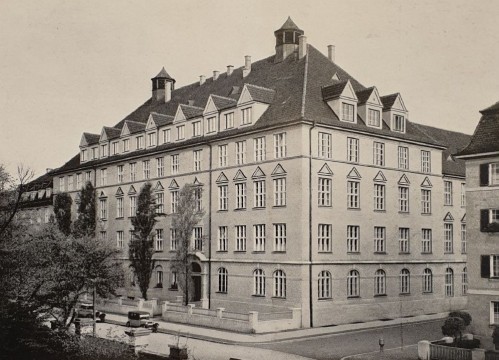
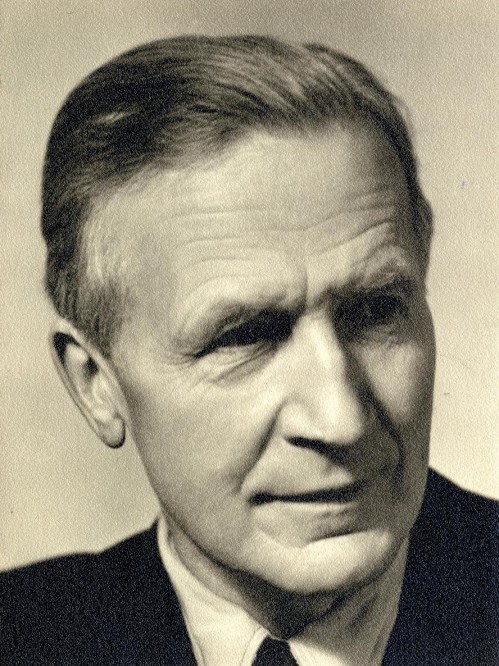
One of the founders of the Municipal Master School for Germany’s Book Printers and its first director was the book designer and typographer Paul Renner (1878–1956). In 1926, he moved to Munich to take up the post of head of the city’s graphic arts vocational schools on Pranckhstraße. He served as director of the Master School from 1927 to 1933.
1927
In the mid-1920s, Renner designed one of the most significant typefaces of his time: ‘Futura’. It embodies the modern requirements of a functional typeface. In the decades that followed, it gained widespread international popularity.
1927
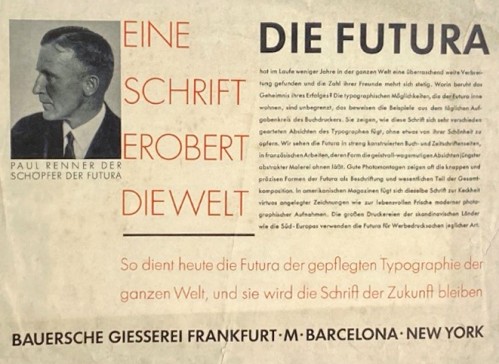
Pupils in the typesetting room of the Municipal Master School for German Book Printers, circa 1929. They are being supervised by teacher Josef Käufer (right). According to his son Erwin Käufer, the room appears fuller than usual because pupils from other classes were also included in the photograph.
Around 1930
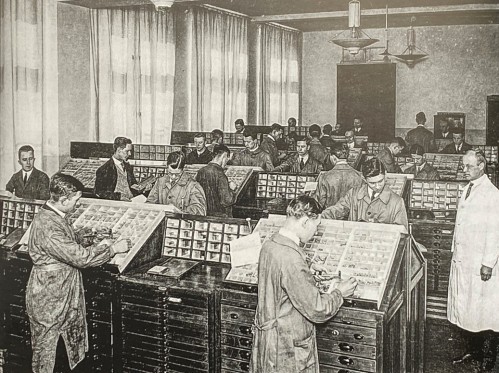
For practical lessons at the “Higher Technical College of the City of Munich”, classrooms equipped with various technical tools were available.
1930
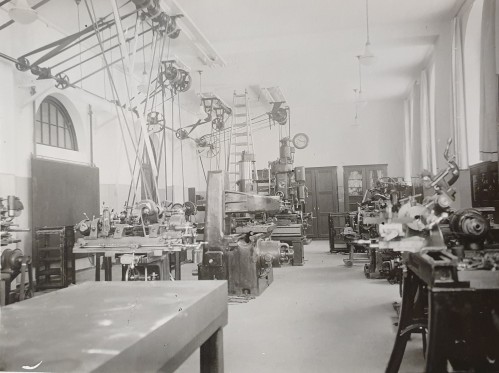
Jan Tschichold (1902–1974) was one of the most influential typographers of the 20th century and a lecturer at the Municipal Master School for German Book Printers. He played a key role in the development and dissemination of ‘New Typography’. After the National Socialists came to power, he was forced to emigrate.
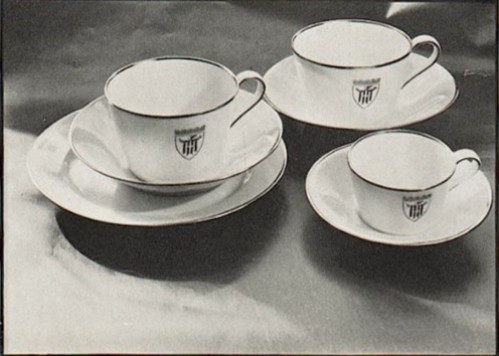
1930
The coat of arms of Munich (shown here: parts of the Ratsservice, 1930) is based on a design by Eduard Ege from 1927. Ege had been working at the Meisterschule since that year. Following some revisions, his design was used for the seals of the municipal authorities in 1932.
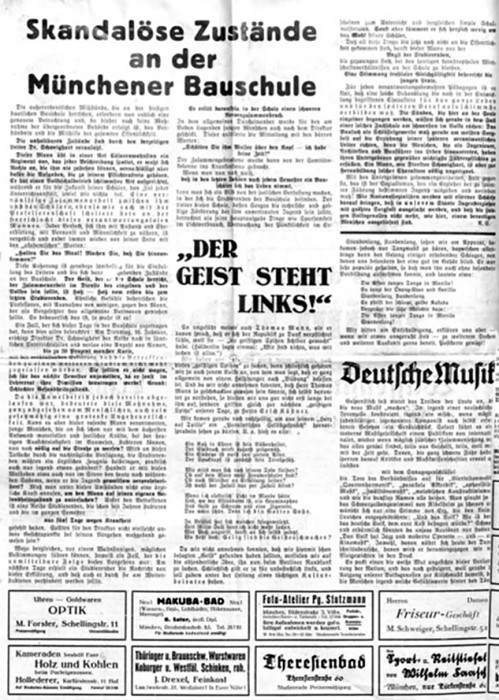
1932
Even before the National Socialists came to power, the pro-Nazi student newspaper *Deutsche Revolution* had been attacking Schweighart’s leadership of the State School of Architecture.
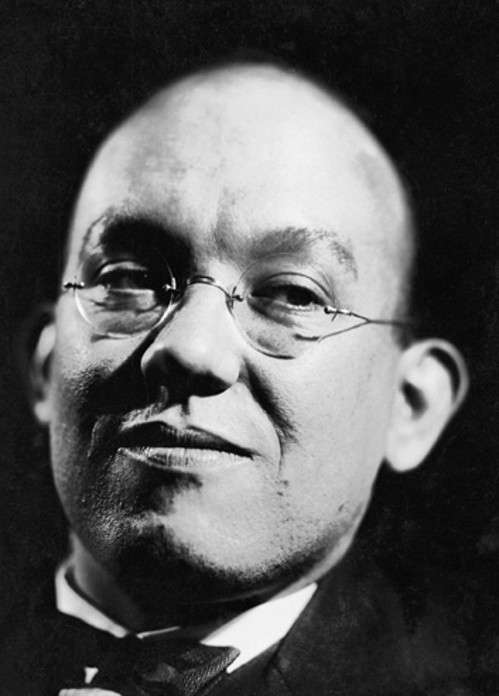
1932
In 1932, Paul Renner published his essay “Cultural Bolshevism?”, in which he criticised the National Socialists’ views on culture and art. The *Völkischer Beobachter* attacked him and defamously labelled him a “cultural Bolshevik”.
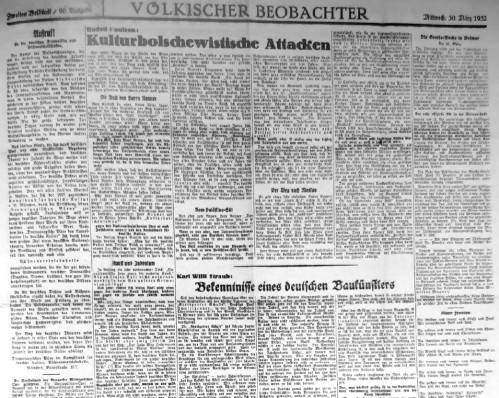
Around 1933
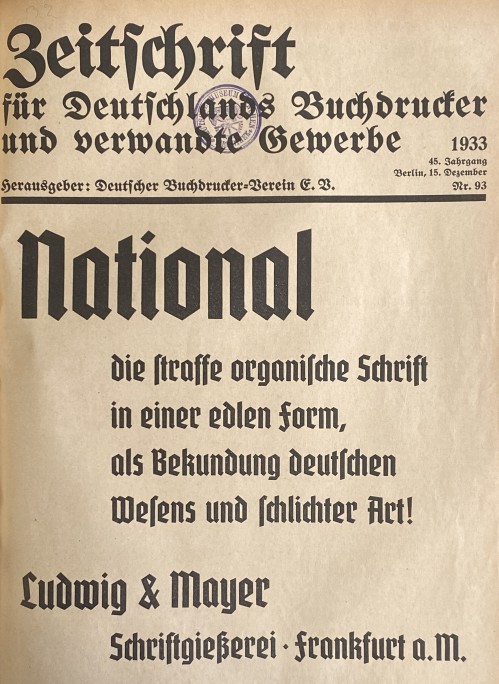
The Nazi seizure of power had an impact on the Meisterschule. Headmaster Renner was dismissed from municipal service, and other teachers were forced out of the school. Typography and the printing industry underwent significant changes after 1933. In contrast to Roman typefaces, Gothic typefaces were stylised as particularly ‘German’ and ‘national’ and co-opted by Nazi cultural propaganda. Fraktur also dominated the Meister School’s curriculum and shaped the school’s printed materials and students’ work in the years that followed.
Pictured: An advertisement for the new Gothic typeface ‘National’ in the journal of the German Book Printers’ Association, which ran the school in partnership with the City of Munich, December 1933.
1934
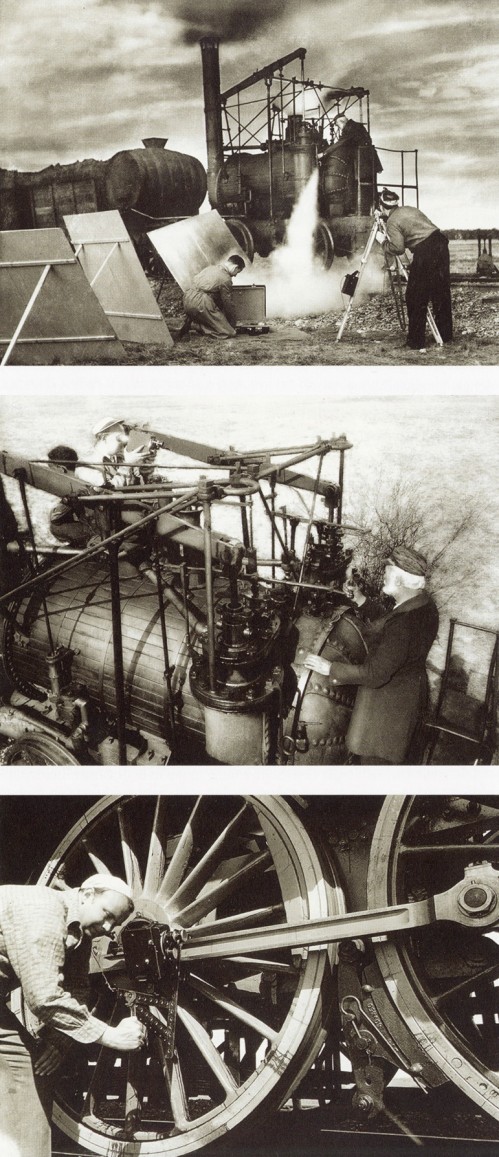
The photography school was innovative in setting up a cinematography department to train camera operators and film projectionists. The most prominent teacher was Willy Zielke, who in 1934 made the film *Das Stahltier* to mark the 100th anniversary of the Reichsbahn. However, the film did not please those in power and was banned.
1936
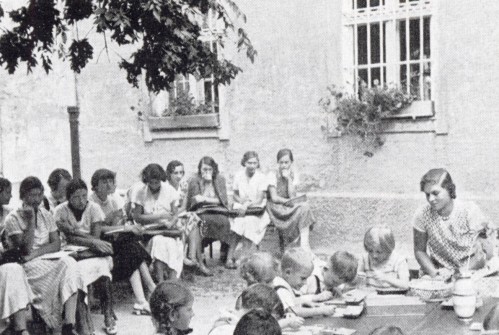
In 1936, the Youth Leaders’ Seminar was established at Hochschule München, marking another precursor to social work. This was a one-year further training course for experienced nursery school teachers preparing them for leadership roles. It was set up at the long-established Munich Municipal Nursery School Teachers’ Seminar.
Pictured: A teaching exercise in the training nursery, circa 1940.
1937
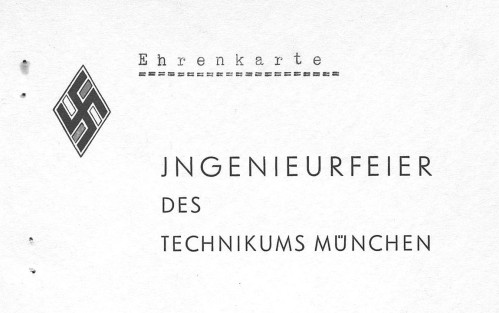
Following the Nazi seizure of power, National Socialist symbolism increasingly came to characterise the image of the ‘Higher Technical College of the City of Munich’. From 1935 onwards, it was headed by a new director: Gebhard Himmler.
1938
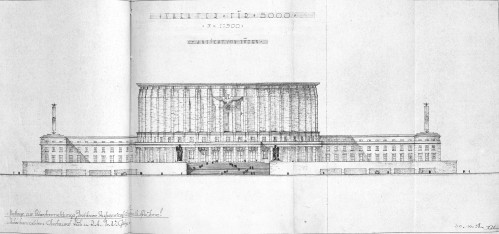
A design for a theatre in Teplitz-Schönau, now Teplice (Czech Republic), drawn up by Wilhelm Käb, a lecturer in teaching at the State School of Architecture. The Nazi symbolism is very prominent.
1940
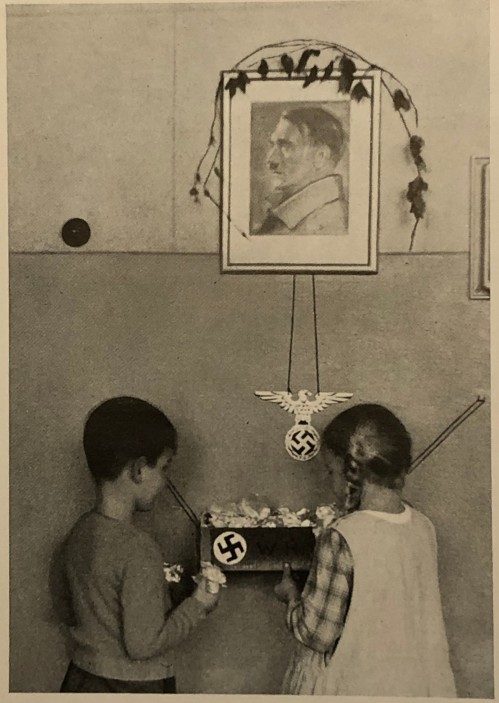
From 1933 onwards, the curriculum at the Social School for Women was reoriented in line with the inhuman aims of National Socialism. Racial hygiene and Nazi educational ideals were introduced. The National Socialist Martha Rehm became the new headmistress.
Pictured: Propaganda photograph from the book *Aus einem deutschen Kindergarten* (From a German Nursery School), published in 1940 by the Munich Municipal Nursery School Seminar.
1942
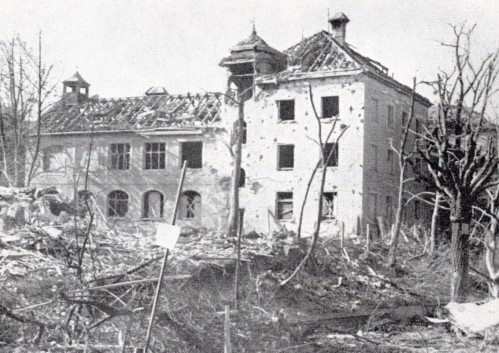
The Social School for Women and the Nursery School Teacher and Youth Leader Seminar shared a school building on Bogenhauser Kirchplatz. In 1942, the school building was badly damaged, and by 1943 it had been largely destroyed. The institutions were forced to move frequently.
1944
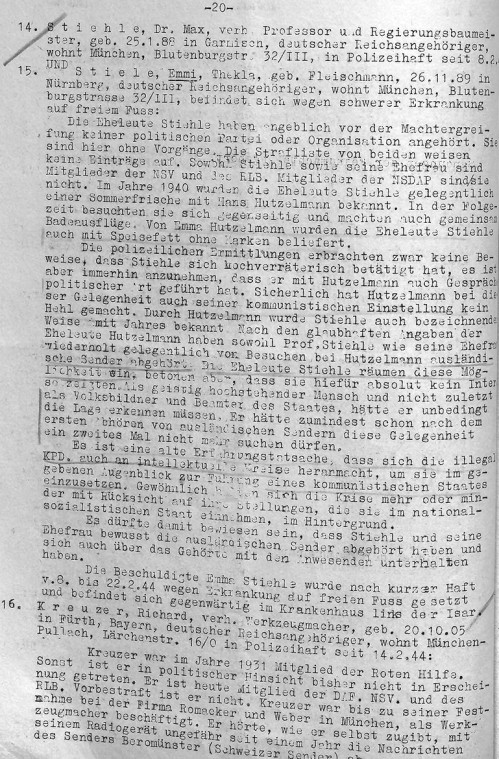
At the beginning of the year, the Gestapo arrested Max Stiehle, one of the teachers at the State School of Architecture, on suspicion of listening to foreign radio stations and plotting “high treason”. After his release from prison, the school only assigned him to menial tasks.
1944
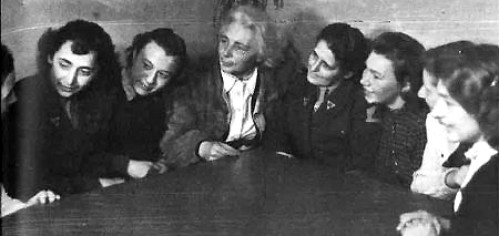
Following the death of the previous director, Maria Urban, in 1944, the running of the nursery school teachers and youth leaders seminar was taken over by the educationalist Elisabeth Zorell. Both were critical of the Nazis, but outwardly went along with them.
Pictured: Zorell with participants in the youth leaders’ training course, 1944/45.
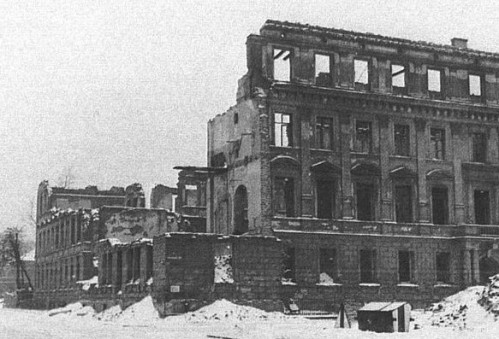
1944
The ruins of the State School of Architecture in the immediate post-war period – following a bombing raid in July 1944 and the subsequent two-day fire, the building was a total write-off.
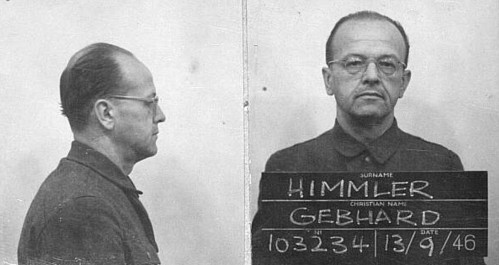
1946
Between 1935 and 1941, Gebhard Himmler, the brother of the ‘Reichsführer-SS’, was director of the ‘Höhere technische Lehranstalt der Stadt München’. After the war, he was called to account for his role in the Nazi regime
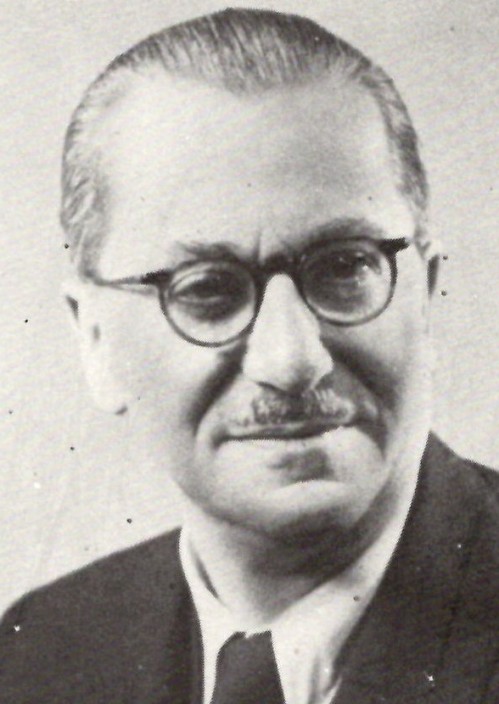
1946
Between 1946 and 1954, Max Stiehle, a victim of Nazi persecution, was the school’s headmaster. He successfully campaigned for the State School of Architecture to become independent from the Oskar von Miller Polytechnic.
1947
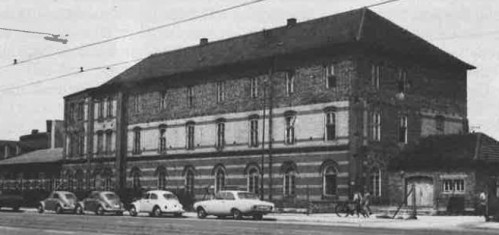
On 14 December 1947, the ‘Oskar-von-Miller Polytechnic’, as the Higher Technical College had been known since 1946, celebrated the topping-out ceremony for the extension at 98 Dachauer Straße.
1949
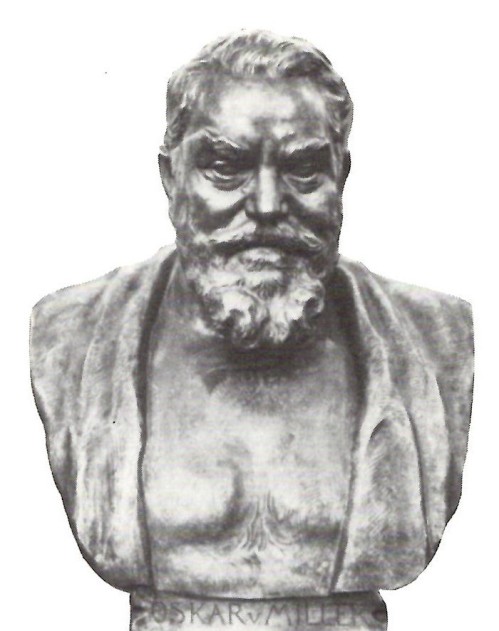
To mark its 25th anniversary, the Association of German Engineers presented the ‘Oskar von Miller Polytechnic’ with a bust of its new namesake, who had been honoured in this way since 1946.
Around 1950
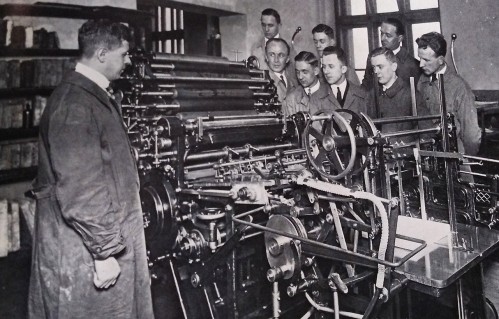
In addition to courses in typography, typesetting and printing techniques, as well as business administration and management, the Municipal Master School for Germany’s Book Printers placed particular emphasis on practical training: students received instruction directly at a printing press.
Around 1950
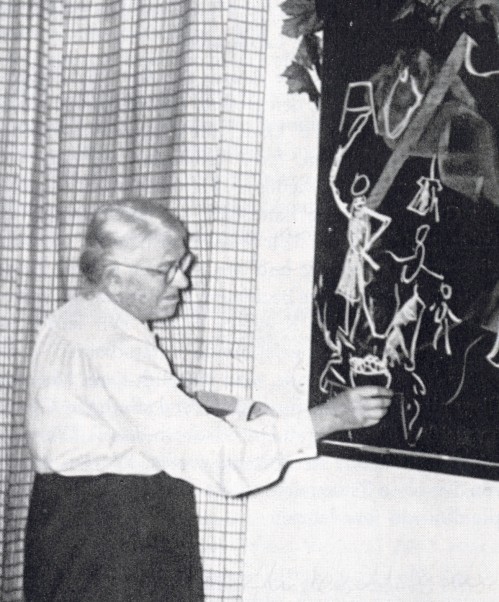
After 1945, Nazi content was removed from the curricula. However, despite her involvement with the Nazis, Martha Rehm remained headmistress of the Social Work School for Women. From the 1950s onwards, discussions on reform led to longer training periods for social work professions and to higher training standards.
1950
In the 1950s, the profession of photography became hugely popular. To mark the photography school’s 50th anniversary, an exhibition featuring the school’s work was organised.
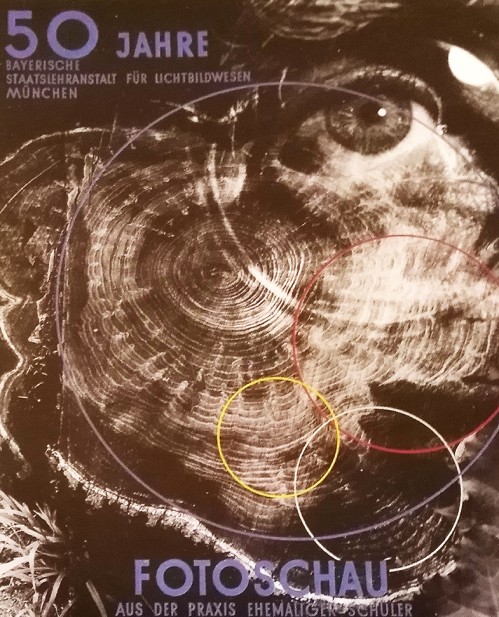
1952
The conductor and composer Joseph Suder (1892–1980) founded the choir and symphony orchestra of the Oskar von Miller Polytechnic. Both ensembles remain cultural institutions of the university to this day and are an integral part of the curriculum.
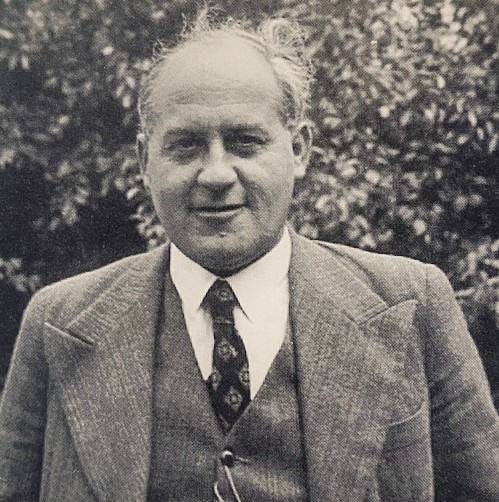
1954
The State School of Architecture moved to new premises at 6 Karlsstraße.
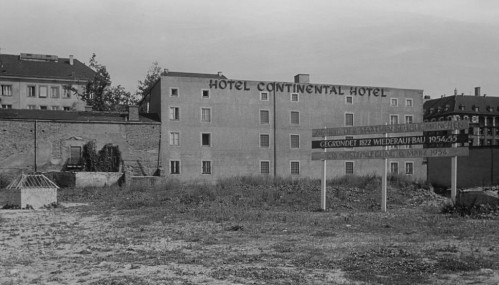
1954
On 6 March, the foundation stone for the new State School of Architecture was laid.
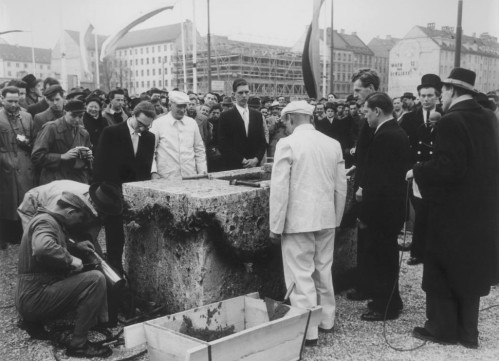
1954
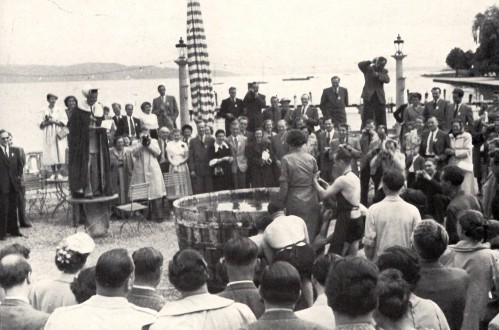
Despite the fact that there was a strong drive towards academicisation at the school, it maintained close ties with the printing trade. The picture shows pupils at the Municipal Master School for Germany’s Book Printers around 1954 during the ‘Gautschen’ ceremony: in this traditional ceremony marking the graduation of printer’s apprentices as journeymen, they are thrown into a tub of water. Although a craft tradition is at the heart of this, the Master School is also an institution of higher education.
1955
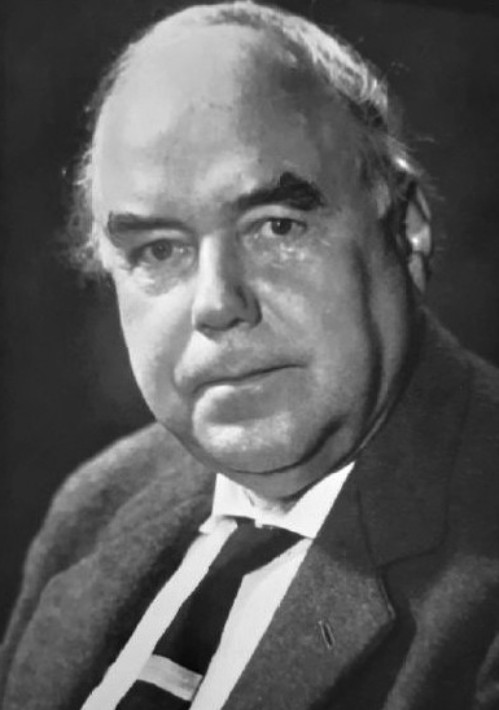
Herbert Post was Director of the Academy of Graphic Arts from 1955 to 1968. The school, which had been upgraded to a Higher Technical College in 1962, sought in the mid-1960s to achieve equality between its own students and those of engineering schools. This eventually led to the introduction of engineering and technical training programmes.
1956
In 1956, the education authorities approved the establishment of a private technical college under the direction of H.-D. Bohne. From 1958, it became a Higher Technical College (abbreviated to HTL). In 1967, following its takeover by a school-sponsoring association, it was renamed the ‘Bohne School of Engineering’.

1957
The new building for the State School of Architecture was officially opened in March – although lessons had already begun there in October 1956.
around 1960
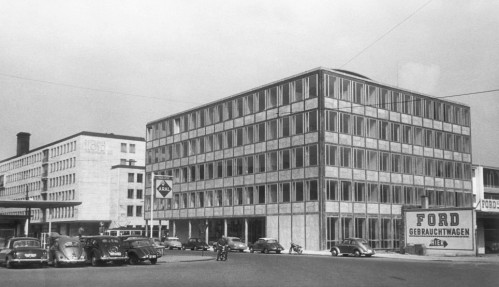
In 1960, the former Social School for Women became the Higher Technical College for Youth and Social Work.
Pictured: New building on Bogenhauser Kirchplatz, 1959/60. All the municipal social schools were brought together here, including the ‘Technical College for Youth Leaders’, which was later also recognised as a Higher Technical College.
Around 1960
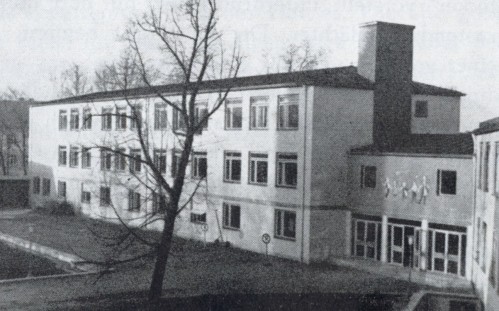
An aeronautical group was affiliated with the Bohne School of Engineering as a society, providing students with practical training in gliding and powered flight. Flights took place in collaboration with the Bad Tölz Flying Club, amongst others.
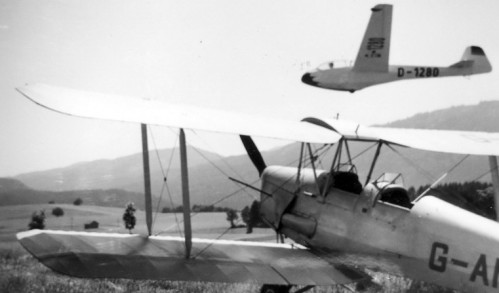
1960
Reverend Günter Hegele was the first student chaplain to look after the forerunners of the university of applied sciences, taking up the post of Chaplain IV at Munich’s Christuskirche on 1 October 1960. The Evangelical Student Community (ESG) has been active ever since. In 1996, it was renamed the ‘Evangelical University Community at the Munich University of Applied Sciences’.
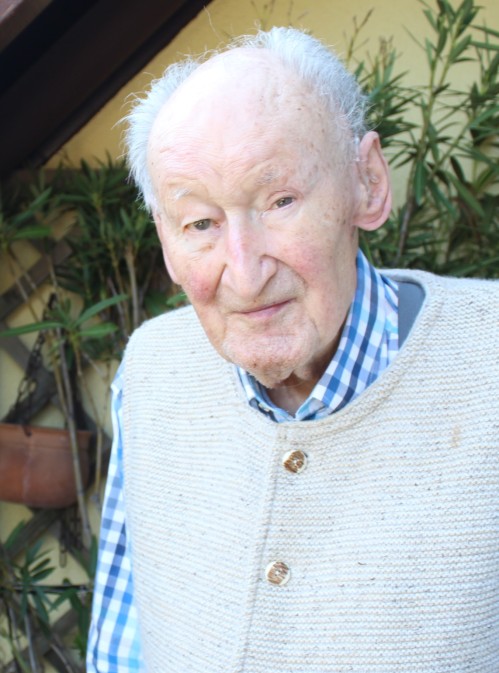
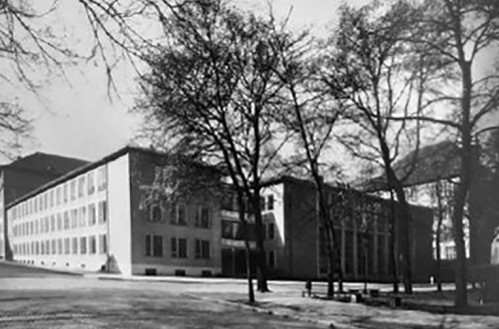
1961
The extension (Building D) of the ‘Oskar-von-Miller-Polytechnikum’ on Ferdinand-Miller-Platz; St Benno’s Church can be seen in the background.

1961
After the teacher training college became a university of education in 1959, students were looked after by student chaplains from November 1961 onwards in the newly opened St. Albertus Magnus House student hall of residence (Avenariusstraße 15). Even back then, the work was largely ecumenical.
Today, students from HM are given priority for accommodation in the halls of residence on the Pasing campus.
Pictured: The building housing the current Department of Applied Social Sciences on the Pasing campus

1965
The laying of the foundation stone for the extension to the “Oskar-von-Miller-Polytechnikum” on Dachauer Straße in September was attended by, among others, Lord Mayor Hans-Jochen Vogel (left).

1965
In 1956, the Municipal Master School for Germany’s Book Printers was upgraded to an academy. Here is the building on Pranckhstraße, which, following lengthy negotiations, finally received a new extension in 1955 and an adjoining connecting building in 1958.
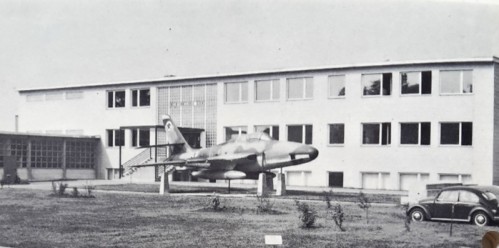
1966
Since 1966, the Bohne School of Engineering had been housed in a new building in Aubing. On the grounds, in front of the entrance – effectively its landmark – there was also a jet aircraft that had been supplied and assembled by the German Armed Forces.
1967
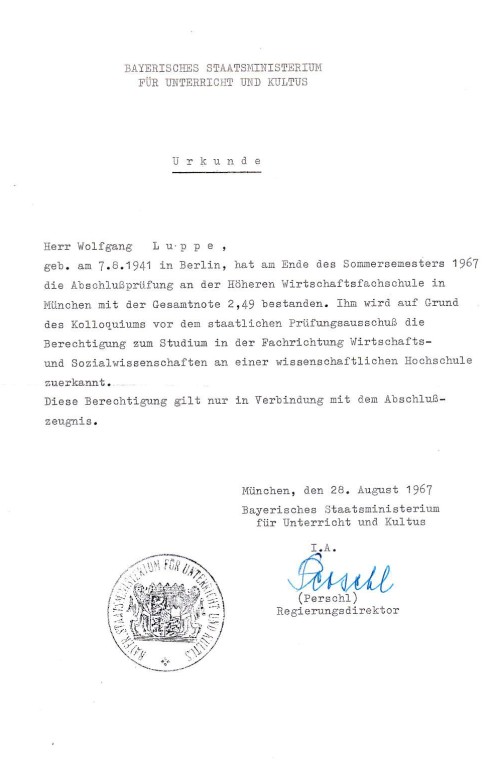
As an institution offering alternative education, it was also possible to progress to university via the Higher School of Economics. To do so, students had to pass an oral examination before a state examination board.
1968
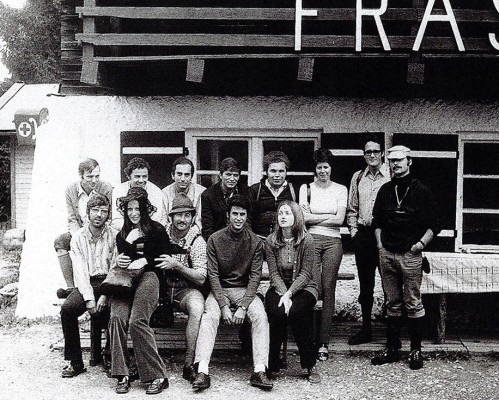
In the 1960s, the proportion of female students at the Higher School of Economics ranged between 6 and 8 per cent. The photograph shows students from a year group at the Higher School of Economics in front of a mountain hut in Frasdorf.
1968
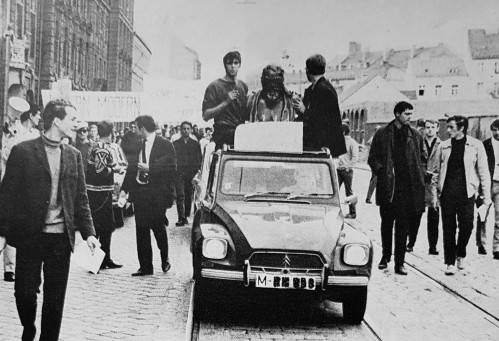
During one of their protests against the reform of engineering schools, students from the Polytechnic carried Miller’s bust with them.
1968
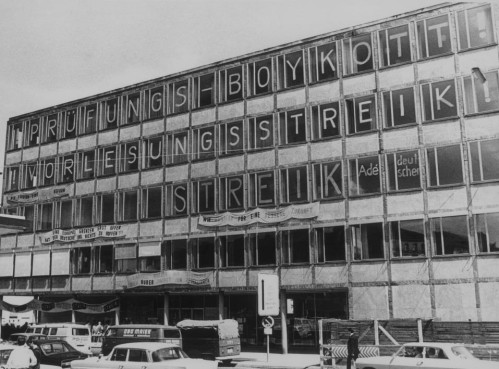
On 10 June 1968, students at the State School of Architecture began a boycott of lectures and examinations. This continued until November of the following year.
Around 1970
The origins of the Catholic University Community (KHG), as it still exists today, date back to 1970. Since then, its premises have been located in the then newly built Roncalli College, which was intended exclusively for students at the state engineering schools. Its chaplain, Father Richard Freiherr von Aretin, held the dual role of both the first director of the Roncalli College and chaplain, and thus head of the KHG, which subsequently became the KHG at the university of applied sciences.
1971
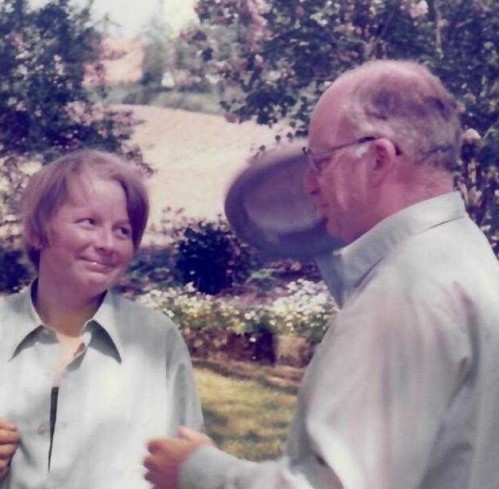
The Munich University of Applied Sciences (FH) was founded in 1971 from
- Munich State School of Architecture – Academy of Construction Technology
- Oskar von Miller Polytechnic of the City of Munich – Academy of Applied Technology
- Bohne School of Engineering
- Munich College of Economics
- Higher Technical College for Youth and Social Work
- City of Munich College of Social Pedagogy
- Department of Commercial Art at the Academy of Graphic Arts
1971
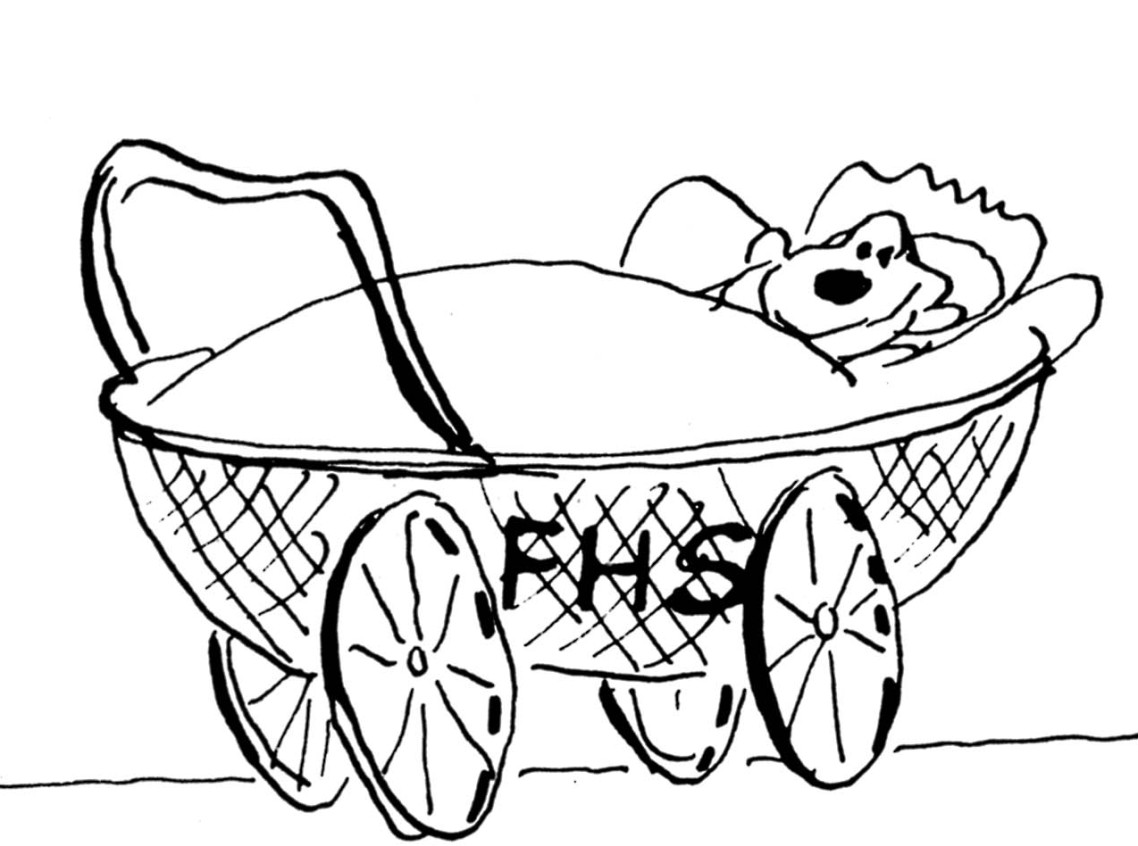
The founding president of Munich University of Applied Sciences (FH) is Dr Karl Hammer, who was previously director of the Oskar von Miller Polytechnic.
1971
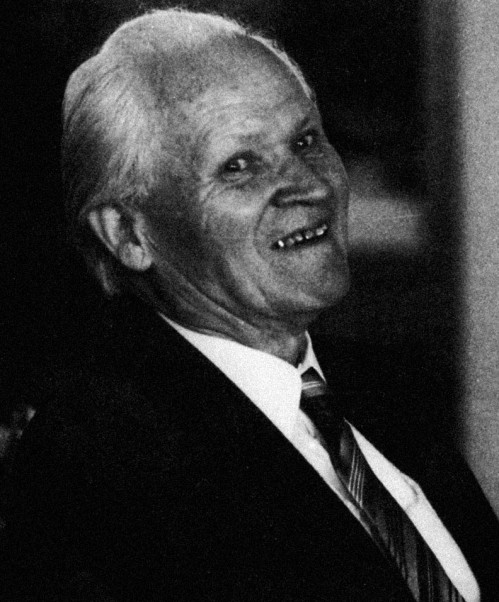
Munich University of Applied Sciences has organised the 23 departments of its predecessor institutions into 23 subject areas. The degree programme comprises eight semesters, including two practical semesters integrated into the course.
In the winter semester of 1971/72, Munich University of Applied Sciences began teaching with 1,295 students in the first semester and 4,692 students in higher semesters. A total of 5,987 students were enrolled, in:
- Technology: 4,961
- Economy: 521
- Social services: 413
- Design: 92
1973
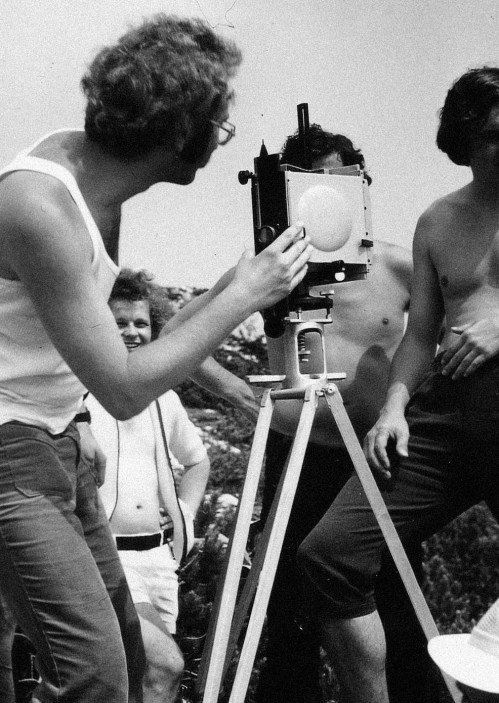
For the first time, practical semesters are being introduced in companies outside the university. In the higher education sector, practical semesters are currently only available at universities of applied sciences.
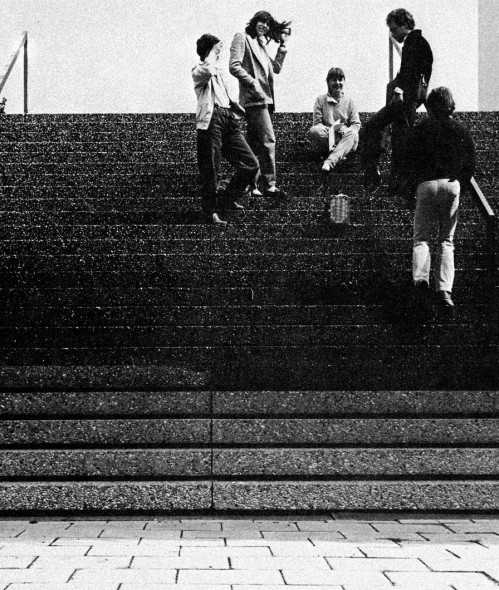
1974
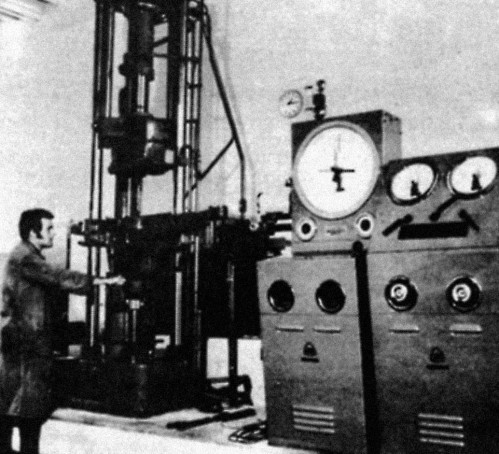
The Council of Munich University of Applied Sciences resolves to establish a library as a central facility in the auditorium of the former Oskar von Miller Polytechnic at 34 Lothstraße, as well as a computing centre. Central maintenance workshops are to be equipped.
Pictured: Materials Testing Laboratory
1975
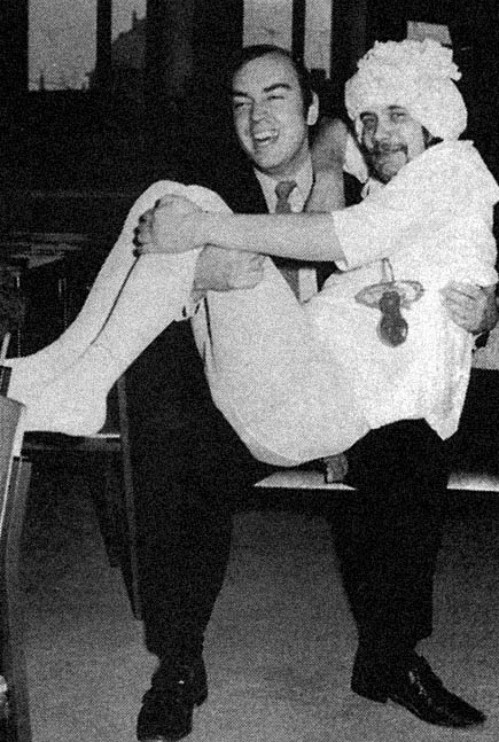
Uwe Brockhausen has been appointed Registrar of the university of applied sciences in Munich.
1975
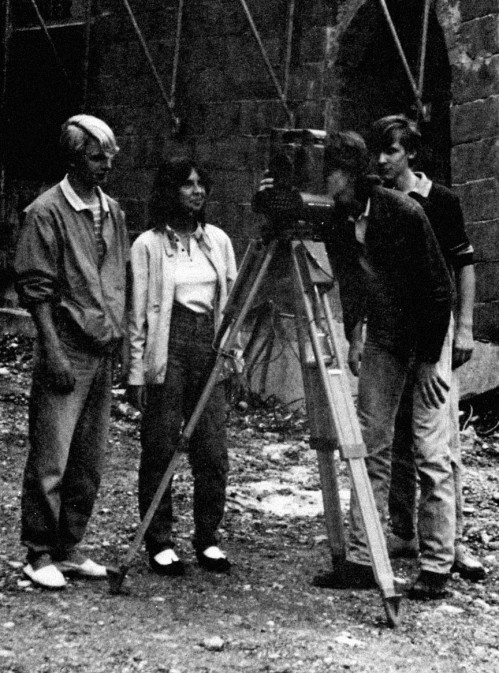
The first students to have completed a full degree programme at Munich University of Applied Sciences are sitting their final exams.
1975
The numerus clausus is being introduced for the subject areas of Social Work and Business Administration, as well as for the Cartography programme within the Department of Surveying.
1976
Prof. Dr Walther Keßler is taking up the post of President of the University of Applied Sciences in Munich.

1978
Following the amendment to the Bavarian Higher Education Act, universities of applied sciences are permitted to carry out ‘application-oriented development work’.
1979
The university of applied sciences is getting its own logo.

1980
A post dedicated to supporting international students is being created within the Student Advice Centre.
1980
Universities of applied sciences will be granted the right to award diplomas to their graduates and to award diplomas retrospectively to all alumni of the predecessor institutions.
1980
The Bavarian Senate visits Munich University of Applied Sciences and documents the appalling learning, teaching and working conditions.
1981
Around 10,000 students are enrolled at Munich University of Applied Sciences.
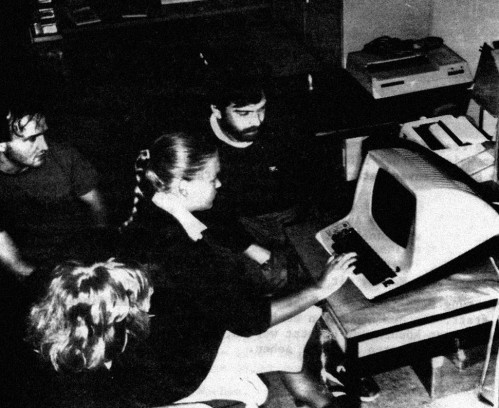
1984
Munich University of Applied Sciences has strong regional roots: 88 per cent of its students come from Bavaria, with 31 per cent from the Greater Munich area, 34 per cent from the rest of Upper Bavaria and 23 per cent from the rest of Bavaria. Eight per cent come from other federal states within Germany and 4 per cent from abroad.
1984
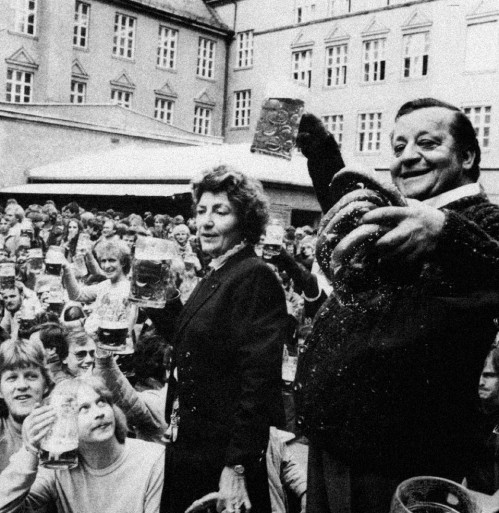
Edi, the ‘Graddler landlord’ – the ‘hub of student life’ – is celebrating his twentieth anniversary as a canteen landlord with the students.
1985
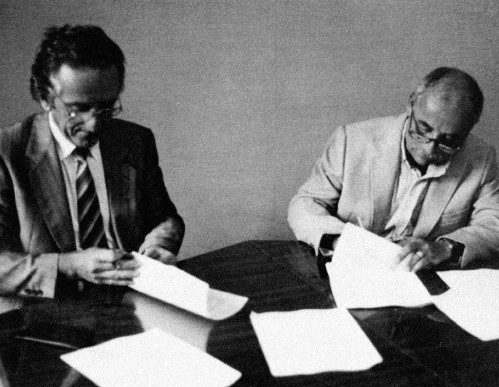
Establishment of the “International Office”. President Keßler (right) and Director Laget formalise the partnership between Munich University of Applied Sciences and the École Supérieure de Commerce de Pau in France.
1985
Following many years of consultancy work, a ‘Technology Transfer Office’ is being established at Munich University of Applied Sciences.
1987
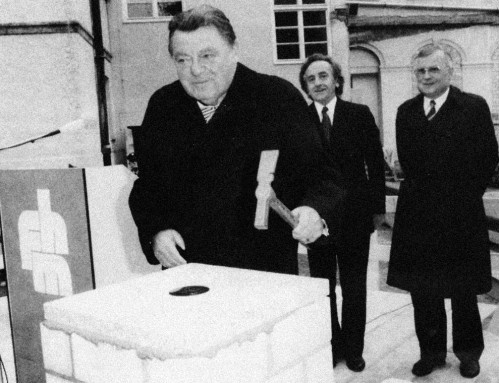
The foundation stone for the extension buildings on Lothstraße (Buildings G and H) was laid by Minister-President Franz Josef Strauß. Students disrupted the ceremony with chants “against the enemy of education” (background: a shortage of space and staff at the university of applied sciences in Munich). Some students were taken into police custody.
The laying of the foundation stone marks the start of the expansion to 7,000 student places. A lecture theatre and laboratory building for the engineering department will be constructed on Loth-/Loristraße, with the Library and canteen opposite.
1989
The first Women’s Representative at the Munich University of Applied Sciences has been elected: Prof. Dr Ursula Schrag has stated that her aim is “to improve access opportunities for qualified women in teaching and to encourage young women to take up higher education, particularly in technical subjects.”
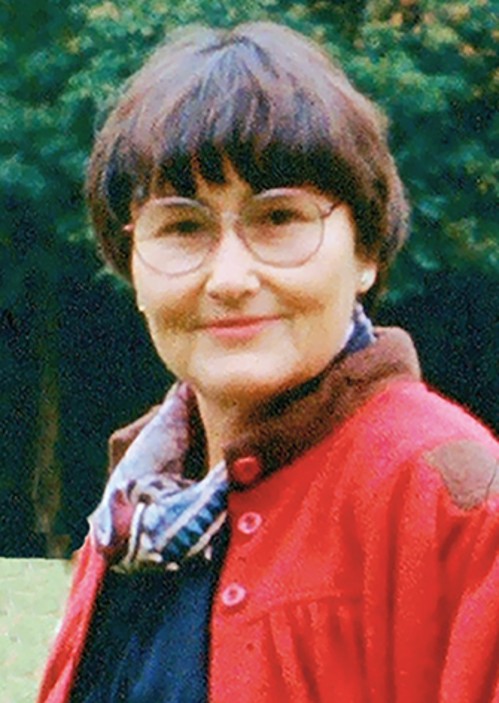
1990
Keßler, President of the University of Applied Sciences, is threatening Hans Zehetmair, the Minister for Education and Cultural Affairs, with a “demonstration by professors and students” outside the State Chancellery, because the minister described Munich University of Applied Sciences as a “moloch” from which “nothing can be salvaged.”
1990
Universities in Bavaria are establishing partnerships with universities in Saxony. Hochschule München has signed a partnership agreement with Mittweida University of Applied Sciences, which is continuing as a pilot project for universities of applied sciences in the eastern part of the Federal Republic of Germany.
Pictured: the new building at 34 Lothstraße.
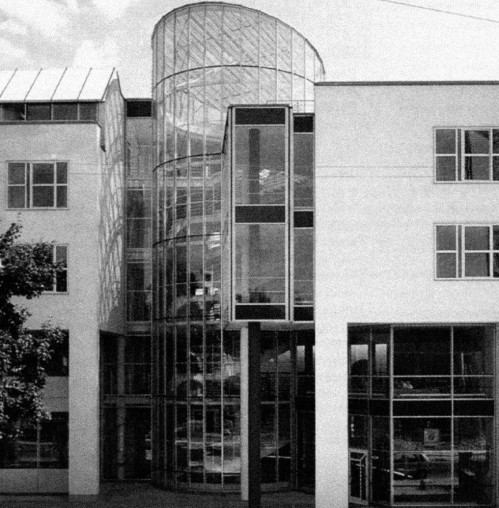
1991
The Munich University of Applied Sciences appoints Dr Wilhelm Wimmer, Chief Executive of the Chamber of Industry and Commerce for Munich and Upper Bavaria, as its first honorary professor (background: the 1989 revision of the Bavarian Higher Education Act).
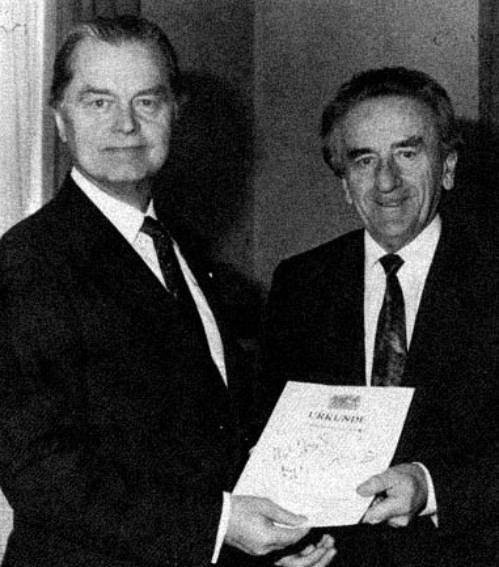
1992
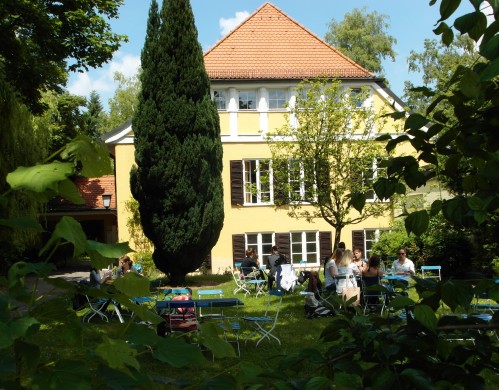
Merger of the two departments of the Social Work subject area in Aubing and Bogenhausen at the Pasing campus.
The Catholic and Protestant University Community at the Pasing Campus was established in 1992 for the departments of the university of applied sciences and was based at Paosostr. 10 (the PAOSO). Once the tenants had moved out, the three flats in the villa were let to students at the Pasing Campus.
Toni Maier (1992–2011) was the Catholic chaplain, whilst Joachim Zuber was the Protestant student chaplain based at Loristr. 1. Between 1992 and 1997, he also helped to lead the EHG on the Pasing campus and remains involved with the EHG on the city centre campus to this day.
From 1997 to 2021, Jutta Lang served as the Protestant student chaplain in Pasing.
Hans Klug succeeded Toni Maier and has been the Catholic university chaplain in Pasing since 2011.
(View of the building from 2014)
1993
Minister for Education Hans Zehetmair states that Bavaria’s universities of applied sciences have “become a distinctive and indispensable part of the higher education landscape.”
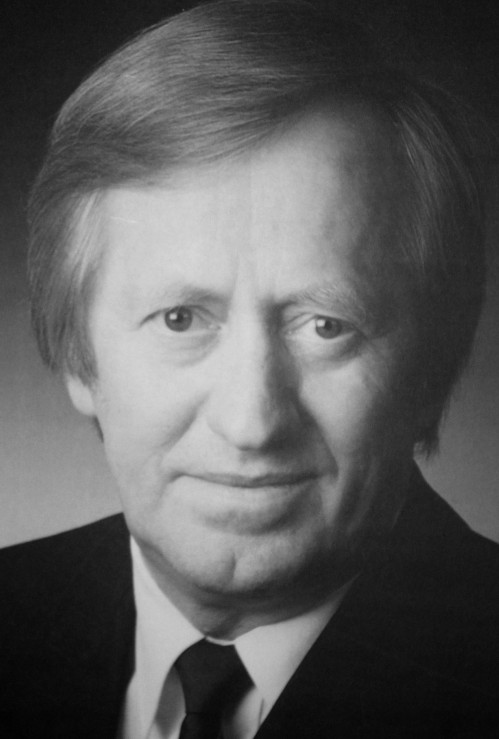
1994
After 18 years in office, Prof. Dr Walther Keßler is to be succeeded by Prof. Gerhard Röhrl as President of the university of applied sciences in Munich.
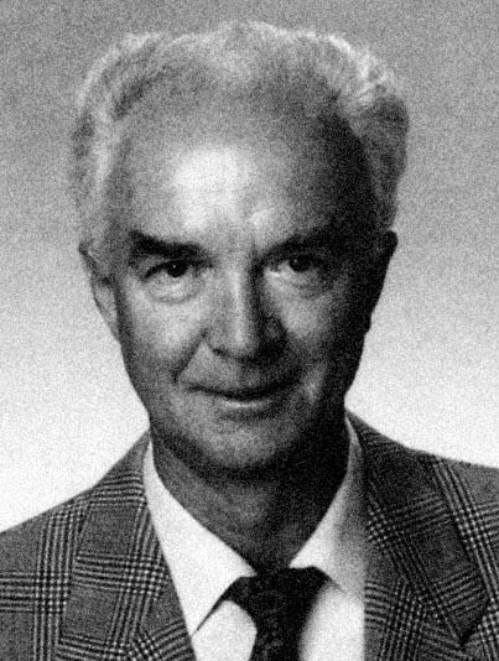
1995
The Friends and Supporters Association of Munich University of Applied Sciences is being established with the aim of supporting application-oriented education and research and enhancing the performance of Munich University of Applied Sciences.

1996
Munich University of Applied Sciences has decided to introduce a machine-readable evaluation form for student feedback on courses.
1996
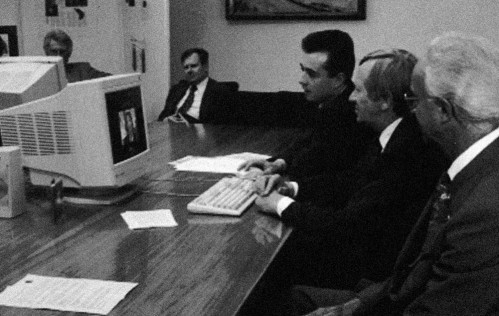
The new CD-ROM from the University of Applied Sciences in Munich is being tested by, among others, Minister for Education and Cultural Affairs Hans Zehetmair.
1996
With a ceremony attended by numerous representatives from the worlds of politics, business and academia, Munich University of Applied Sciences is celebrating its 25th anniversary at Lothstraße 34.
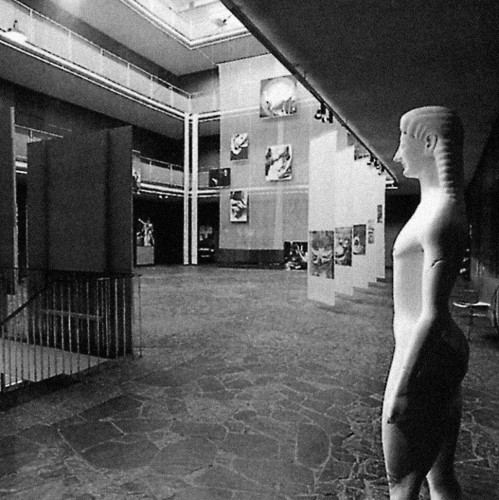
Pictured here is the ‘Gesten’ exhibition at the FHM Cultural Forum on Karlstraße.
1997
Start of the annual info session, the ‘Open Day’, for school pupils.
1997
http://www.fh-muenchen.de: Munich University of Applied Sciences and its subject areas present themselves online.
1998
“Standing on our own two feet”: Munich University of Applied Sciences aims to become a model institution for all Bavarian universities of applied sciences and has applied to the Ministry of Science to be converted into an autonomous “state-owned enterprise”, thereby laying the groundwork for the establishment of a modern university management system with financial autonomy (a unified budget).
1998
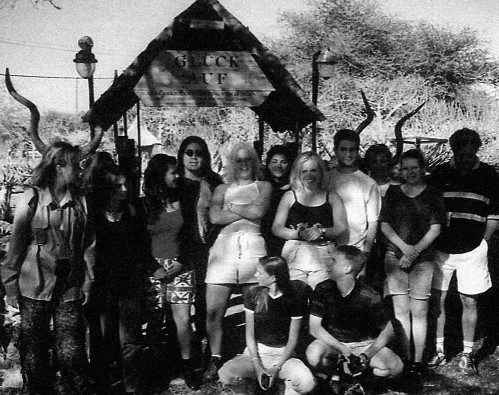
Tourism students on a field trip in Namibia
1998
Following a decision by the German Rectors’ Conference, universities of applied sciences may use the designation ‘University of Applied Sciences’.
2000
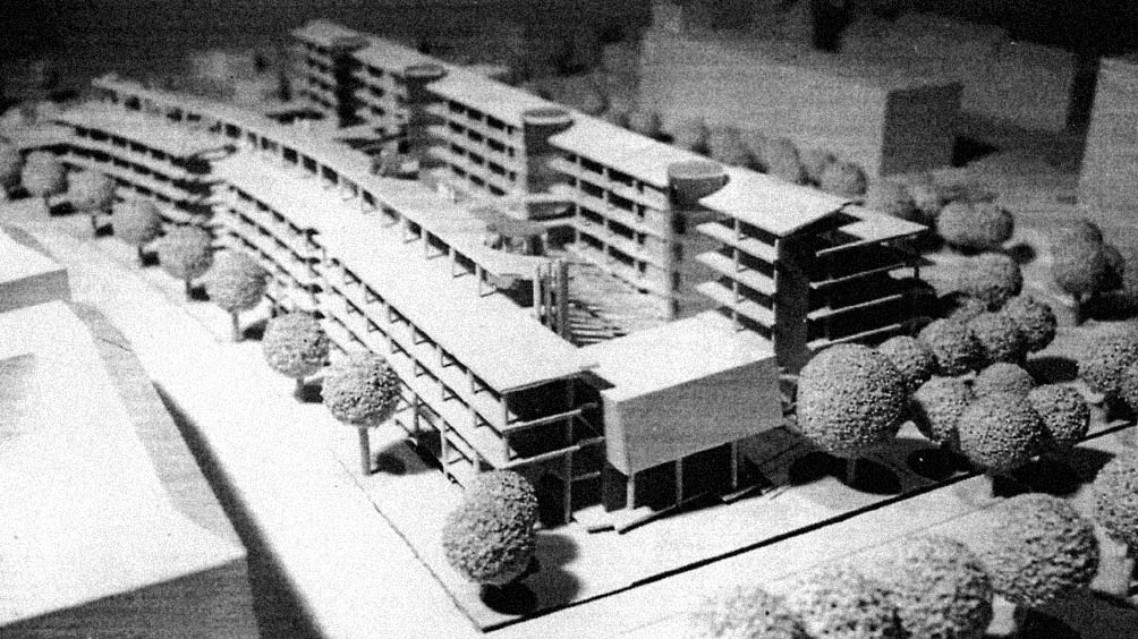
A new building project for Hochschule München is being presented.
2000
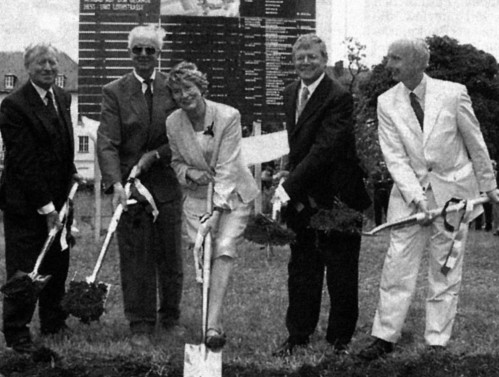
Funded by the Bavarian High-Tech Initiative, the ground-breaking ceremony has taken place for the largest construction project in the history of Bavaria’s universities of applied sciences: the new engineering building on Loth-/Heßstraße.
2000
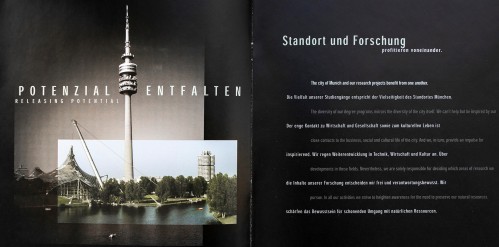
Munich University of Applied Sciences has adopted a mission statement.
2000
The first master's degree programme in Electrical Engineering, leading to a Master of Science qualification, has been approved.
2000
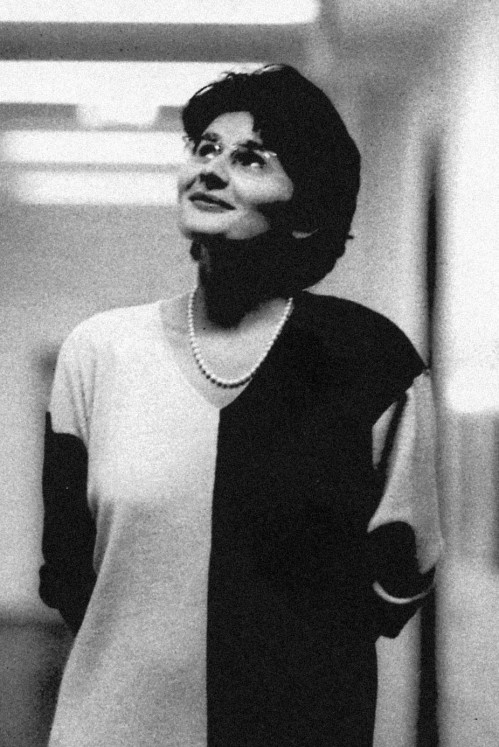
Prof. Dr Marion Schick has been elected President of Hochschule München. She is thus the first woman to head a Bavarian university of applied sciences.
2001
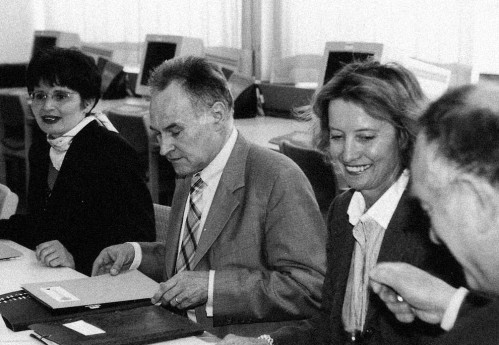
With well over 50,000 alumni to date, Munich University of Applied Sciences has been making a significant contribution to progress in Bavaria, a leading centre for high-tech innovation, for 30 years. Under the patronage of Minister of State Erwin Huber, the Information Technology Initiative Group is founded.
2002
Falk F. Strascheg is establishing the Strascheg Center for Entrepreneurship (SCE) at Munich University of Applied Sciences. With an endowment of 7.5 million euros, it is the largest endowment ever established at a Bavarian university of applied sciences.
2002
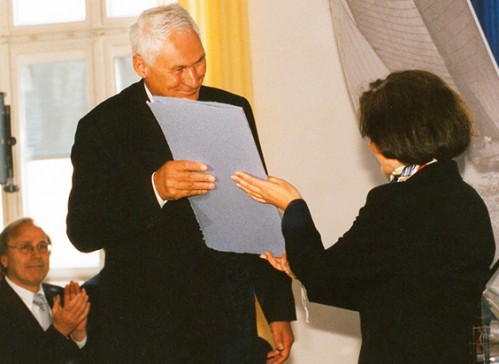
The Centre for Higher Education Development (CHE) has named the University of Applied Sciences Munich the ‘Best Practice University 2002’

2002
The State Academy of Photographic Design is to be integrated into the subject area of Design.
2002
Munich University of Applied Sciences has unveiled a new corporate identity. With its dialogue- and news-oriented portal, the university’s new website is setting a new standard in the higher education sector.
2003
The Chinese Minister of Education, Zhou Ji, is visiting Munich University of Applied Sciences; the People’s Republic of China intends to adopt the Bavarian model for universities of applied sciences.
2005
2005
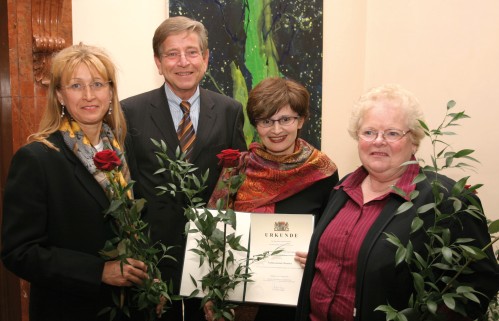
The Ministry of Science has awarded Munich University of Applied Sciences first prize for the most compelling “university concept for fulfilling the mandate on gender equality”.
Pictured are the Women‘s Representatives Prof. Dr Huber-Jahn (left) and Prof. Dr Hueglin (right), Minister of State Dr Goppel and President Prof. Dr Schick at the Equality Award ceremony
2005
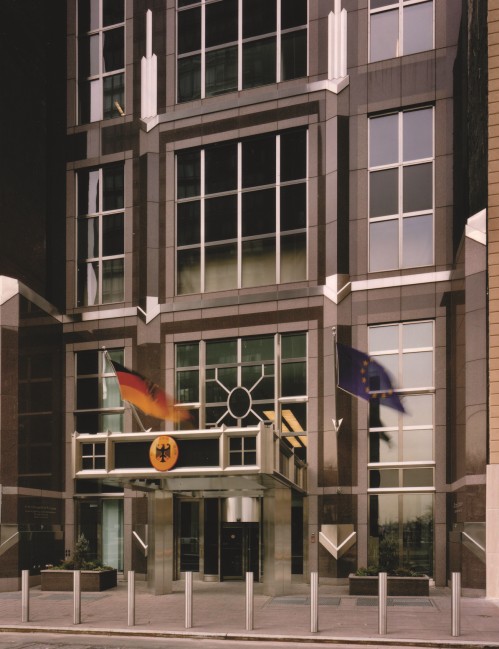
Globalisation is gaining momentum: through UAS7, Munich University of Applied Sciences is opening a liaison office in New York in collaboration with six other German universities of applied sciences.
Pictured here is the UAS7 office in German House, New York.
2007
After more than 35 years as Munich University of Applied Sciences, the 2007/08 winter semester marks the start of a new era for the University of Applied Sciences (HAW) – Hochschule München, or Hochschule München for short.

2008
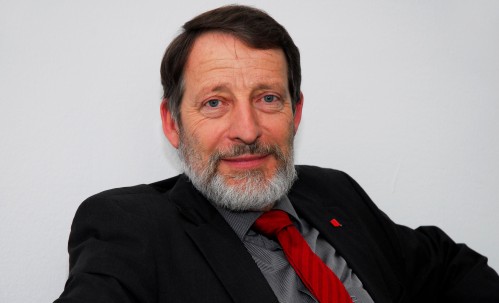
Prof. Dr Michael Kortstock is to become the new President of Hochschule München (HM).
2009
Hochschule München now also allows applicants with relevant professional experience but without a school-leaving certificate to enrol on a subject-specific degree programme.
2010
Students are electing the first Student Parliament. The reorganisation of student representation will help to address students’ concerns more effectively.
2010
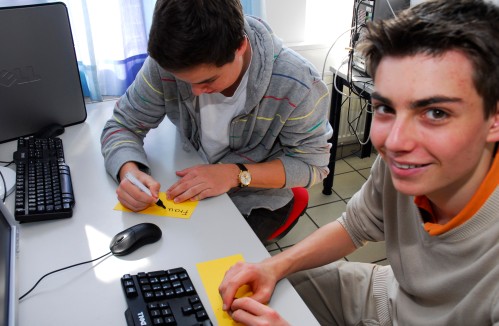
The university is hosting its first Boys’ Day. The Department of Applied Social Sciences will be providing school pupils with information about careers in the social sector.
2011
Hochschule München has achieved success in the EXIST competition, a funding programme run by the Federal Ministry for Economic Affairs and Energy. As one of three German universities, it is entitled to use the title ‘EXIST Start-up University’.

2011
Along with nine other Bavarian universities, Hochschule München is celebrating its 40th anniversary.
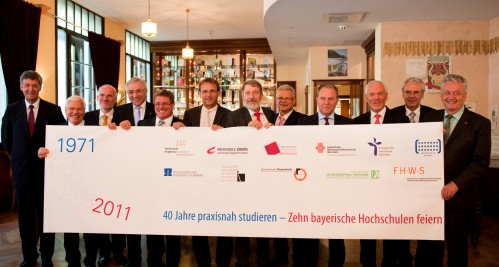
2011
On 9 November 2011, the first 46 high-achieving and committed students will celebrate their acceptance onto the Deutschlandstipendium (Germany scholarship) at HM together with their sponsors.
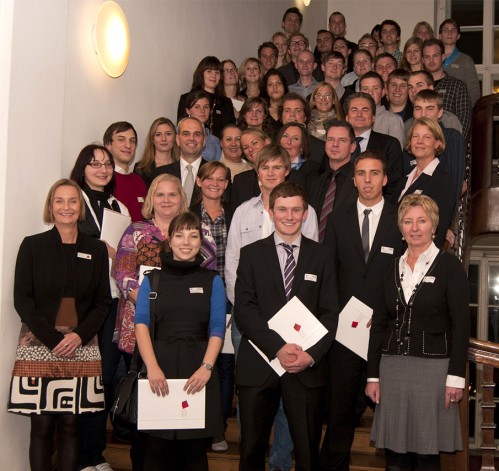
2011
In a joint project between Munich University of Applied Sciences and Ingolstadt University of Applied Sciences, the ‘Open University of Upper Bavaria’ concept won the BMBF competition ‘Advancement through Education: Open Universities’. A direct result of this is the Centre for Continuing Education at Hochschule München.
2012
Networking and research: Hochschule München is successfully participating in the Excellence Initiative at the Technical University of Munich. In addition, the two universities are launching their first joint research training group on ‘Building Services Engineering & Energy Efficiency’.
2012
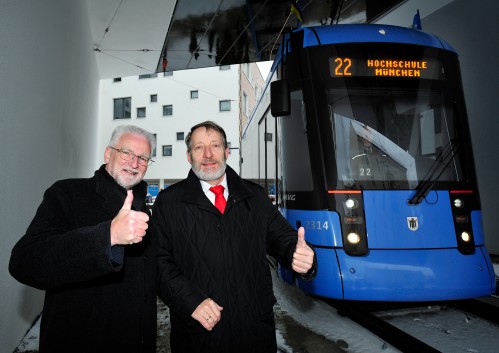
The tram stop at the Lothstraße campus is being renamed ‘Hochschule München (Lothstraße)’.
Pictured: MVG Director Herbert König and President Prof. Dr Michael Kortstock (right).
2012
The ZUG project – Equipped for the Future – is receiving €7 million in funding from the BMBF.
2013
Following years of negotiations and several votes, the term ticket is being introduced.
2013
With almost 900 students on dual study programmes, Hochschule München is the leader in dual study programmes among universities of applied sciences in Bavaria.
2013
Hochschule München, together with the SCE (its entrepreneurship centre), has taken first place in the ranking of start-up support at German universities. This is confirmed by the “Gründungsradar” study conducted by the Stifterverband der Deutschen Wissenschaft.

2014
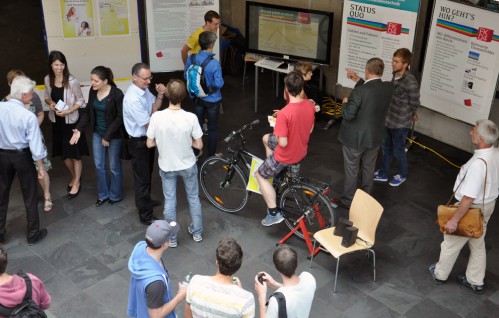
Students from all 14 departments are presenting solutions to the technical, economic and social challenges of the future at a ‘Future Fair’. In a ‘World Café’, they are gathering ideas for the university’s future direction.
2015
Through the Bavarian Science Forum (BayWISS), universities and universities of applied sciences aim to create a platform for collaboration between the two types of higher education institution. The joint PhD programme is designed to remove barriers for graduates of universities of applied sciences.
2015
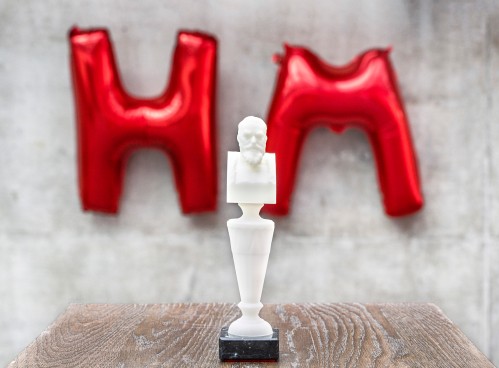
For the first time, Hochschule München will be presenting ‘Oskars’ at its Oskar von Miller ceremony to recognise outstanding academic achievements as well as excellence in Teaching and research. Companies can also receive an ‘Oskar’ in recognition of their special commitment to the university.
2016
Hochschule München ranks highly in the rankings published by *Wirtschaftswoche*, the international *U-Multirank* and the *University Employability Ranking* by *Emerging*.
2016
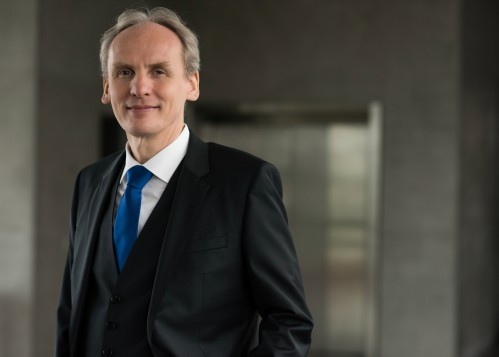
Prof. Dr Martin Leitner has been elected as the new President of Hochschule München.
2016
The “ZUG – Ready for the Future” project is receiving a further €10 million in funding from the BMBF.
2017
The student racing team municHMotorsport is unveiling its first driverless vehicle.

2018
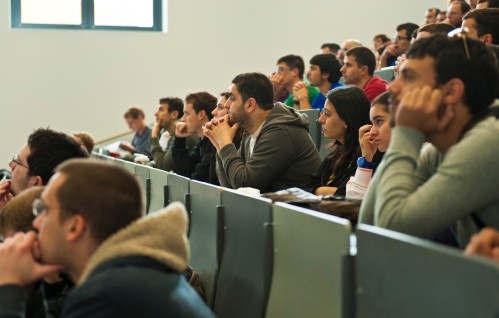
18,400 students: Hochschule München has more students than ever before.
2018
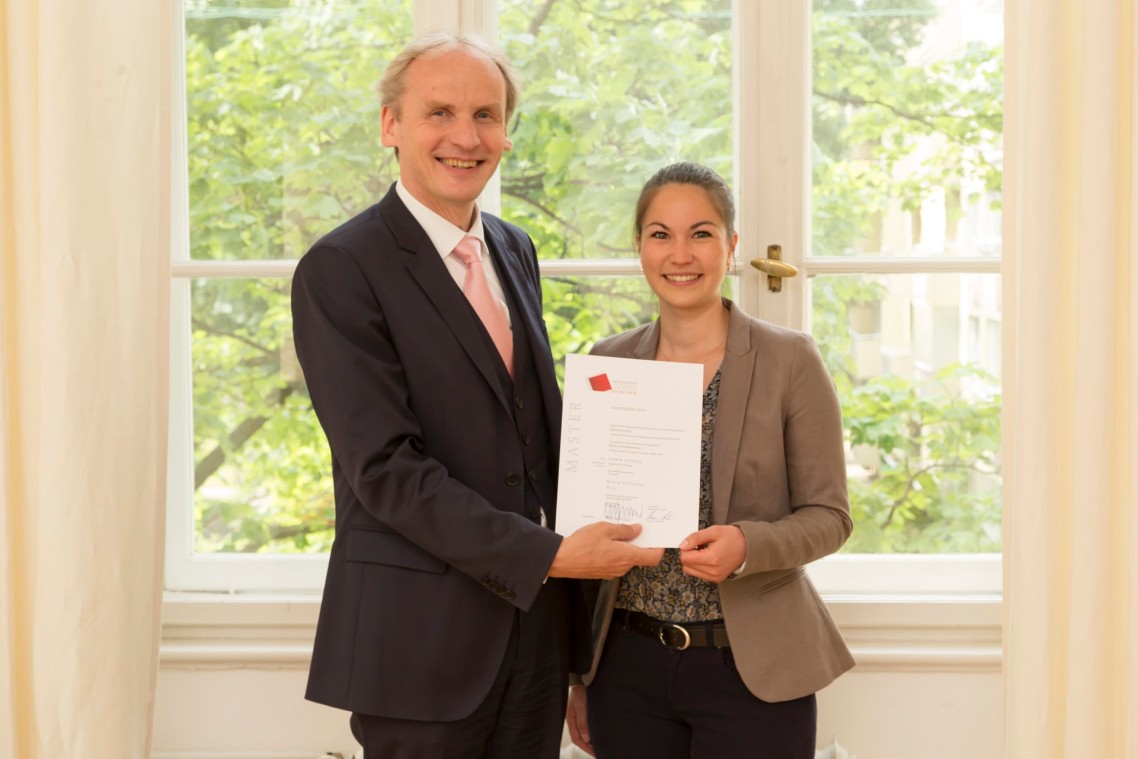
Graduates of Hochschule München work in many Bavarian firms, as well as in European and international companies. Jutta Schürba is the 100,000th graduate; she has successfully completed her Master’s degree in Electrical Engineering.
2019
EXIST Potentiale start-up competition: Hochschule München and SCE have once again achieved success in the field of entrepreneurship.

2019
Hochschule München is establishing three cross-faculty research institutes: IMB, ISES and CENERGIE.
2020
Due to the coronavirus pandemic, most teaching at Hochschule München is taking place online.

2020
The fourth inter-faculty research institute is being established: Institute for Applications of Machine Learning and Intelligent Systems (IAMLIS).
2020
To expand its research activities, Hochschule München is to receive a total of over 50 non-teaching professorships as part of the Bavarian High-Tech Agenda.
2020
The new MUC.DAI interdisciplinary school – the Munich Centre for Digital Sciences and Artificial Intelligence – is developing interdisciplinary degree programmes that combine specialist knowledge with the challenges of the digital world.
2020
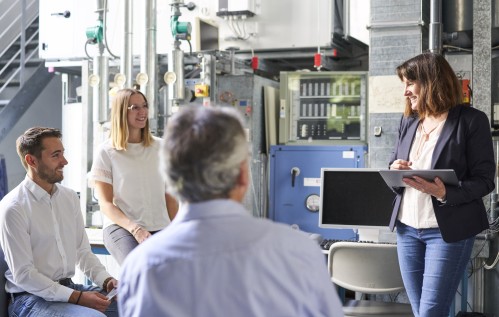
Hochschule München is getting a new brand identity.

2021
50|200 Years of Applying Science – this was the theme under which Hochschule München celebrated its anniversary. And not just one, but two.
50 years, as the HM was founded in 1971 as the Munich University of Applied Sciences from seven Munich engineering schools and higher technical colleges. 200 years, because the School of Building Trades – with the Feiertagsschule as its predecessor – began its regular lectures 200 years ago as the forerunner to the Departments of Architecture, Civil Engineering and Geoinformatics.

2021
The Graduate School has been established to support early career researchers and PhD students. Its work focuses on a comprehensive training programme, providing guidance to PhD students and their Supervisors, and offering established funding opportunities.
2022
The first volume of the history of Hochschule München has been published. It traces the development of the seven institutions that preceded Hochschule München, right up to its foundation in 1971. It makes it clear that Hochschule München is an institution with a rich history spanning over 200 years.

2023
In rankings and competitions , HM has once again impressed with outstanding results: it has once again performed exceptionally well in *Wirtschaftswoche* and, together with the SCE, has taken first place in the Stifterverband’s Gründungsradar (the largest comparison of start-up support at German universities).
2024
The introduction of the right to award doctorates in 2023 marks a historic milestone: Hochschule München is establishing seven doctoral centres in a Bavaria-wide partnership with Nuremberg and Regensburg, three of which will be hosted by Hochschule München – a partnership model that is unique in Germany.

2024
HM University has been recognised as an institution with a strong commitment to gender equality . Through its gender equality policy, it promotes gender equality in all areas, for example through gender-sensitive appointment procedures and STEM degree programmes.
2024
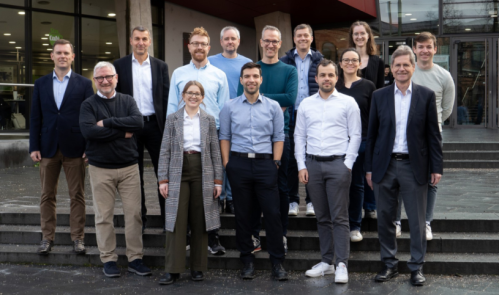
The interdisciplinary research institute, the Institute for Mobility and Life in Motion (IMM), is being established. It brings together ten chairs from the fields of mechanical engineering, automotive engineering, aeronautical engineering, electrical engineering and design, and develops interdisciplinary, sustainable mobility solutions.
2025
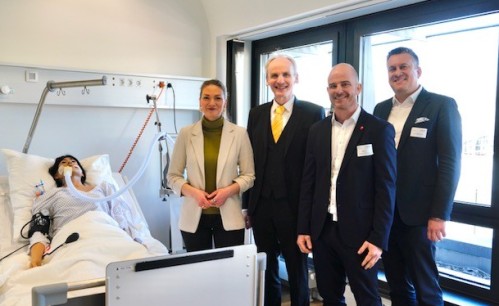
With the launch of the new interdisciplinary MUC.HEALTH school, HM is establishing itself in the forward-looking field of health and strengthening its role as a driver of innovation. It offers interdisciplinary, practice-oriented degree programmes, thereby responding to the growing demand for healthcare professionals.
2025
The TIZIO Technology and Transfer Centre is specifically designed to strengthen technology transfers and regional cooperation. From December 2025, researchers from HM will work alongside companies and regional stakeholders in four high-tech laboratories to develop application-oriented innovations.
2025
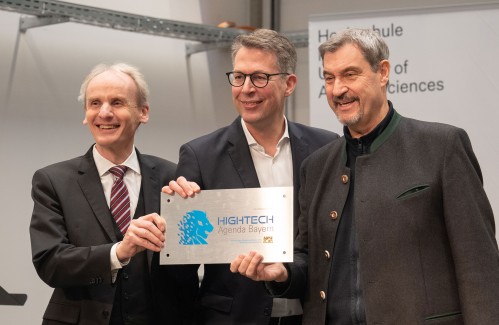
A four-storey modular building covering 1,800 square metres is being constructed on the Lothstraße campus to accommodate modern working concepts. The new building is a pilot project for flexible, future-oriented ways of working and was developed in collaboration with staff members.
2026
In our book, you can find out how the Hochschule München evolved into today’s Munich University of Applied Sciences, how teaching, research and knowledge transfer have changed, and what has shaped the development of the HM.

We have attempted to identify all copyright holders. We would ask any copyright holders who could not be identified to contact Hochschule München.