
AI in teaching
AI Guideline for Higher Education Teaching

Recommendations on the use of AI in teaching at Universities of Applied Sciences and Technical Universities in Bavaria.
The successful and, at the same time, responsible use of AI at Bavarian universities requires a nuanced assessment of the opportunities and risks involved. The wide range of possibilities offered by AI must be proactively shaped within the framework of strategic, ethical and legal guidelines. Only in this way can the technology realise its potential and have a lasting positive impact on the higher education landscape for the benefit of all. This guideline on the use of AI in higher education teaching aim to make a decisive contribution to this end.
The guideline was commissioned by Hochschule Bayern e. V. It is the result of a cross-university collaboration among lecturers and students from across Bavaria, developed by the vice-presidents for academic affairs and teaching at the participating universities in partnership with the Forschungs- & Innovationslabor Digitale Lehre (FIDL) (research and innovation lab for digital education).
Visit the FIDL website for more information
Download the AI Guidelines for University Teaching (Only available in German)


OneTutor pilot phase
The HM is trialling the OneTutor AI assistance system in its teaching. The system was developed at the Bavarian Research Institute for Digital Transformation (BIDT) in collaboration with the Technical University of Munich and has already been tested in over 130 courses at the HM. Since summer term 2026, all HM lecturers have been able to use OneTutor voluntarily as part of the pilot phase. As a data protection-compliant AI tool for teaching, lectures can decide for themselves if and how they want to integrate it into their courses.
Registration for lecturers
Lecturers may use this link to register on the OneTutor platform. Access will be activated within 24 hours during the work week. Lecturers can then create their own courses on OneTutor and upload their teaching materials.
What does OneTutor offer?
- AI-powered learning support for students, based on their existing lecture notes
- Detailed, anonymised analyses of learning behaviour for lecturers
- Easy access via SSO login with your HM account
Further information can be found here:
Evaluation results from the winter term
The analysis of the evaluation from the 2025/26 winter term has shown that OneTutor offers great potential: we have received positive feedback regarding its support for the learning process and as well as valuable input on identifying suitable use cases. At the same time, it became clear that not all interested parties were able to test the system during the test phase. A summary of the evaluation results can be found here.
Advice & Support
Are you a lecturer at the HM and would like advice on how to use OneTutor for teaching purposes? Do you need setup-support?

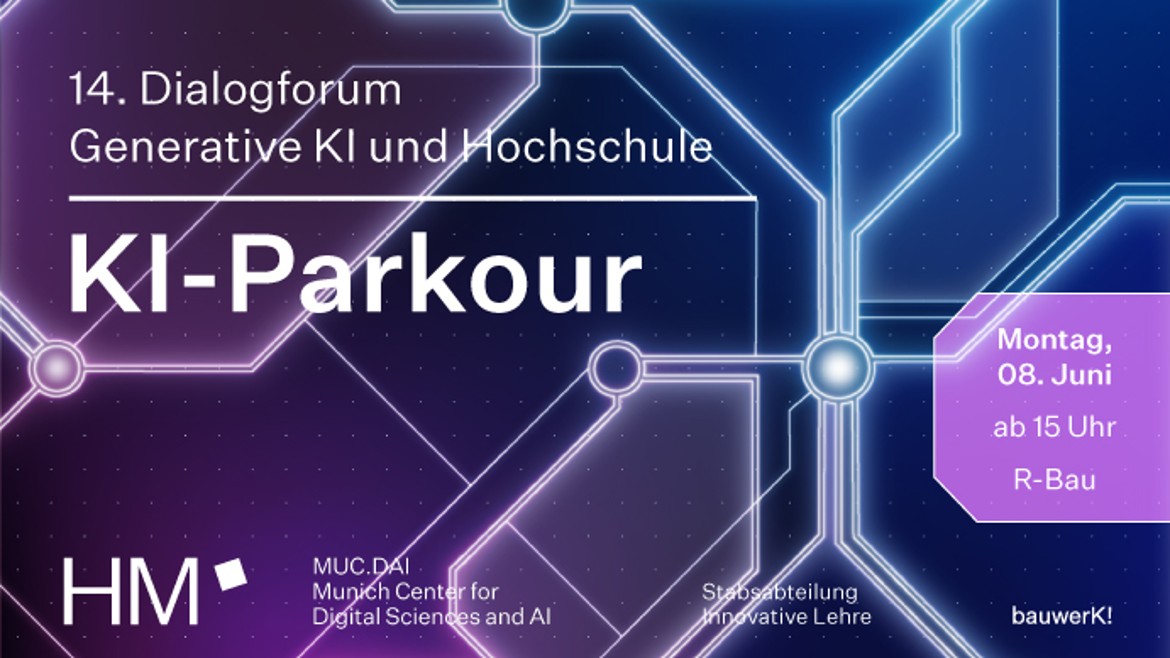
The 14th Generative AI and Higher Education Dialogue Forum took place in person under the title “AI Parkour”.
The AI Parkour was designed as an interactive forum for discussion and engagement, featuring numerous stations dedicated to AI at HM. Participants were able to try out the latest AI tools, gain insights into ongoing projects and initiatives, and discuss the opportunities, challenges and necessary AI skills.
Whether visitors were taking their first steps with AI, testing new tools or had the wish to contribute their ideas for the future development of the HM into an AI-competent university – the AI Parkour invited everybody to get involved, have their say and help shape the future.
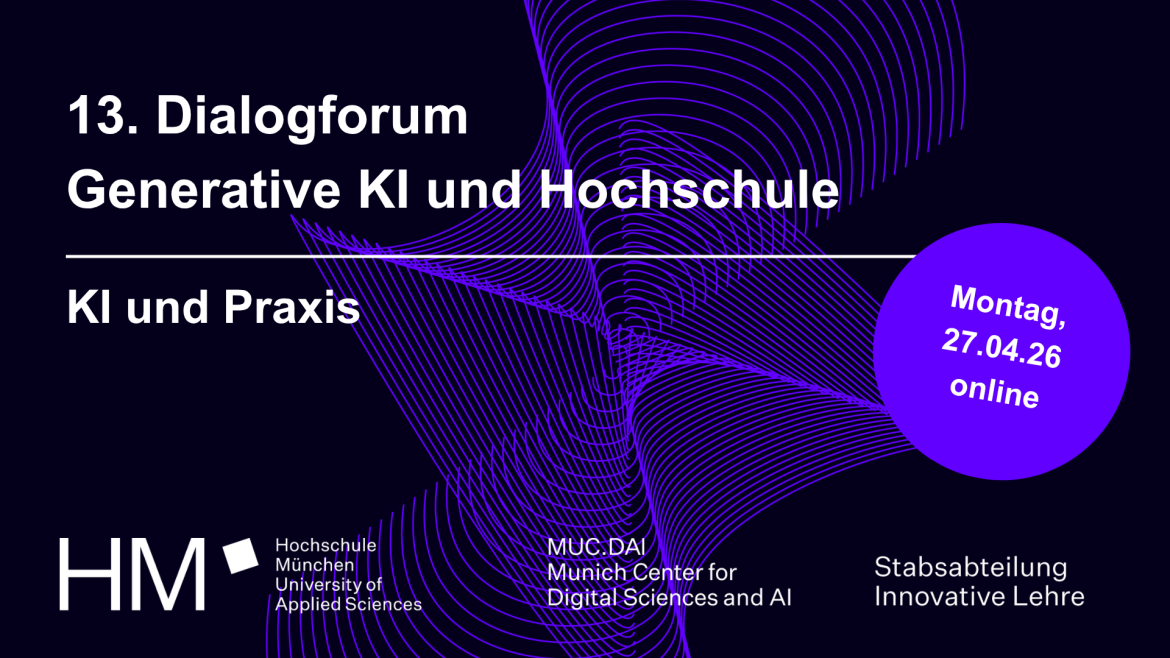
The 13th Generative AI and Higher Education Dialogue Forum took place online under the title “AI and Practice”. The focus was on how companies and public authorities are currently integrating AI into their processes. Representatives from the field provided insights into specific application scenarios. We presented findings from student projects on the use of AI agents in businesses. Together, we discussed where the current opportunities and limitations lie, what skills professionals will need in future, and what expectations businesses have of university graduates in the age of AI.
University members can find the articles relating to the event on the intranet.
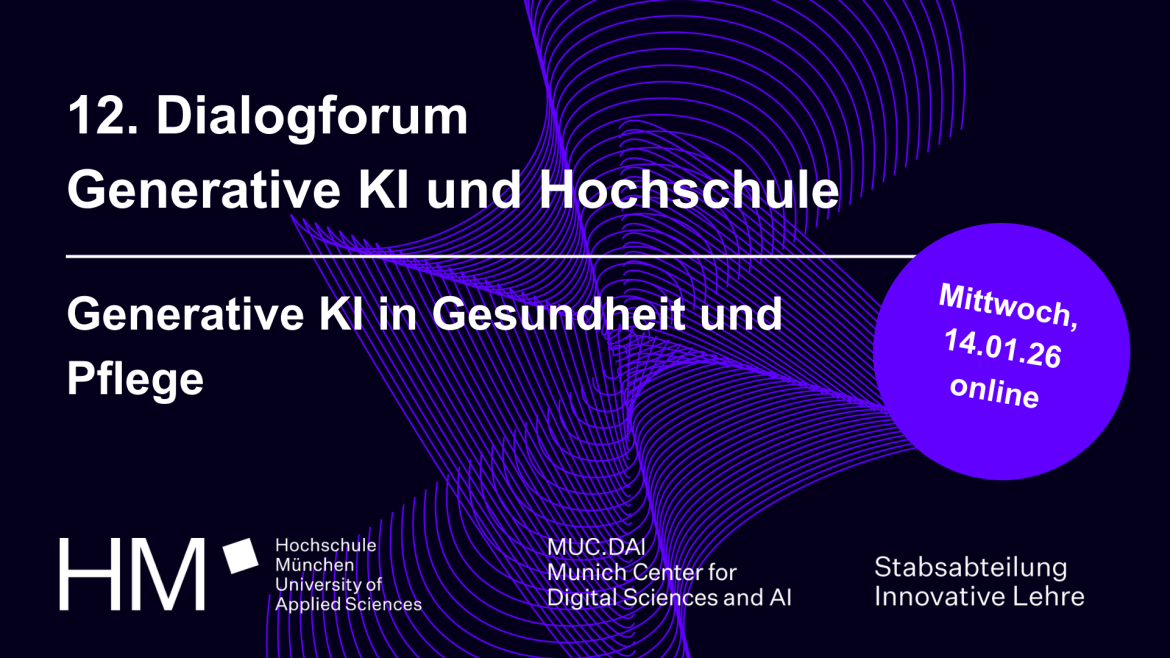
The 12th Generative AI and Higher Education Dialogue Forum took place online under the title “Generative AI in Health and Care”. The forum addressed and discussed how the integration of generative AI is profoundly transforming healthcare professions and what professional, ethical and legal challenges this poses for teaching. In this context, universities are becoming spaces for experimentation, where lecturers and students can test new technologies and explore further applications.
University members can find the articles relating to the event on the intranet.
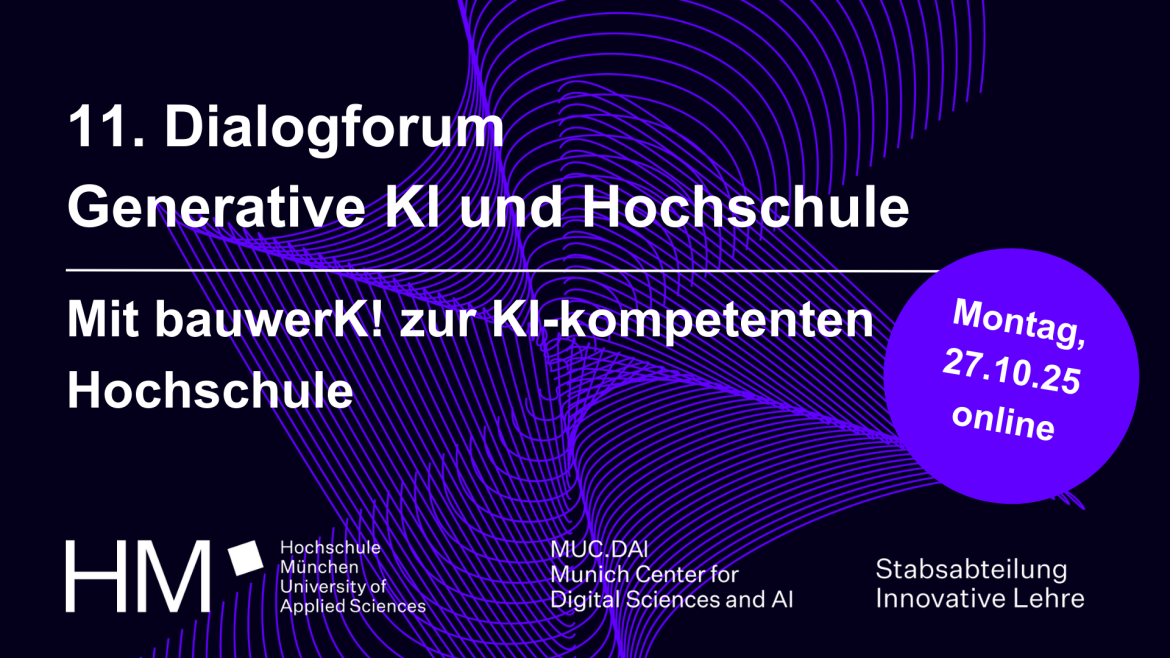
The 11th event took place under the title “Towards an AI-competent university with bauwerK!”. With the project “bauwerK! – Teaching and Learning with and about AI”, the HM, on behalf of the Vice-President for Teaching, Prof Dr Klaus Kreulich, and under the cooperative leadership of the Center for Innovation in Teaching and Education (IL) and the MUC.DAI interdisciplinary school, successfully secured a grant from the Foundation for Innovation in Education (StIL) as part of the “Teaching Architecture” funding programme. At the 11th Dialogue Forum, we discussed this new project together.
University members can find the materials of past events on the intranet.
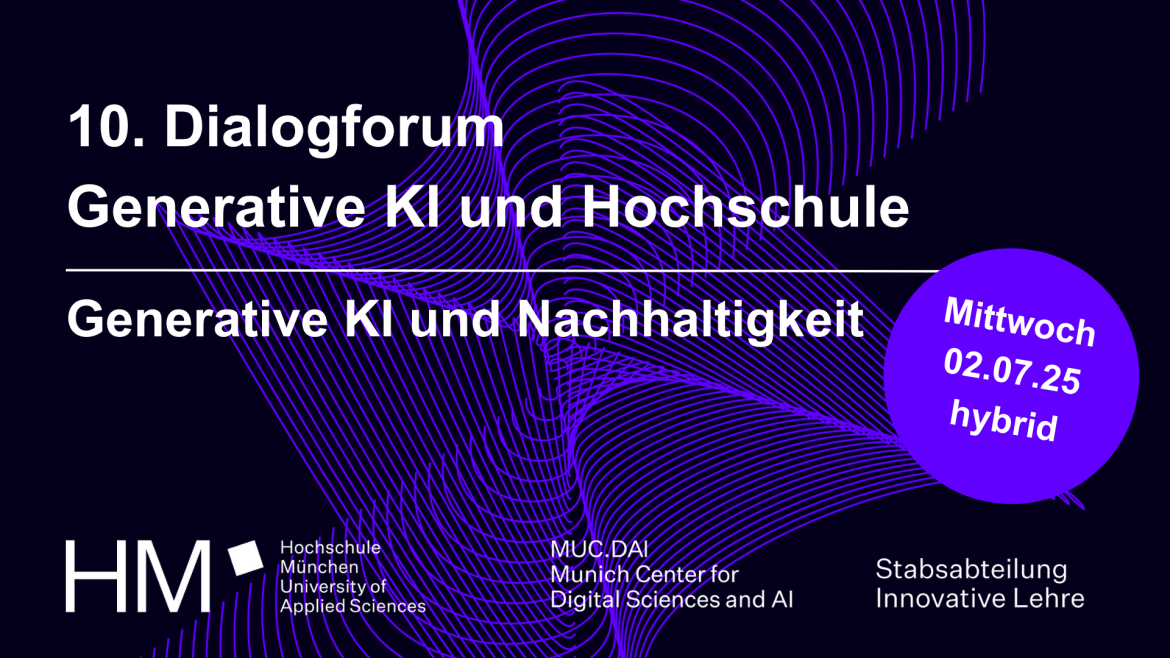
The 10th Generative AI and Higher Education Dialogue Forum took place in a hybrid format under the title “Generative AI and Sustainability”.
We discussed how AI can be used in the context of sustainability, and how sustainable the use of AI can be. A key question was also: Which aspects should universities consider in the social, economic and environmental dimensions of sustainability when looking at generative AI, so that the discussion goes beyond the issue of ‘saving energy’?
University members can find the materials of past events on the intranet.
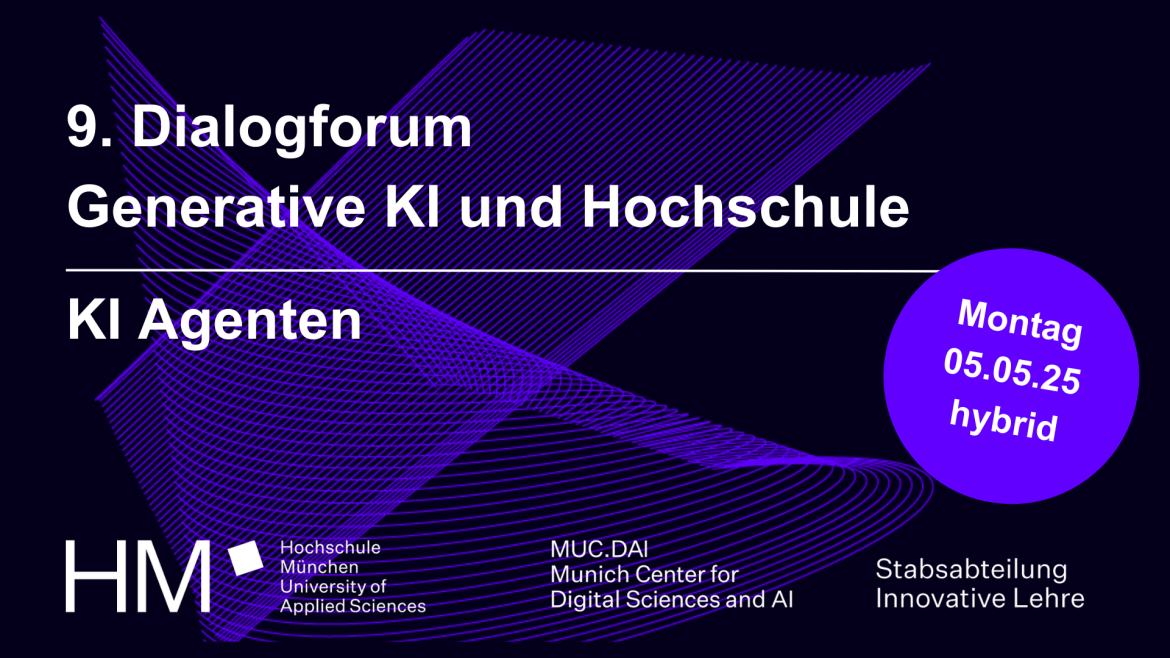
The 9th Generative AI and Higher Education Dialogue Forum took place in a hybrid format under the title “AI Agents”. We discussed how AI is used to create autonomous systems – so-called AI agents – and what implications they may have for the higher education sector.
University members can find the materials of the past events on the intranet.



Contact
Center for Innovation in Teaching and Education