
Why are more and more older people ending up in prison?
As life expectancy rises and birth rates fall, the number of people who commit crimes in old age or serve prison sentences as senior citizens is also increasing. The causes of crime vary only slightly across age groups. However, the types of offences and the factors that trigger them change over the course of a person’s life.
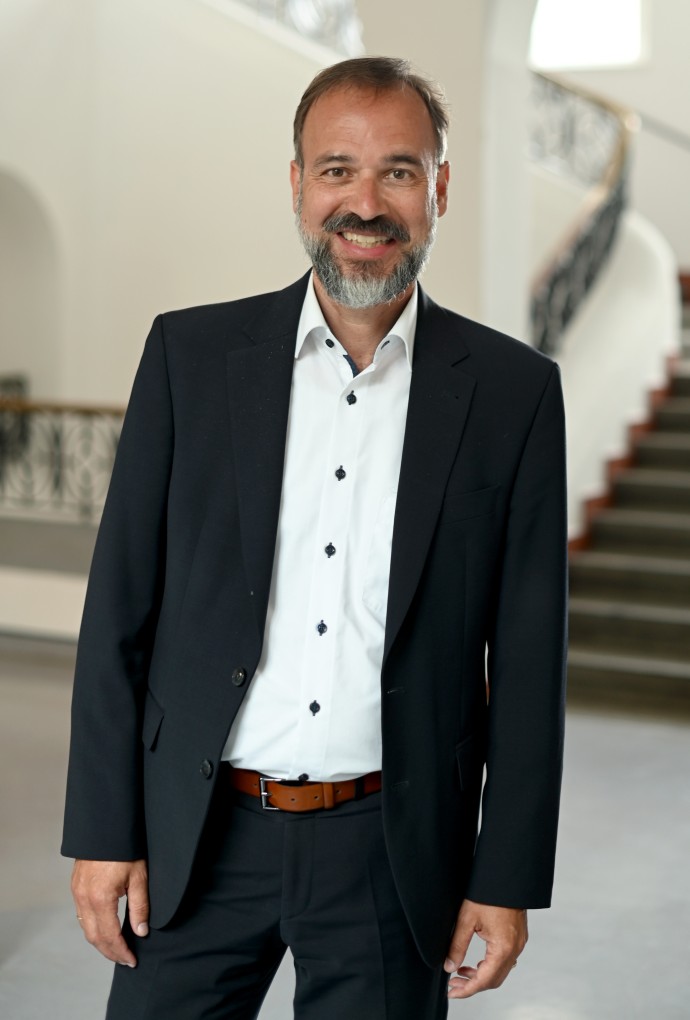
HM Professor Stefan Pohlmann from the Department of Applied Social Sciences at HM is researching crime among the elderly – a subject he considers taboo.
Why is the issue of crime among the elderly important for today’s society?
Crime committed by older people is a taboo subject because it does not fit with conventional notions of old age. However, it is important to examine those aspects of society that are rarely given any attention. In particular, looking at older people who commit crimes can reveal new approaches to the prosecution, sentencing and punishment of all offenders.
What are the needs of older prisoners?
We know that people in prison age more quickly and that the risk of long-term and worsening health conditions is particularly high. To ensure that older prisoners do not break down whilst in prison, their specific needs must be taken into account in their care, taking into consideration the length of their sentence, prison conditions and their reintegration into society.
Does society view young and older offenders differently?
This is precisely what our surveys of members of the public regarding their understanding of the law suggest. Two distinct trends emerge: for minor offences, people tend to call for more lenient sentences for older defendants, whereas for more serious crimes, they increasingly call for harsher punishments than they would for younger defendants.
What findings surprised you during your research into crime among the elderly?
My research into elderly prisoners has brought home to me just how harsh life in captivity feels, particularly when one has little time left to live. This highlights the importance of a justice system that is humane and proportionate, yet also acts as a deterrent. I am surprised at how little attention the academic world has paid to this issue so far.
What drives you in your research?
As a scientist, I am always a learner as well. Ageing research gives me the opportunity to draw on existing practical knowledge whilst gaining a better understanding of generation-specific issues, mistakes and potential solutions for the future. I can hardly imagine anything more exciting.
How do you think this phenomenon will have developed by 2050? Will there be prisons exclusively for older people, or separate wings for older people, as there are today for women and young people?
There are already prisons offering specific support for older prisoners. This is certain to increase, as the number of older suspects is also highly likely to continue rising. We hope that current measures will be systematically reviewed and that, at the same time, effective alternatives will be found so that older people are not simply locked away. This urgently requires further research.
Still not full?
Ask the Mindsnacks team or keep browsing our Mindsnacks website.