Tuition fees, accommodation, funding
Student Advice Centre
All about studies
Living in Munich
Munich is the highly attractive and dynamic capital of the Free State of Bavaria, with a population of over 1.5 million, numerous international companies and three major universities. For this reason, the cost of accommodation, food and entertainment is naturally higher than in many other university towns. Prospective students should start thinking early on about how they will finance their studies.
| Expenditure | Per month |
|---|---|
| Rent (depending on the accommodation) | approx. €550–1000 |
| Health insurance | approx. €145 |
| Telephone | approx. €55 |
| Food | approx. €250 |
| Other expenses (laundry, photocopying, entertainment, medication) | approx. €100 |
| Total | €1.000–€1.500 |

Munich is known for having the highest rents in Germany. The main reason for this is that Munich is a very attractive city with a high standard of living and a relatively large number of high-quality jobs. This attracts many people, which unfortunately also means that affordable accommodation for students is in very short supply. In addition, there are three large universities and numerous smaller ones, meaning there are a great many students looking for affordable flats.
The waiting time for a room in a Studentenwerk hall of residence is often 3–4 semesters.
- Roncalli College Preference given to students from Hochschule München
- Overview of halls of residence from all providers
- Portal www.meinestadt.de
City Flat-sharing Agency (up to 26 years old)
Private housing market:
- Noticeboards at Hochschule München, LMU Munich and the Technical University of Munich (particularly in canteens and cafeterias)
- 'Kurz & Fündig' classifieds magazine on Tuesdays and Fridays
- Abendzeitung (AZ) on Saturday
- *Süddeutsche Zeitung* (SZ) on Wednesdays and Fridays

Hochschule München currently charges the following tuition fees for non-EU students:
€500 for bachelor's degree programmes.
€700 for master's degree programmes. Further details are set out in the tuition fee regulations
. Separate tuition fees apply to extra-occupational programmes and certificates; please check the relevant programme websites directly.
Further information on tuition fees for non-EU students can be found in these FAQs.
In addition, ALL students must pay the student union fee (€97.00) each semester. The student union runs the canteen, the counselling service and the halls of residence.
You must transfer this amount to Hochschule München for final enrolment.
For local public transport, there is a €43 discount ticket available online on a subscription basis. Every student must purchase this themselves if they wish to use the underground, buses, trams or the S-Bahn.
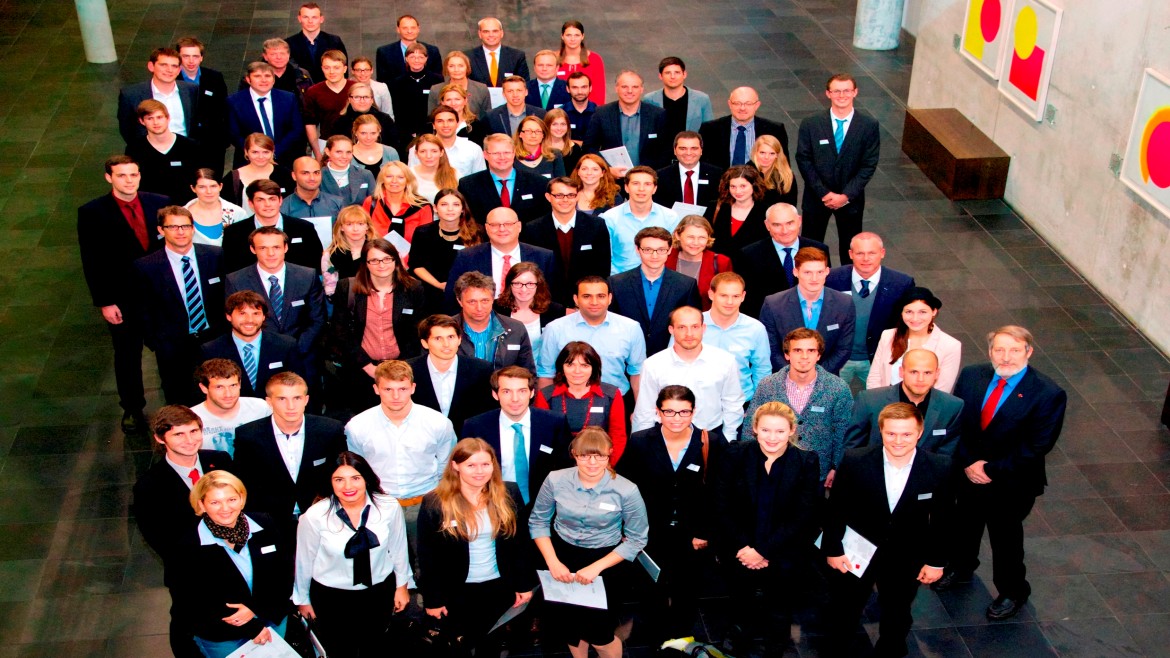
Who better to answer questions about studies at Hochschule München and other aspects of university life than the students themselves? As a prospective student, you are also welcome to contact our dedicated students (members of the Student Parliament). They will be happy to help you. Please note, however, that the students are not staff members and are unfortunately unable to answer questions regarding the application process, admission requirements, academic qualifications, etc.
Further information and contact details for you:
Facebook group "Department for Cultural Diversity – Hochschule München"
The Student Parliament looks forward to your questions!!!

The DAAD’s Student Journey explains, in five stages and in an interactive format featuring videos, texts, links and hotspots, what studies in Germany have to offer and what opportunities they open up, how you can prepare for them, and what requirements you should meet.
Stage 1 – Discover Germany
• Why Germany? Links and videos featuring interesting facts about Germany, its many university towns, and the stories of other international students
Stage 2 – Study opportunities in Germany
• German universities and degree programmes – links and videos to relevant resources and databases, from admission to choosing a degree programme
Stage 3 – The application for a place at university
• A successful application – links and videos on the university entrance test, preparatory courses and the Studienkolleg
Stage 4 – Funding your study visit
• What funding opportunities are available? – Links to proof of funding and a scholarship search
Stage 5 – Your arrival in Germany
• What steps do you need to take before and upon arrival in Germany? – Links to information on visas and health insurance, as well as tips for starting your studies
Users of the Student Journey can join or switch at any stage, depending on the questions they have.
The Student Journey can be accessed from the homepage of Studying in Germany via the teaser or via this link.