Oliver Pfefferkorn
Doctoral candidate at the Center for Applied Research in Responsible Innovation (CARRI).
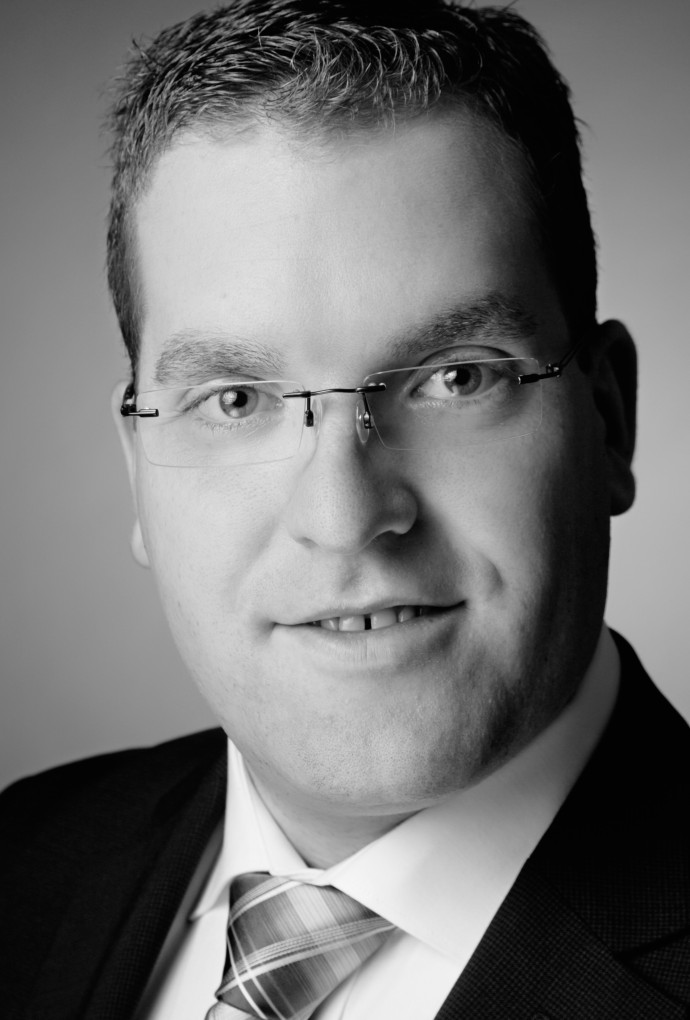
Oliver Pfefferkorn studied industrial engineering at Mittweida University of Applied Sciences. After completing his diploma, he went on to complete a postgraduate Master’s degree at the OHM Professional School at Nuremberg University of Applied Sciences, specialising in ‘Purchasing and Supply Management’. His career has focused on procurement and supply chain management, as well as on production at Continental. He subsequently moved into the consultancy division at thyssenkrupp and currently works in compliance management.
Topic: Resilient corporate structures in sustainability and compliance risk management
Principal supervisor: Prof. Dr.-Ing. Ralf Bogdanski
In my research, I intend to focus on ‘Resilient corporate structures in sustainability and compliance risk management’. The rapidly changing operating environment currently facing businesses – including legal regulations, stakeholder management, the influence of and on NGOs, and the availability or scarcity of resources – is forcing companies to adapt. Rigid and inflexible organisational and operational structures – and the often associated long response times to the aforementioned, sometimes highly dynamic factors with which companies are confronted – create scope for corporate risks that must be identified, averted or at least mitigated.
I first came into contact with this highly interesting and topical subject whilst working on my extra-occupational Master’s thesis at Nuremberg Tech. Following my career progression into the field of compliance management, my desire to explore this area academically was once again greatly strengthened.
I have been looking for some time now for a good way to balance my career with my doctorate. To this end, I have looked into various programmes, including some International, but none of them have convinced me as much as the CARRI model. In particular, the key aspects that are important to me – such as excellent individual supervision, reflected in my professor’s high level of academic expertise and availability, as well as the outstanding reputations of the HM and the TH Nuremberg, including their networks – were the deciding factors in my choice and, at the same time, offer excellent career prospects.
I already knew my supervisor from my time as a Master’s student at the OHM Professional School of the Nuremberg University of Applied Sciences. After I graduated, we stayed in touch, as part of my professional remit falls within the teaching and research area of Prof. Dr.-Ing. Bogdanski.
The challenges include, amongst other things, the highly time-consuming preliminary investigation and analysis of the subject area, combined with a significantly more demanding literature review than in a Master’s programme, including a preliminary selection of methods for empirical research. The drafting of the research proposal was closely coordinated with my supervisor. It is precisely the inclusion, analysis and verification of various sources and research methods that increases the number of factors to be taken into account and leads to numerous adjustments, particularly at the start of the research proposal.
As well as the dissertation itself, I am interested in knowledge transfer and exchanging ideas with other academics in order to advance the state of research in my field and to forge long-term personal and professional connections for the future. The practical application and implementation of the findings in a business context are particularly important to me.