Tobias Wetzel
Doctoral candidate at the Center for Applied Research in Responsible Innovation (CARRI).
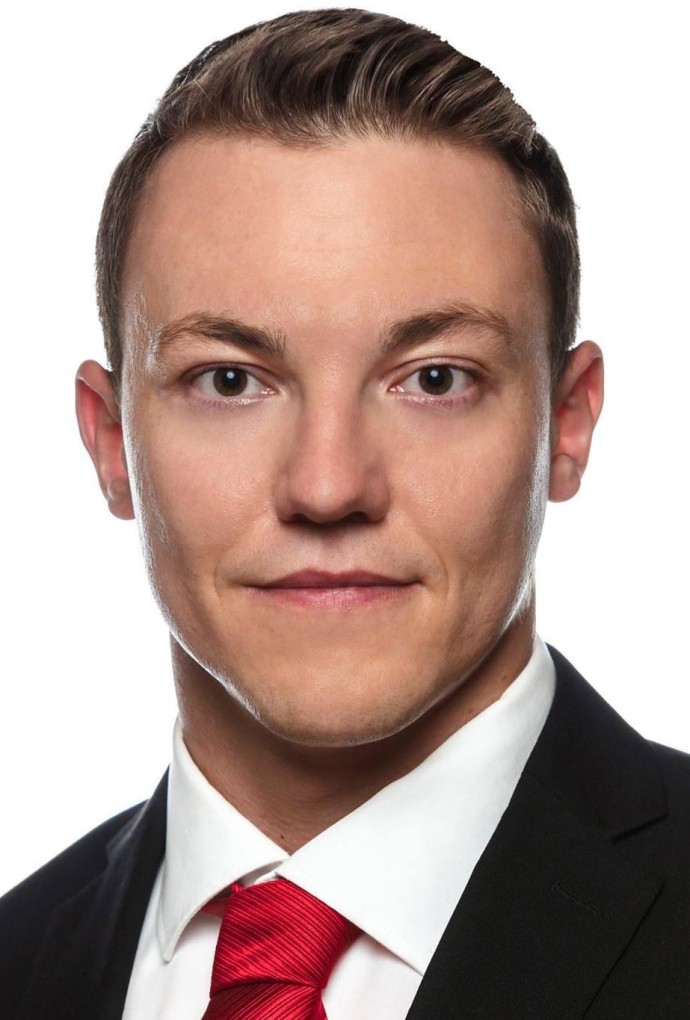
Tobias Wetzel studied aerospace engineering at Hochschule München, completing both his bachelor's and master's degrees, and complemented his technical background with an MBA in Management & Strategy from HM Business School. He built up his wide-ranging expertise in technology, leadership and strategic business development over more than seven years’ professional experience in the aviation industry – including in senior roles as Senior Programme Manager, Business Unit Manager, Project Manager and management consultant. In these roles, he successfully managed international projects, optimised business processes and made a significant contribution to the further development of the product portfolio and customer network.
Topic: Enhancing innovation potential by improving the matching process between established aviation companies and start-ups
Principal supervisor: Prof. Dr. Klaus Sailer
As part of my dissertation, I am investigating how the potential for innovation can be sustainably enhanced through targeted, structured and practice-oriented collaboration between established aviation companies and innovative start-ups. The aim is to identify sector-specific success factors in innovation and matching processes and, on this basis, to derive a practical optimisation approach that can be directly applied in industrial practice. Methodologically, the study begins with an analysis of the current state of existing innovation structures, supplemented by qualitative expert interviews with key industry stakeholders. The insights gained form the basis for the development and subsequent validation of a practically-oriented action plan. In the long term, this research aims to make a substantial contribution to strengthening the innovation and competitiveness of the aviation industry in the context of technological change.
The idea for my PhD thesis arose from the observation that, despite its great need for innovation, the aviation sector is slow to bring new technologies to market compared with other industries. The reasons for this include, amongst other things, lengthy certification procedures, complex supply chain structures and a risk-averse corporate culture. At the same time, however, it is evident that start-ups, with their agility, innovative spirit and willingness to take risks, are able to drive new developments forward much more quickly – yet often fail to achieve market penetration. The realisation that both sides could benefit from each other, yet that the initial matching process frequently fails due to structural, cultural and organisational barriers, was decisive in sparking my research interest. The aim of my work is therefore to gain a better understanding of this process and to develop targeted strategies for improving the initiation of cooperation, with a view to sustainably increasing the innovation potential within the aviation industry.
I decided to pursue a doctorate at CARRI because I had already completed my bachelor's and master's degrees at Hochschule München, where I consistently had excellent experiences with the effective integration of theory and practice. In my view, this practice-oriented yet scientifically sound approach, complemented by an interdisciplinary research environment, offers the ideal conditions for me to work on my application-oriented PhD thesis topic in a focused manner. Ultimately, the doctorate represents a logical next step in the development of my academic profile: building on a technical master's degree in Aerospace Engineering and a business-oriented MBA, I wish to deepen my expertise at CARRI in a targeted manner and, in the long term, strengthen the interface between scientific research and industrial practice.
I held my first substantive discussions as part of the thematic orientation for a potential doctorate with Prof. Julia Eiche, who had previously supervised my MBA final assignment and with whom I had already discussed some initial, exciting topic ideas. As our discussions continued, it became clear that Prof. Klaus Sailer – particularly given his proven expertise in the field of innovation and matching processes, as well as his role as Managing Director of the Strascheg Center for Entrepreneurship – was the best fit for my research project, both in terms of subject matter and academic expertise, as my primary Supervisor. Working closely together, we further developed the topic and devised a doctoral project that perfectly combines the fields of entrepreneurship, innovation and aviation.
Writing my research proposal was a challenging and iterative process, characterised by high academic standards. At the start of my research, there were numerous ideas and approaches on the table, which meant that the focus of my research changed several times in the early stages and only became increasingly concrete as the work progressed. It was only as I delved deeper into the specialist literature and engaged in intensive discussions with my Supervisors that increasingly concrete approaches and objectives began to emerge. These regular insights, along with new ways of thinking, played a key role in continuously refining the topic and ultimately developing a precise research proposal. Overall, the research proposal played a key role in giving concrete form to my research project and ensuring that the necessary steps and methods were carefully planned in order to achieve the set objective efficiently.
I am particularly looking forward to sharing my experiences and insights with the scientific community and gaining valuable insights from various fields through interdisciplinary exchange. Close collaboration with other researchers offers an excellent opportunity to develop new perspectives and innovative solutions, through which I can make a concrete contribution to the further development of innovation processes in the aviation industry. Furthermore, I hope that my doctorate will open up new professional and academic opportunities that will both broaden my specialist expertise and enrich my future career path in academia or industry.