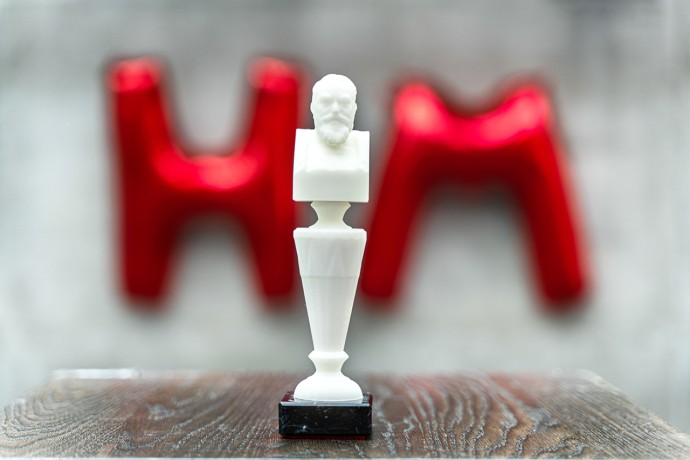
Teaching Award: ‘Oskar for Quality in Teaching’
Providing contemporary and student-centred Teaching is a core mission of Hochschule München. The university wishes to recognise outstanding commitment to high-quality Teaching in particular and will present the annual HM Teaching Award in April 2026.
The final decision on the awarding of the prizes is made by a jury comprising students from Hochschule München, the student representatives of the deans of studies, and the Vice-President for Innovation and Quality in Education.
The award ceremony took place as part of the Oskar von Miller celebrations on
23 April 2026.
Previous winners
Prof. Dr. Marlen Jurisch
Oskar: Quality in Teaching
Prof. Dr Klaus Kreulich, Vice-President for Innovation and Quality in Education at HM, presented the Oskar Award for Quality in Teaching to Prof. Dr Marlen Jurisch of the Department of Computer Science and Mathematics.
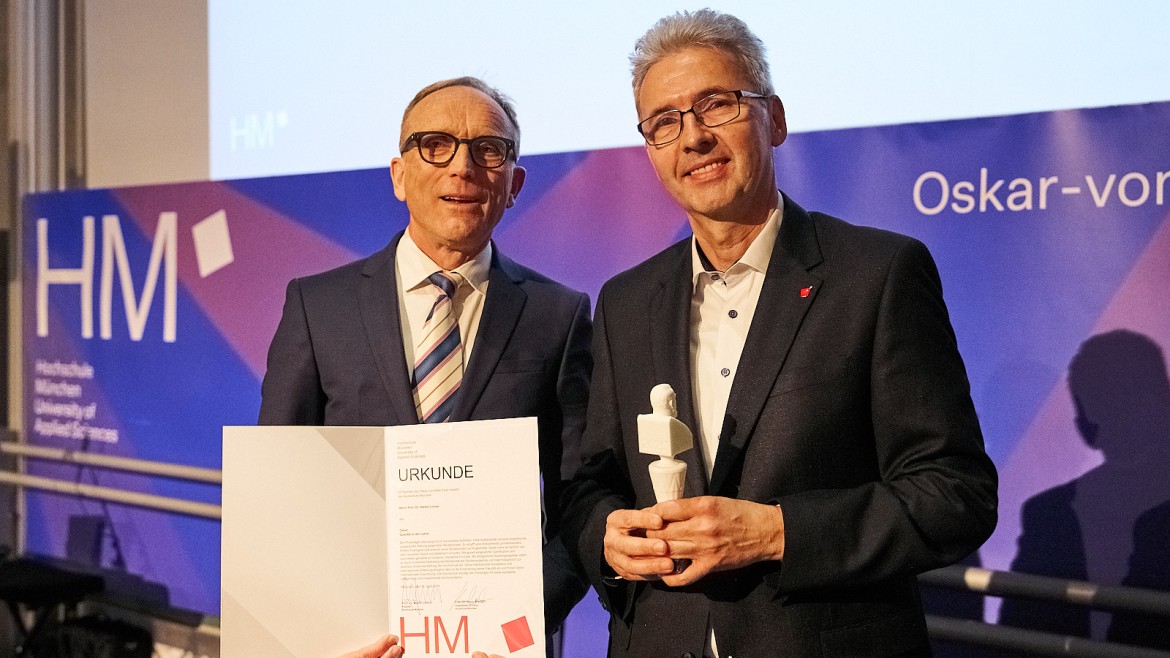
Prof. Dr. Stefan Linner
Oskar: Quality in Teaching
Prof. Dr Klaus Kreulich, Vice-President for Innovation and Quality in Education at HM, presented the Oskar Award for Quality in Teaching to Prof. Dr Stefan Linner of the Department of Applied Sciences and Mechatronics.
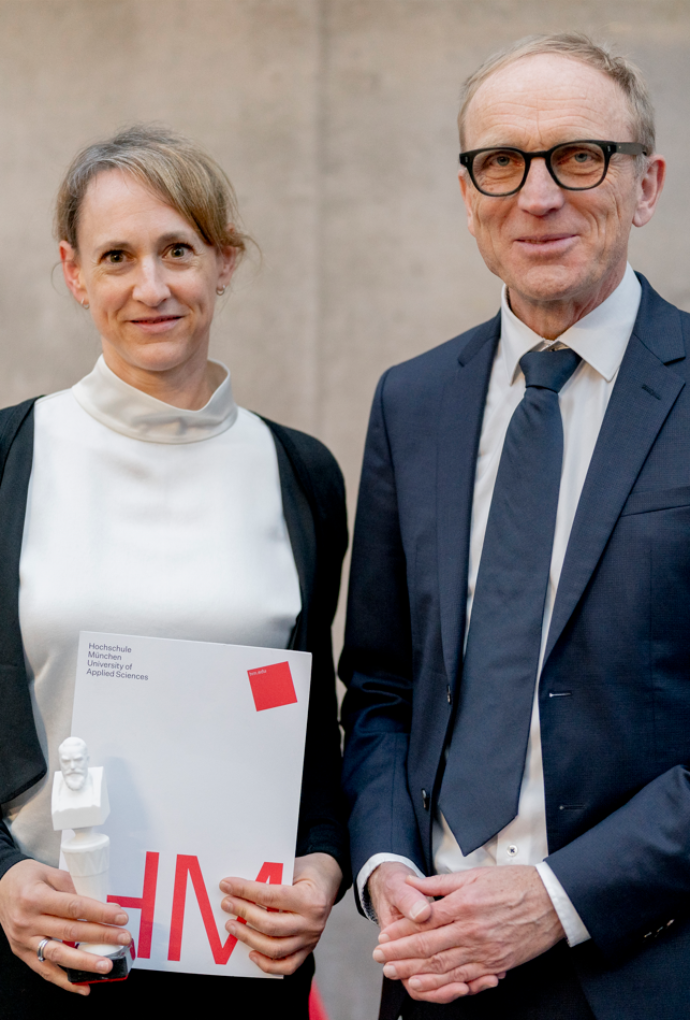
Prof. Dr. Verena McIntosh
Oskar: Quality in Teaching
Prof. Dr Klaus Kreulich, Vice-President for Innovation and Quality in Education at HM, presented the ‘Oskar’ for Quality in Teaching to one of the lecturers nominated by the students:
Prof. Dr. Verena McIntosh, Department of Engineering and Management
A high level of preparation, curiosity and an openness to new ideas characterise me as a teacher. Fostering personal development through individual feedback on presentations, frequently engaging students’ attention, coaching them in group work, and recognising outstanding students are just some aspects of my teaching approach, which I believe contributes to academic success.
The nominees for the Teaching Oscar
Prof. Dr. Kegler, Karl R., Dept 01
The approach I take in my teaching is perhaps best described by the concept of a ‘learning partnership’. Both the learner and the lecturers come away from each event having gained new knowledge. It
It is not about amassing individual facts, but about connections and productive principles.
Prof. Dr.-Ing. Klein, Markus, Dept 03
Good teaching not only focuses on imparting knowledge and skills but also fosters the relationship between lecturers and students, thereby creating a positive learning environment and ensuring long-term academic success. Just as students are all unique, so too, ideally, should teaching methods be diverse.
Prof. Dr Wolfgang Högele, Dept 07
The aim of my teaching is to help students overcome reservations, barriers and, in some cases, even fears, and to encourage them to approach the subject of mathematics with a fresh perspective, by focusing on their interest in learning. The underlying view of human nature is that everyone can understand mathematics (perhaps at different paces).
Prof. Dr. Ariane Sept, Dept 11
As a professor, I have the luxury of being both a lecturer and a learner at all times. I am able to learn with, for and through my students, whilst at the same time sharing my knowledge and experience with them. It is important to me to instil in my students a love of learning and to help them practise methods for absorbing new material.
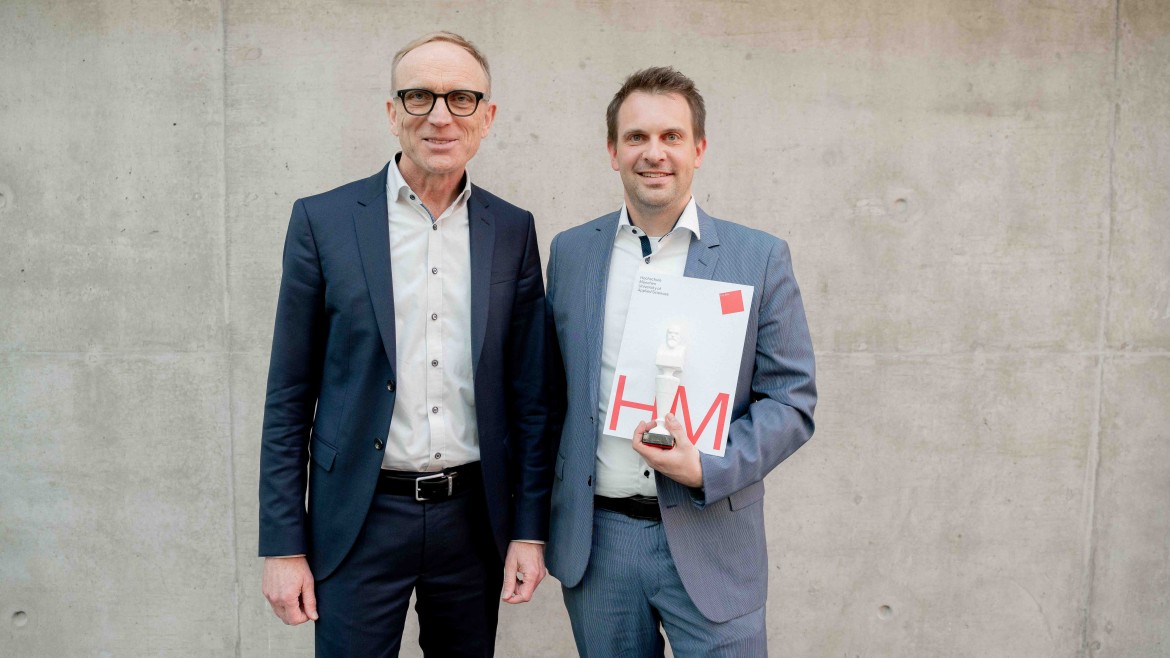
Prof. Dr. Bastian Katz
Oskar: Excellent Teaching
Prof. Dr Klaus Kreulich, Vice-President for Innovation and Quality in Education at HM, presented the ‘Oskar’ Award for Outstanding Teaching to a lecturer nominated by students. He had succeeded in guiding “students into the fascinating world of knowledge” whilst, beyond subject-specific knowledge, also fostering values such as cooperation, tolerance and respect amongst his students. Prof. Dr. Bastian Katz from the Department of Computer Science and Mathematics thanked his students for the nomination and for the trust they had placed in him during face-to-face teaching. For him, this is a format in which “lecturers and learners forgo flexibility” and which he “uses to convey what they cannot learn from a video alone”.
Prof. Dr. Bastian Katz, Department of Computer Science and Mathematics: “I see the challenge and opportunity of digital teaching not in forcing students into a learning process and reducing interaction, but, on the contrary, in making the most of the flexibility it offers. Working through and absorbing content at their own pace, being able to assess their own learning progress, and viewing joint events as ‘quality time’ in which communication takes centre stage.”
The nominees for the 2023 Teaching Oscar
Prof. Dr. Florian Nafz, Dept 05:
As a lecturer, I try to act not only as a source of knowledge and skills for my students, but also as a sort of coach who supports the student team to ensure both collective and individual learning success. In doing so, I select the most appropriate method depending on their abilities and level of learning.
Prof. Dr. Gabriele Fischer, Dept 11:
For me, discursive teaching and learning formats form an important basis for good teaching. They give students the opportunity to express themselves, to test their ideas through debate, and to develop, justify and even revise their positions, thereby strengthening their critical thinking skills
Prof. Dr.-Ing Markus Klein, Dept 03
For me, good teaching goes far beyond simply imparting knowledge and skills. A balance between theory and practice, up-to-date teaching content, the interconnection of teaching content, consideration of students’ individuality, as well as feedback, appreciation and mutual respect should be taken into account as holistically as possible.
Prof. Michael Hiebel, Dept 04
Interesting visual aids and experiments are just one of the many options I make use of every day. In addition, a report or a brief anecdote from my own working life can be very useful for placing learning content in a tangible context.
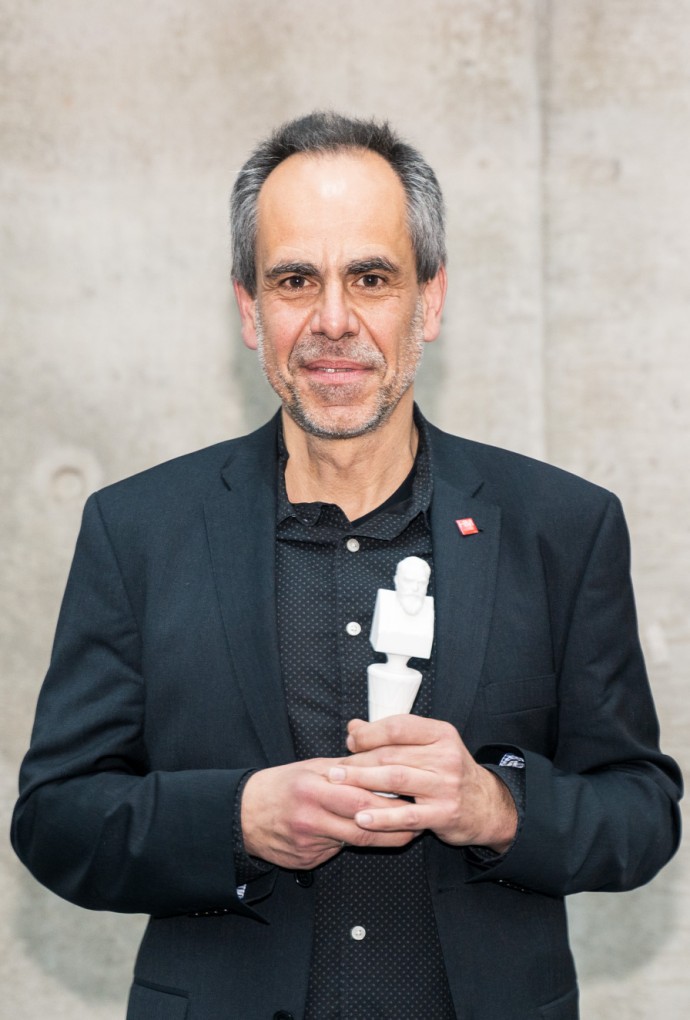
Prof. Dr. Jörg Reinhardt
Oskar Award for Quality in Teaching 2022
Prof. Dr Klaus Kreulich, Vice-President for Innovation and Quality in Education, opened the first golden envelope. He presented the ‘Oscar’ for Quality in Teaching to Prof. Dr Jörg Reinhardt. The lecturer at the Department of Applied Social Sciences attaches particular importance to “meeting students where they are”. He explains the challenges and benefits of the legal framework in social work using real-life case studies – both in face-to-face and online teaching.
The nominees for the 2022 Teaching Oscar
Prof. Dr. Michael Krämer, Dept 04:
My approach as a lecturer during the first few semesters is aimed at providing each student with what they need to get off to a successful start in their studies, as well as providing a structure that enables students to engage in effective self-directed learning.
Prof. Dr.-Ing Michael Amft, Dept 03:
Even in large groups, my aim is to address all students by name at least once in every lecture and to involve them, as well as to encourage them to take responsibility for their behaviour.
Prof. Dr. Gabriele Fischer, Dept 11:
For me, discursive teaching and learning formats form an important basis for good teaching. They give students the opportunity to express themselves, to test their ideas through debate, and to develop, justify and even revise their positions, thereby strengthening their critical thinking skills.
Prof. Dr. phil. Karl Kegler, Dept 01:
Students are important. That is why it is crucial to demonstrate confidence in students’ ability to learn during lectures and seminars. Objectives must be achievable, and the content must be open to critical scrutiny. This implies a willingness to review and discuss one’s own presentation. Teaching must provide a broad foundation of knowledge; it must be ambitious, challenging and motivating, whilst at the same time ensuring that no one is left behind.
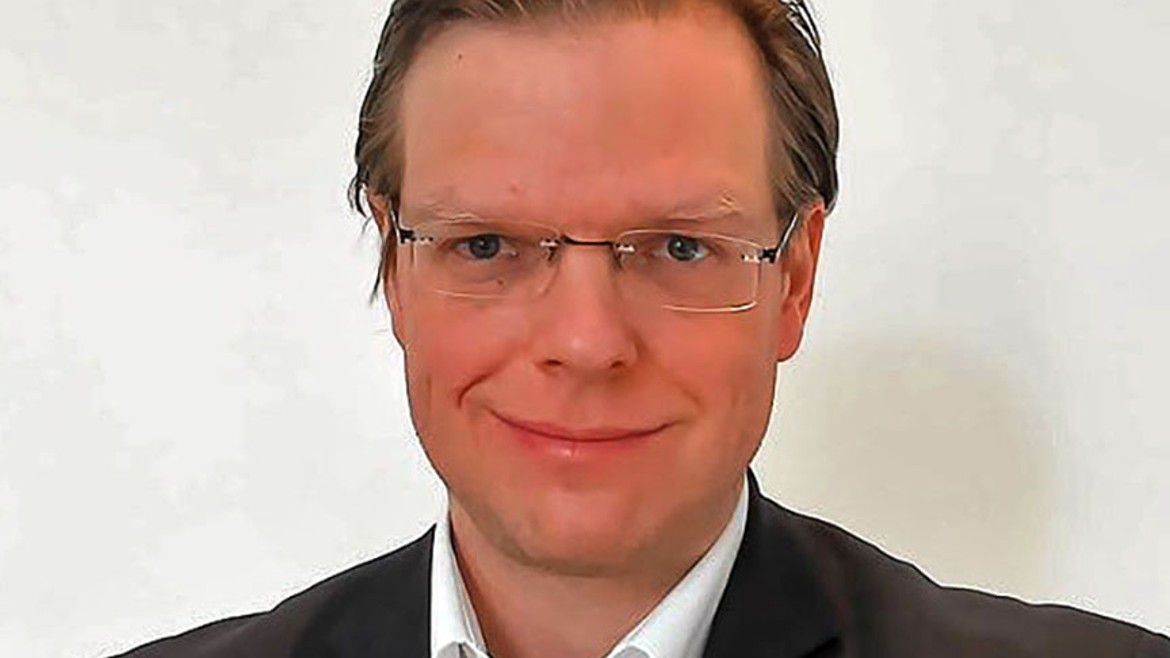
Prof. Dr. Lukas Schönberger
“Hochschule München gives us the freedom to shape our digital teaching as we see fit. But it’s only thanks to our students that it works so well. When it comes to the coronavirus and the measures in place, they’re doing a fantastic job: they’re helping to make these measures work despite the pressures they face, and are continuing to study successfully.”
Prof. Dr. Lukas Schönberger, Professor of Applied Business Administration and Corporate Management at the Department of Tourism
The tourism industry has been undergoing a transformation for some time, not just since the COVID-19 pandemic. However, the pandemic has accelerated this digital transformation. What is the best way to respond to this? “It’s working well in teaching,” reports Prof. Dr. Lukas Schönberger. Among other things, his tourism students organised Munich University of Applied Sciences’ virtual presence at this year’s virtual ITB. The students managed Hochschule München’s presence at the trade fair as an independent project, initially partly in person, then entirely online after the fair in Berlin could not go ahead. Schönberger emphasises: “Good teaching, both during and outside the COVID-19 pandemic, is not a one-sided endeavour. Successful virtual teaching only works with and through our committed students.”
One key skill that Schönberger teaches in some of his courses is self-management – both for their studies and for when they later enter the world of work. In live negotiation exercises as part of the ‘Applied Business Management’ module, students practise their communication and negotiation skills as well as their resilience to stress: just as in real working life, they must make decisions in teams based on incomplete information. Depending on the approach taken, the aim is to implement and enforce these decisions through either a cooperative or a confrontational exchange with other teams.
Schönberger’s teaching approach does not entirely disregard the entertainment factor: the lecturers aim to engage students through exciting topics and practical examples. One such topic was the ‘In-person Exams at the Munich Exhibition Centre’ project. The students learnt how to plan and negotiate arrangements for a potential 72,000 in-person exams in the halls of the Munich Exhibition Centre, including hygiene, procedural and safety protocols for the 2020 winter semester – even though these exams never actually took place.
The nominees for the 2021 Teaching Oscar
- Prof. Dr. Michael Amft, Department of Mechanical, Automotive and Aeronautical Engineering: “Be the person you needed when you were younger! A shift in perspective that I constantly practise: I show students that I understand how they think, how they’re feeling and what they’re going through – and, at the same time, I clearly reflect on the impression students have of me in my role as their professor, their supervisor or even their boss. Together, these two things lead to an enormous and very valuable gain in insight.”
- Prof. Dr Jörg Reinhardt, Department of Applied Social Sciences: “In my experience, teaching works best when we’re on an equal footing. As a lecturer, I also see myself as a service provider. That’s why I try to meet students where they are.”
- Prof. Dr. Sabine Rodt, Department of Business Administration: “I try to support and challenge students intuitively, drawing on my specialist knowledge, as well as my teaching, practical and academic experience, and my personal commitment.”
- Prof. Dr. Bastian Katz, Department of Computer Science and Mathematics: “I see the challenge and opportunity of digital teaching not in forcing students into a learning process and reducing interaction, but, on the contrary, in making the most of the flexibility it offers. Working through and absorbing content at their own pace, being able to assess their own learning progress, and viewing joint events as ‘quality time’ in which communication takes centre stage.”
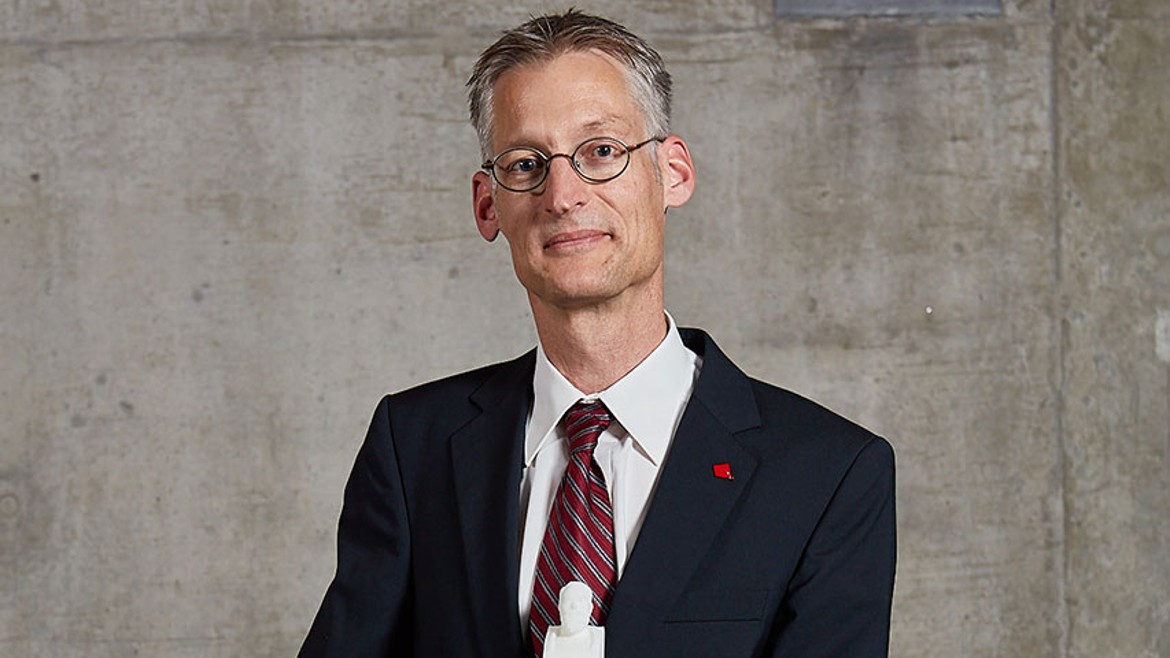
Prof. Dr Guido Stehr
“I am delighted to have won the Teaching Oscar: firstly, because the nomination came from my students, and if anyone is in a position to judge my teaching, it is them. Secondly, because the university management is thereby making it absolutely clear that teaching remains our core business.”
Prof. Dr. Guido Stehr, Professor of Fundamentals of Electrical Engineering at the Department of Electrical Engineering and Information Technology
“In my introductory courses, I mainly teach first-year students who have to overcome not only subject-specific but also methodological and personal challenges. I guide my students with empathy as they embark on and progress through their studies. My starting point for effective teaching is a friendly and respectful relationship between my students and me as a lecturer. “On this basis, a clearly structured and focused presentation of the subject matter leads to successful learning, as the 2009 Hattie study already highlighted. Electrical and Information Technology is commonly regarded as an abstract and complex field. And indeed, the mechanisms at work in electrical engineering are largely beyond direct perception, meaning that most of it can only be understood rationally. But that is precisely what makes it so appealing: the central aim of my teaching is to equip students with abstraction and systematic thinking as the most important tools of the engineering disciplines. I want to instil in my students confidence in their own problem-solving abilities: just as they have mastered challenging topics during their studies, they will also be able to overcome difficult challenges in their professional practice.”
Prof. Stehr has been teaching the fundamentals of electrical engineering at the Department of Electrical Engineering and Information Technology at HM since 2015. Prior to this, he spent ten years working in the semiconductor industry in the field of modelling and simulation of digital systems. He studied at the University of Paderborn and the University of Karlsruhe, where he obtained his Diplom degree following a period spent in the USA. He was a research assistant at the Chair of Design Automation led by Prof. Antreich at the Technical University of Munich, where he also completed his PhD.
In this Lightboard video, Prof. Dr. Guido Stehr explains what makes his teaching so special.
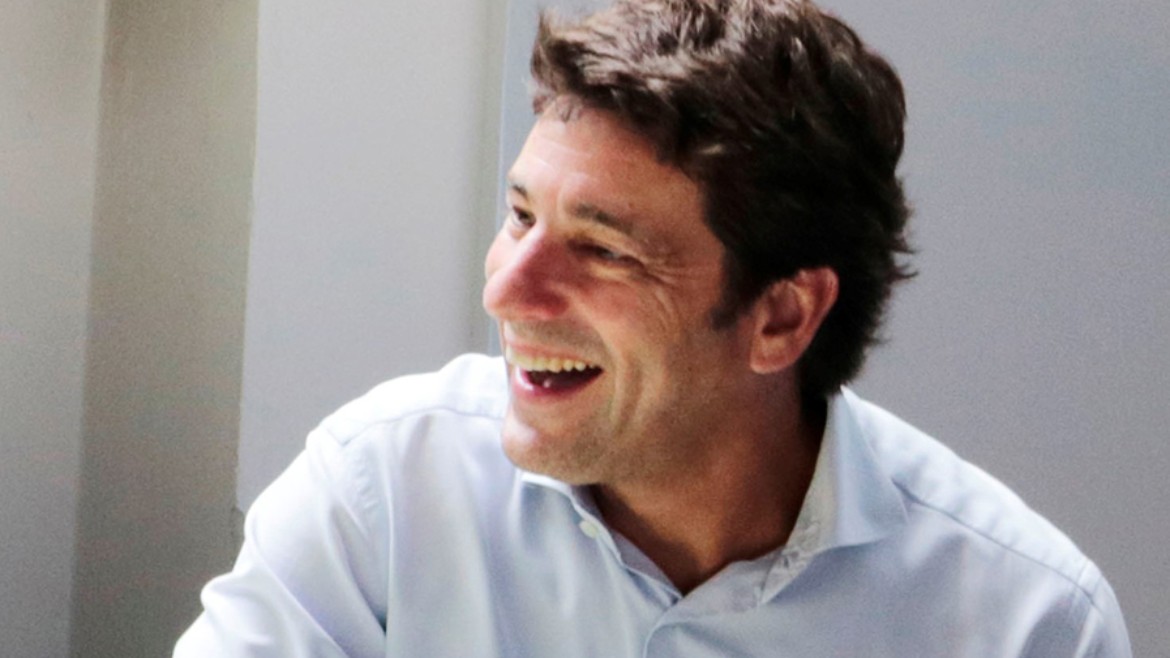
Prof. Dr. Peter Dürr
Peter Dürr is a Professor of knowledge and communication management and co-director of the ‘Management of Social Innovation’ degree programme at the Department of Applied Social Sciences.
How is the role of lecturers changing in the age of digitalisation?
This question has been on the mind of Peter Dürr, Professor of Knowledge and Communication Management at Hochschule München, for years. To gain a better understanding of learning processes, he developed a model during his research semester which he describes as an ‘interactive learning pathway’, in which students engage with a subject in various ways. In this way, they continuously alternate between acquiring, analysing and summarising information, and developing and testing ideas for solutions, whilst taking on different roles such as facilitators, researchers, designers or listeners.
Dürr sees these “changes in perspective” as a key driver in understanding and solving social problems. By designing a “classroom of the future” on the Pasing Campus, he and his colleagues have also created a physical space that makes such versatile teaching formats possible in the first place.
In his seminars, this social scientist – who trained as an economist and engineer – engages intensively with the future, with the transdisciplinary aspect being particularly close to his heart. He sees digital technologies as bringing about not only a radical transformation in the processing and dissemination of information at universities, but also, in particular, in the skills profile required of lecturers: They must be “hunters and gatherers”, always on the lookout for ideas on how to improve learning. A media-enriched learning journey therefore continues to require dramaturgs and storytellers who experiment with different approaches and enable people with diverse prior knowledge and learning styles to construct meaning from what is being taught.
"Oskar Award for Quality in Teaching"
Felicitas Loepp, Department of Engineering and Management
Prof. Dr. Stefan Rappenglück, Department of General and Interdisciplinary Studies
Prof. Dr. Ulrich Moosheimer, Department of Supply and Building Services Engineering, Process Engineering for Paper and Packaging, Printing and Media Technology
"Oskar Award for Quality in Teaching"
Thomas Loster, Graduate in Geography, Department of General and Interdisciplinary Studies
Prof. Dr. Christian Münker, Department of Electrical Engineering and Information Technology
Prof. Dr. Markus Wessler, Department of Business Administration
"Oskar Award for Quality in Teaching"
Prof. Dr. Edda Eich-Soellner, Department of Computer Science and Mathematics
Prof. Dr. Gertrud Grünwied, Department of Supply and Building Services Engineering, Process Engineering for Paper and Packaging, Printing and Media Technology
Prof. Dr. Norbert Geng, Department of Electrical Engineering and Information Technology
"HM Teaching Award"
Prof. Dr. Sonja Munz, Department of Tourism
Prof. Dr. Christian Seiler, Department of Civil Engineering
Prof. Dr. Angela Poech, Department of Business Administration
"HM Teaching Award"
Prof. Dr. Christoph Dauberschmidt, Department of Civil Engineering
Prof. Dr. Jörg Middendorf, Department of Mechanical, Automotive and Aeronautical Engineering
Prof. Dr. Caroline Steindorff-Classen, Department of Applied Social Sciences
"HM Teaching Award"
Prof. Dr. Walter Eger, Department of Civil Engineering
Prof. Dr. Jörg Puchan, Department of Engineering and Management
Prof. Dr. Anne Brunner, Department of General and Interdisciplinary Studies
2012 Award Winners
Prof. Dr. Dauberschmidt from the Department of Civil Engineering is to be awarded the Prize for Excellence in Teaching in recognition of his outstanding commitment to teaching in the field of building materials science.
Prof. Dr. Middendorf from the Department of Mechanical, Automotive and Aeronautical Engineering is to be awarded the Hochschule München Prize for Excellence in Teaching, in recognition of, amongst other things, his course on ‘Technical Mechanics’.
Prof. Dr. Steindorff-Classen has been awarded the Prize for Excellence in Teaching in recognition of her outstanding commitment to the Department of Applied Social Sciences. She is being honoured for her courses “Introduction to Law” and “Juvenile Criminal Law”.
2011 Award Winners
Prof. Dr. Eger has been awarded the Prize for Excellence in Teaching for his course “Road Construction” in the Department of Civil Engineering.
Prof. Dr. Puchan from the Department of Engineering and Management has been awarded the Prize for Excellence in Teaching for his outstanding commitment to an IT project.
Prof. Dr. Brunner from the Department of General and Interdisciplinary Studies has been awarded the Prize for Excellence in Teaching for the “ALLEGRO” teaching and learning model she developed.