Prof. Dr Tina Weisser
Build AI agents rather than just using tools. Design real-world work processes as part of your studies
Motivation
Students often learn about individual AI tools, but not how to integrate them effectively into real-world work processes. At the same time, companies face the challenge of embedding AI into existing workflows. This teaching innovation addresses this gap by enabling students to design AI as part of specific work systems.
Effect
“For the first time, I’ve understood how AI really works within a work process, not just as a tool.”
“It was only once we had mapped out the process properly using the service design approach that it became clear where AI actually makes sense.”
“Most people only accept AI once they see something that actually works. Only then does trust develop.” (Partner company)
“We had lots of ideas, but nothing works without clear data and access.”
“You can’t fix a broken process with AI.”
- Prof. Dr Tina Weisser, practice partners and students
Procedure
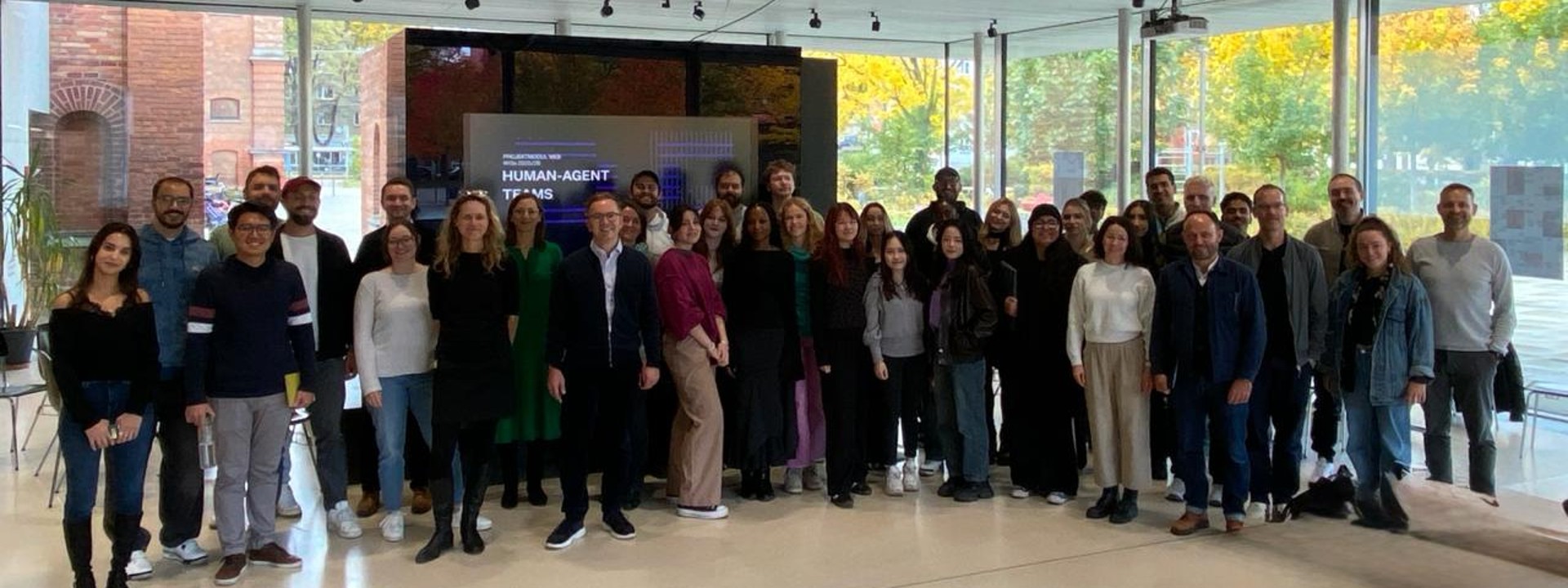
In collaboration with corporate partners such as Celonis, Stadtwerke München and the City of Landau, students develop their own AI agents and multi-agent workflows on a low-code platform. Working in teams, they tackle real-world problems and shape the collaboration between humans and AI.
The project-based approach promotes application-oriented learning, with the prototypes developed being reviewed and further refined through documentation, presentations and feedback from peers and practice partners.
| Module information | |
|---|---|
| Funding period | Winter semester 25/26 |
| department | Dept 12 |
| Degree programme | Computer Science & Design |
| Module title | Web Project Module |
| Module responsibility | Prof. Dr Tina Weisser |
| Other lecturers | Sven-Anwar Bibi, Youssef Elserougi |
| Learning outcomes achieved | The students... |
| ... analyse real-world problems and develop agent-based solutions, | |
| ... build functional AI workflows using low-code tools such as n8n | |
| ... control AI systems through targeted prompting | |
| ... critically evaluate results and make decisions under conditions of uncertainty | |
| ... define roles and responsibilities between humans and AI | |
| ... reflect on the opportunities, limitations and risks in the context of application |
Interested? Why not apply for funding for your teaching innovation too!
Contact
Center for Innovation in Teaching and Education